Offshore vs onshore wind in surfing
 Fin Selector: your fins in 1 minute
Offshore wind blows from the land out to sea and holds the waves up clean. Onshore wind blows from the sea toward the land and roughs them up. Which one you have depends on which way your beach faces.
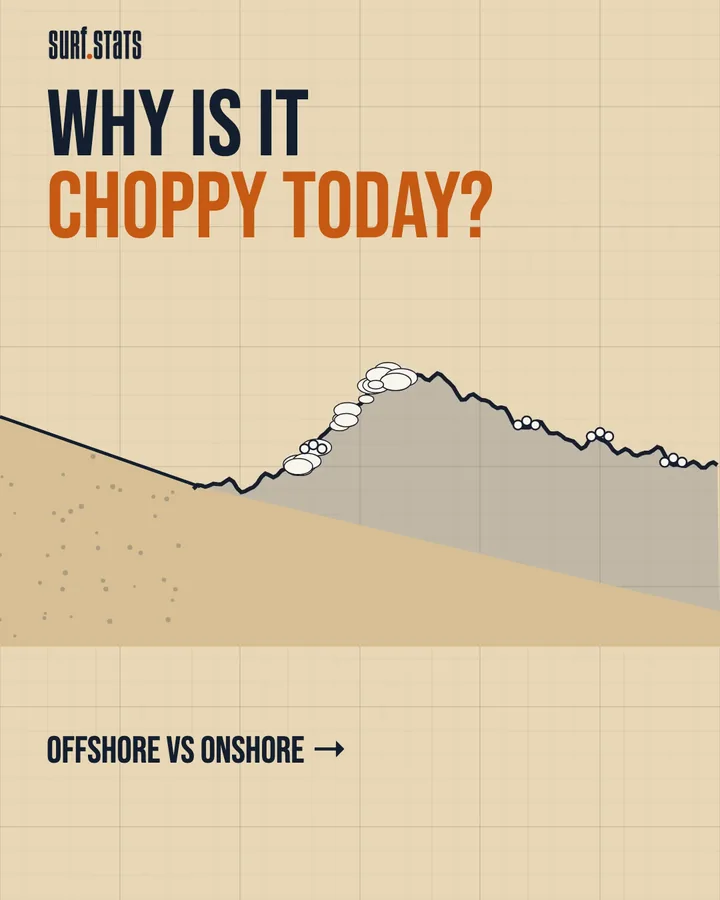
Same spot, same swell, and yesterday it was clean while today it's a choppy mess. Why is it choppy today? Usually, it's the wind. It isn't the only cause, but the local wind at your beach is the usual suspect.
Surfers sort that wind by where it blows compared with the coast, not by the compass. Offshore wind blows from the land out to sea. Onshore wind blows from the sea toward the land. Cross-shore wind blows along the beach. Surf reports and surfers use those three words, plus "glassy" for no wind.
Below are five things you can see from the beach and the wind behind each one. They come from our offshore vs onshore reel, checked against weather agencies, wave research, surf forecasters and surf magazines.
1. Spray blowing off the back of the waves?
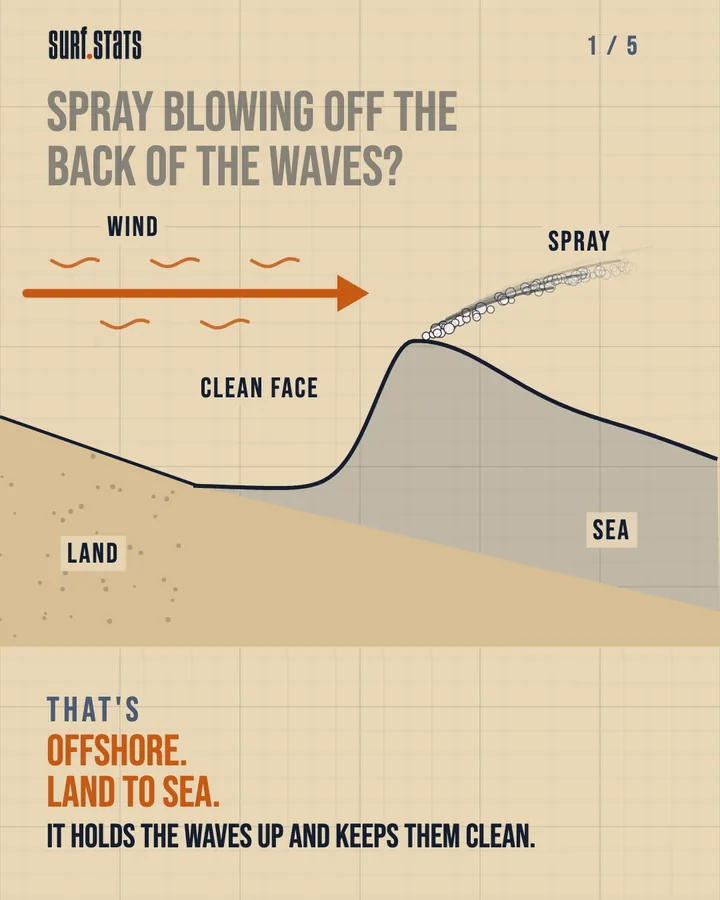
The short version: that's offshore wind, from the land out to sea. It holds the waves up and keeps them clean.
Offshore wind blows against the incoming waves and up their faces. As a wave stands up, the wind catches the top and throws a plume of spray off the back of it, out to sea. That plume is an offshore sign you can spot from the sand.
Why surfers like it:
- It holds the waves up. The wind pushes against the crest, so the wave stays standing longer before it breaks.
- It keeps them clean. It smooths the chop off the wave face.
Lab tests by Douglass and Weggel found the same pattern: with offshore wind, waves broke later and in shallower water. That's an average from a lab tank, not a promise at every beach.
One limit: too strong an offshore can make waves hard to catch. Paddling into them gets harder.
2. Choppy, crumbly waves?
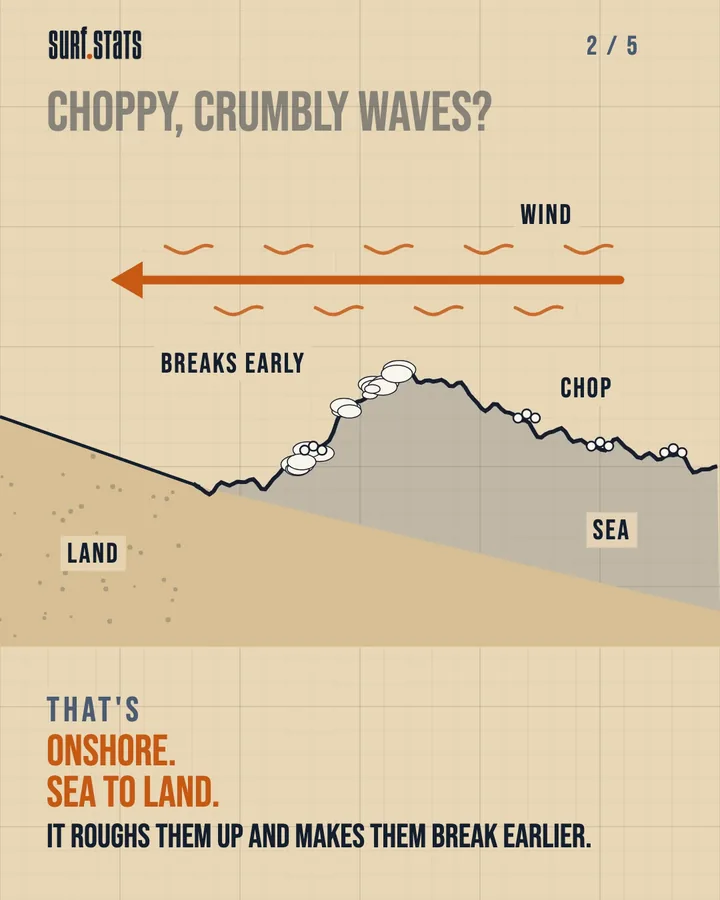
The short version: that's onshore wind, from the sea toward the land. It roughs them up and makes them break earlier.
Onshore wind blows from behind the waves, the same way they travel. It puts chop on the surface and can push the top of the wave over before it's ready, so the wave crumbles down its face instead of standing up. Surfers call it messy or, when it's bad, blown out.
The lab tests match here too: with onshore wind, waves broke earlier, in deeper water, which means farther out, and tended to spill.
Onshore doesn't mean you can't surf. Surfer magazine says a light onshore makes for better surf than a strong one, and that plenty of spots work fine with it.
3. Wind blowing along the beach?
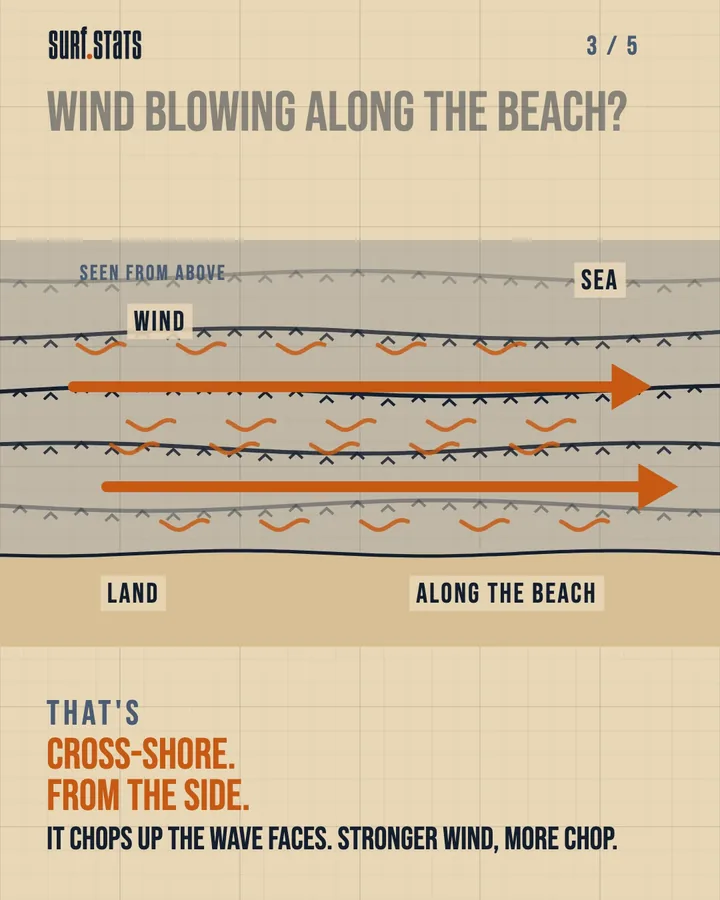
The short version: that's cross-shore (also called side-shore), from the side. It chops up the wave faces. Stronger wind, more chop.
Cross-shore wind blows parallel to the shoreline, so it hits the waves from the side and ruffles their faces. The Met Office says the same: the harder it blows along the beach, the choppier the waves can get.
A note on the word: in science papers, "cross-shore wind" can mean the onshore or offshore part of the wind. In surf reports and on the beach, it means wind along the beach, which is how we use it here.
4. Water smooth as glass?
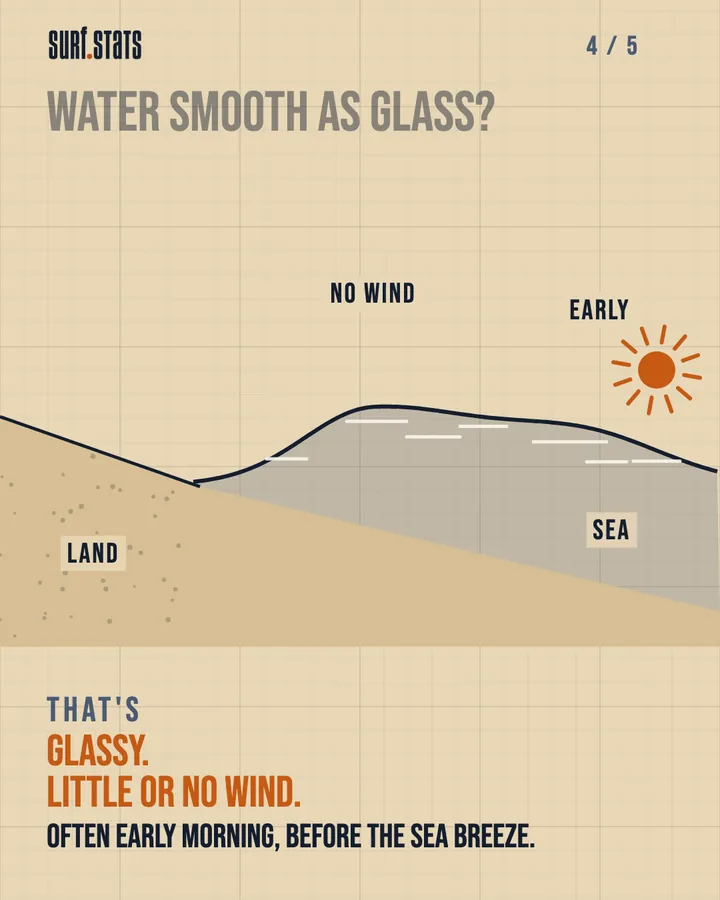
The short version: that's glassy, little or no wind. Often early in the morning, before the sea breeze comes in.
Glassy means the surface is smooth with no wind and no chop. It often happens early. On many coasts the land heats up faster than the sea during the day, and NOAA explains that air from over the cooler ocean then moves in over the land. That's the sea breeze. That breeze blows onshore, so a glassy morning can turn choppy by the afternoon. Evenings can go glassy again as the sun sets.
That's "often", not "always". Some mornings are bumpy anyway, and sometimes what blows early is a light offshore, not dead calm.
5. Not sure which wind it is?
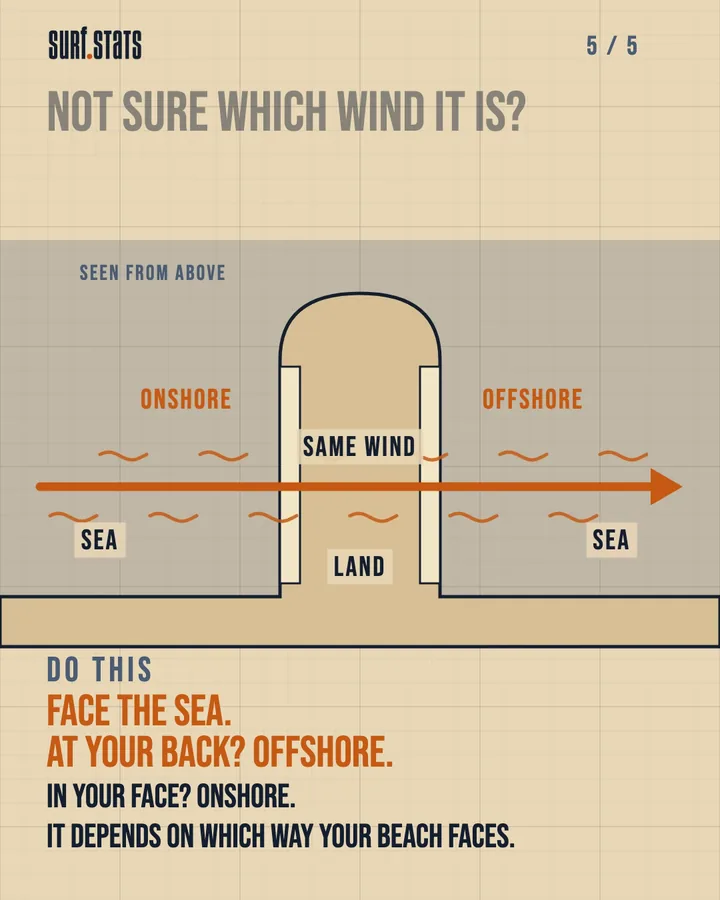
Try this: face the sea. Wind at your back? Offshore. Wind in your face? Onshore.
Standing at the water's edge looking out, the land is behind you. So wind coming off the land hits your back (offshore), and wind coming off the sea hits your face (onshore). Wind across your shoulders is cross-shore.
It depends on which way your beach faces. That's why you can't say "a west wind is offshore" in general. An east wind blows offshore at a west-facing beach and onshore at an east-facing one. In Rio, the Brazilian surf site Waves notes that São Conrado faces southwest, so its offshore is a north or northeast wind. Around a headland, one wind can be onshore on one side and offshore on the other. Two things help when you read a forecast:
- Wind is named for where it blows from. A west wind blows from the west.
- Some surf forecasts label it for each spot, as offshore, onshore or cross-shore, so you don't have to work it out. Our guide on how to read a surf forecast covers the rest of the chart.
Offshore: clean. Onshore: choppy.
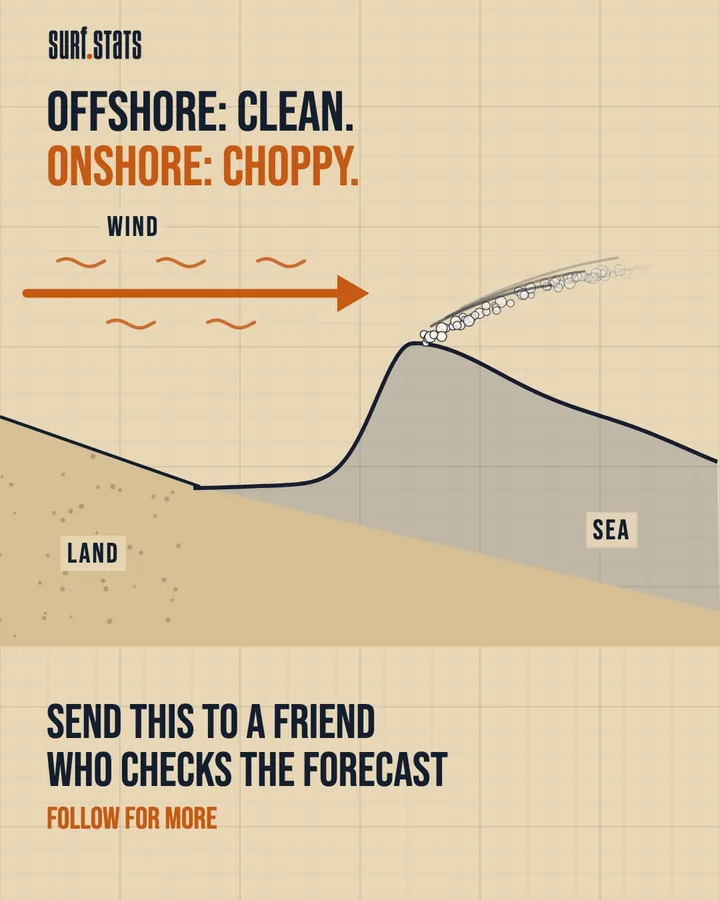
That's the rule of thumb to remember. If the wind is right and the waves still look wrong, the tide might be the cause: see the best tide for surfing.
Quick checklist
- Offshore: land to sea. Spray off the back, clean faces.
- Onshore: sea to land. Chop, crumbly waves that break earlier.
- Cross-shore: along the beach. The stronger it blows, the choppier it gets.
- Glassy: little or no wind. Often early, before the sea breeze.
- Face the sea: wind at your back is offshore, in your face is onshore.
- A forecast's wind is named for where it comes from. Your beach's direction decides the rest.