Should you wear a surf helmet?
 Fin Selector: your fins in 1 minute
Not every surfer needs one, and doctors are split on it. A surf helmet is for a shallow reef, a crowded lineup, going for airs, and coming back from a concussion once a doctor has cleared you. It helps with cuts and hard knocks, but it may not stop a concussion.
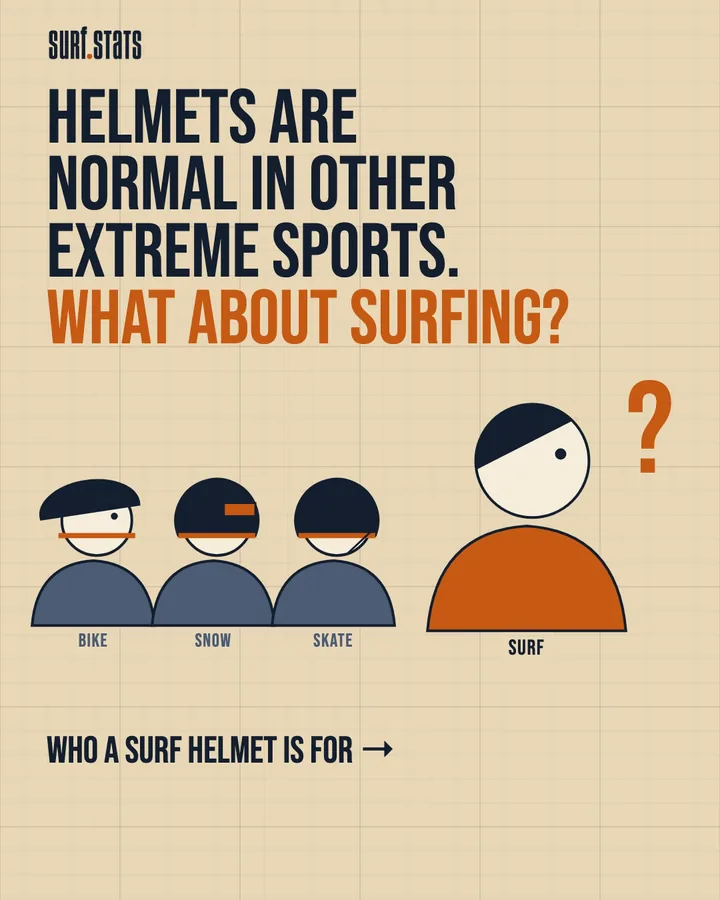
Helmets are standard gear in plenty of other sports. In surfing they are still rare. So should you wear a surf helmet?
Doctors are split on whether surfers need one, and studies say the evidence isn't strong enough to call for helmets in all surf. What research does show is where the risk is higher. So the useful question isn't "should everyone wear one?" It's "who is a surf helmet for?"
Below are the four situations from our surf helmet reel, drawn from surfing injury studies, medical bodies and surf media. One thing to know first: in studies of surfing head injuries, the main thing that hits the head is a surfboard, and across all surfing injuries, the board that hits surfers most is their own.
1. Surfing a shallow reef?
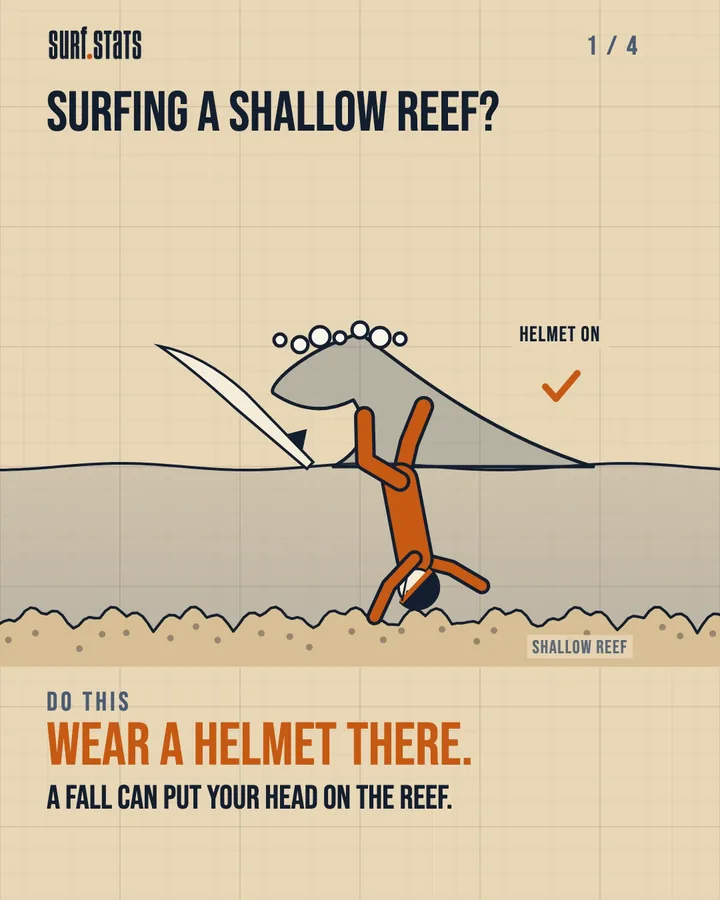
Try this: wear a helmet there.
A fall can put your head on the reef. Head injuries in surfing come from the board and also from hitting the bottom: sand, rock or reef. Research shows the risk of injury is higher on a shallow reef.
An emergency doctor told The Inertia that a helmet lowers your chance of getting hurt by your board or the reef. Some surfers who were hurt in the past now wear one at reef breaks. Honolulu Civil Beat reports that the pro tour began providing helmets to athletes at contests where shallow reefs raise the risk, and The Inertia reported that before the Olympic contest at Teahupo'o, the sport's world governing body promoted helmets for the athletes.
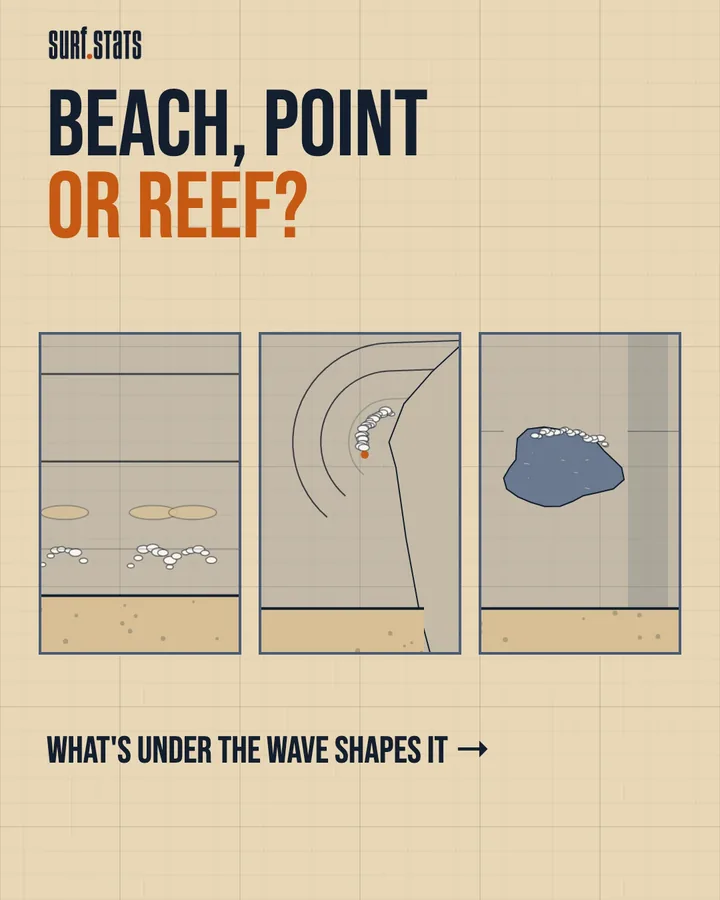
Not sure what kind of wave breaks at your spot? Read beach break vs point break vs reef break.
2. Surfing a crowded lineup?
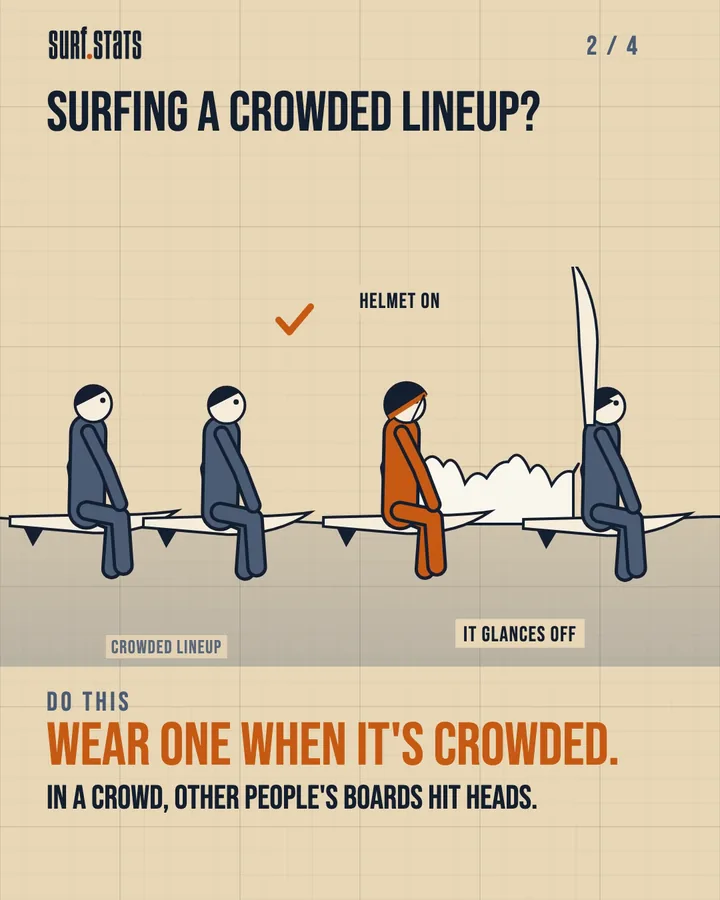
Try this: wear one when it's crowded.
In a crowd, other people's boards hit heads. In a study of injuries that surfers caused to others, some described their board striking another person's head, and many of those hits came in crowded water. A surfing injury review also points to crowding at popular breaks as a likely added risk.
3. Going for airs?
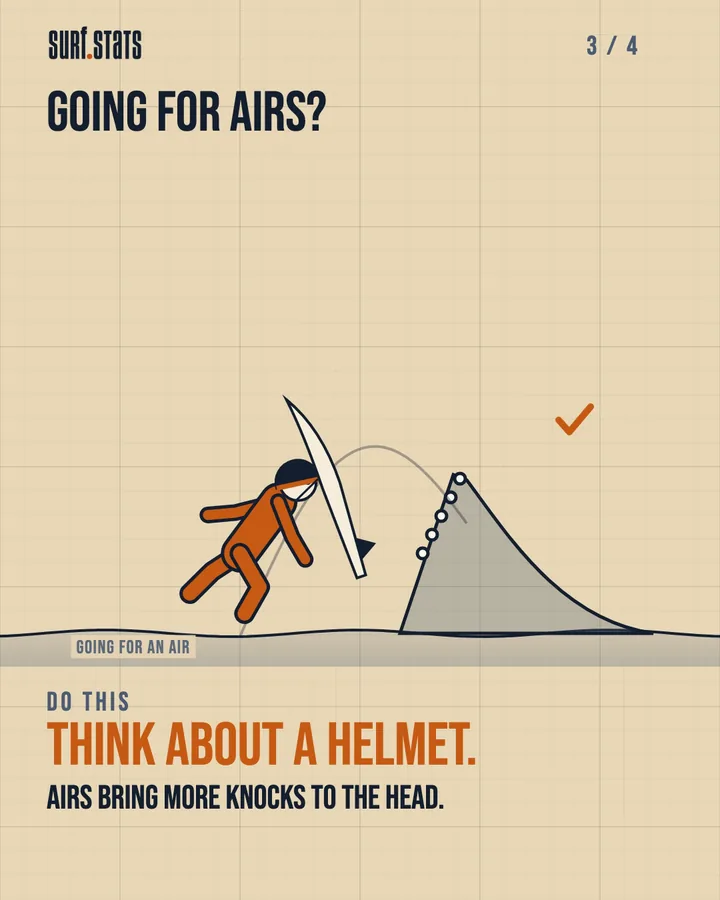
Try this: think about a helmet.
Airs bring more knocks to the head. Research on surfing injuries found the highest injury rate in surfers who do airs, and a review found higher rates of head injury in surfers who can do advanced moves like them. An orthopedic doctor quoted by Spectrum News named aerial surfing as one possible reason for more brain injuries in surfing.
4. Back after a concussion?
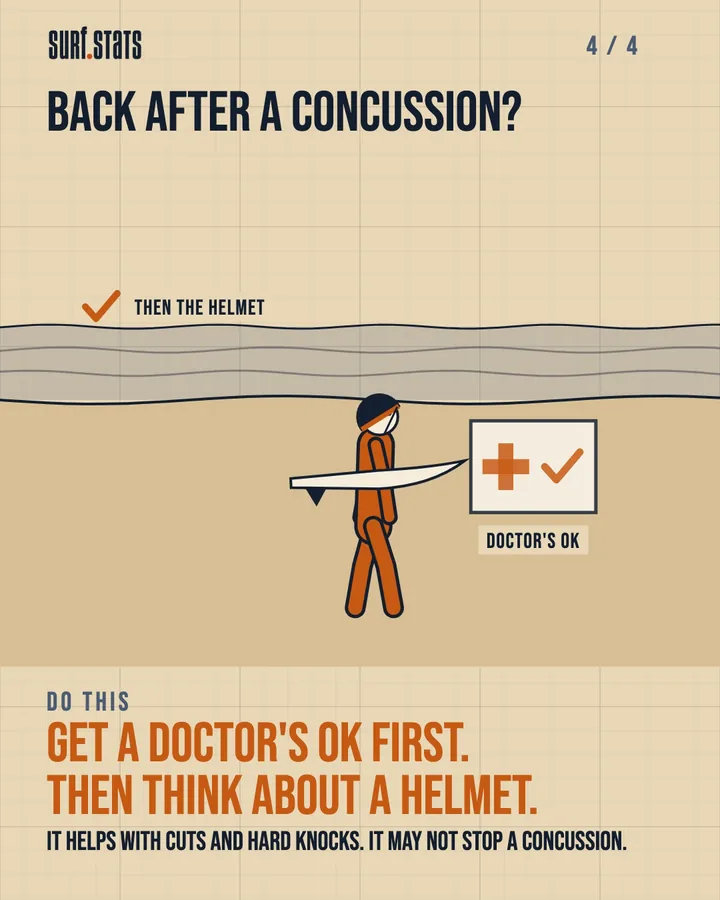
Try this: get a doctor's OK first. Then think about a helmet.
Australia's national sports and medical bodies, and the country's general practice journal, say that after a concussion you shouldn't go back to sport until a doctor has cleared you. The pro tour's own concussion protocol asks for the same: a doctor's clearance before an athlete competes again. So the doctor comes first, not the helmet.
Some surfers coming back from a head injury have added a helmet. Know what it does. It helps with cuts and hard knocks. It may not stop a concussion. Helmets are made for hard, direct hits: they lower the risk of cuts and skull fractures, but the evidence that they prevent concussions is thin. A study of skiers and snowboarders in Western Canada points the same way: with more helmet use, only one kind of head injury fell clearly, and that was cuts.
Reef, crowds, airs, a past concussion
Those are the moments when a helmet helps. Outside them, the choice is yours, and doctors don't all agree. Whatever you decide, it's worth knowing how to fall: read how to wipe out safely.
Quick checklist
- Shallow reef: wear a helmet there.
- Crowded lineup: wear one when it's crowded.
- Going for airs: think about a helmet.
- Back after a concussion: a doctor's OK first, then think about a helmet.
- A helmet helps with cuts and hard knocks. It may not stop a concussion.