Your first hard board: when to leave the foam board
 Fin Selector: your fins in 1 minute
Switch once you can catch unbroken waves and ride along them, not as soon as you can stand up. Make your first hard board a funboard or a longboard, bought for your level, ideally used, and cover your head when you fall.
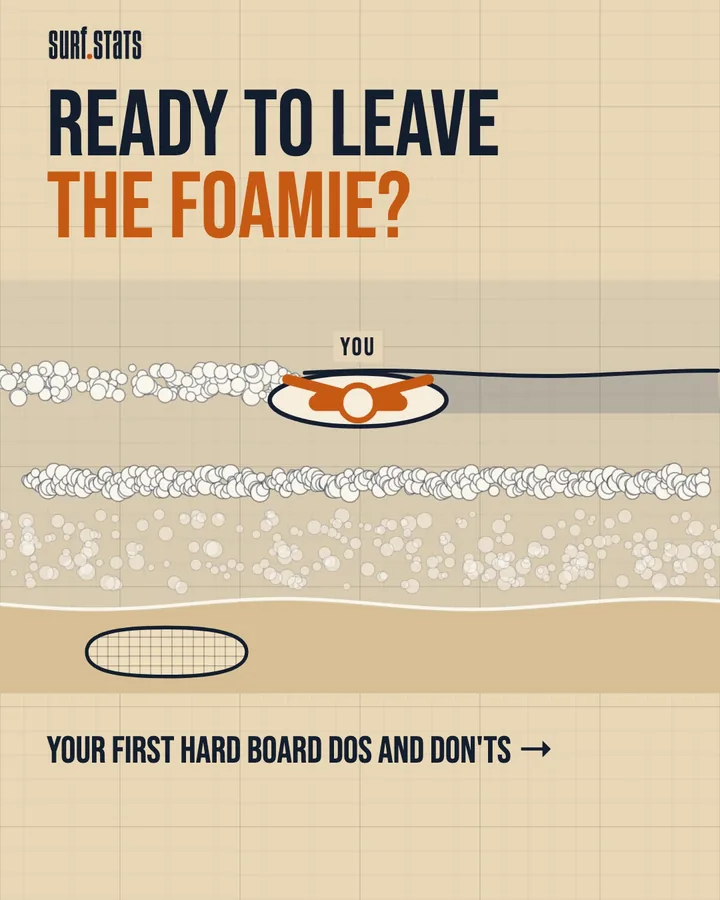
You learned on a big foam board, and now the question comes up: when do you switch from a foam board to a hard board? Not the day you first stand up. Wait until you can catch unbroken waves and ride along them. Then pick a board that still floats and paddles well, buy it for the surfer you are today, and bring one new habit.
Below are five dos and don'ts for your first hard board. They come from our first hard board reel, and each one rests on at least two independent sources: surf magazines, a surf forecaster, a gear review site and Red Bull. No sizes, lengths or timelines: the sources disagree on all of them, so you get skill tests and checks instead.
1. Just learned to stand up?
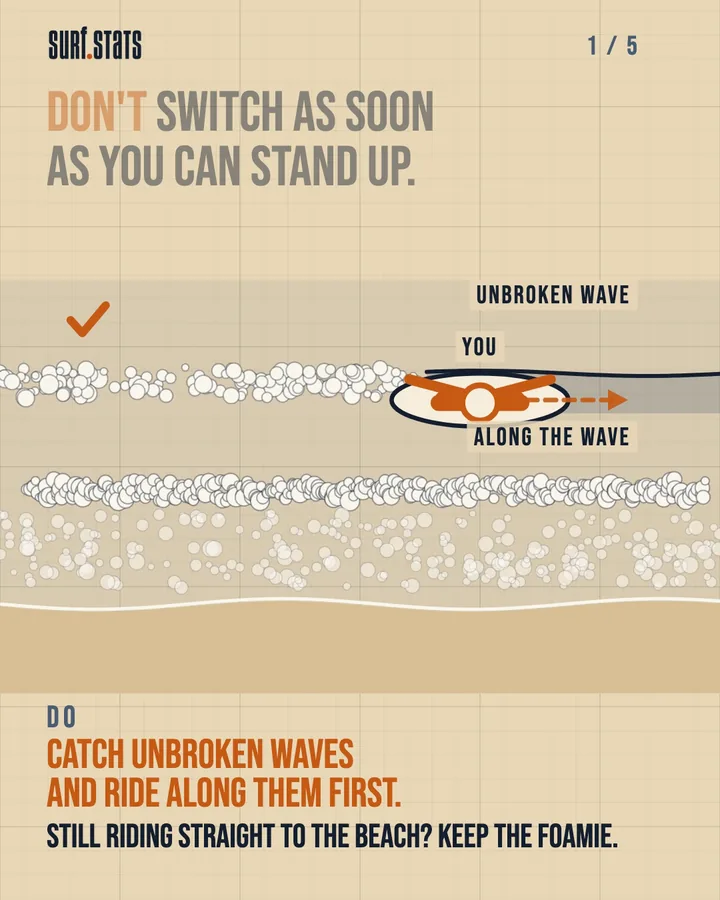
Try this: catch unbroken waves and ride along them first.
Don't switch boards as soon as you can stand up. The Inertia's beginner guide puts the moment later: once you can stand, turn and go down the line, riding the unbroken face of the wave, you might consider moving up. Surfer Today sets a similar bar for funboards: catch a wave, ride its shoulder and make some turns.
The test: still riding straight to the beach? Keep the foamie. Once you're riding along the open face and starting to turn, you're ready to look.
Some guides set the bar lower (Surfline suggests moving up once you've got the hang of riding waves on a soft top). We use the stricter test, and the skill, not the calendar: guides don't agree on how many sessions or months it takes.
2. Thinking of a shortboard next?
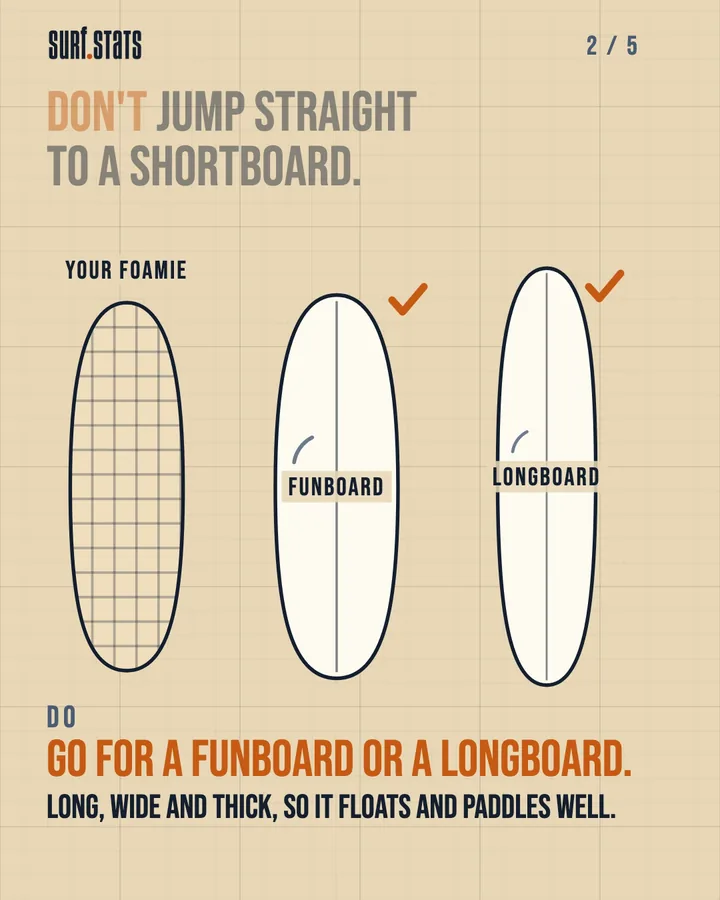
Try this: go for a funboard or a longboard.
Don't jump straight from the foamie to a shortboard. Surfline warns that learning on a small board can be frustrating. The Inertia lists what goes wrong with a board that's too advanced: slower to paddle, a lot less stable once you're up, and easier to damage.
Surfline, The Inertia and Surfer all point to a funboard or a longboard as the next step, and Surfer Today recommends the funboard to beginners moving up. Surfer Today ranks the funboard a step above the longboard; the others don't rank them, and neither do we.
Why they work: they're long, wide and thick, so they float and paddle well. Surfer Today describes the funboard as wider, rounder in the nose and thicker in the rails than a shortboard, so it floats more and paddles and balances like a longboard. Surfline adds that a longer board is easier to paddle and to catch waves on.
Once you know which kind you want, how to choose a surfboard helps you fine-tune it by what you feel in the water.
3. Eyeing the board the pros ride?
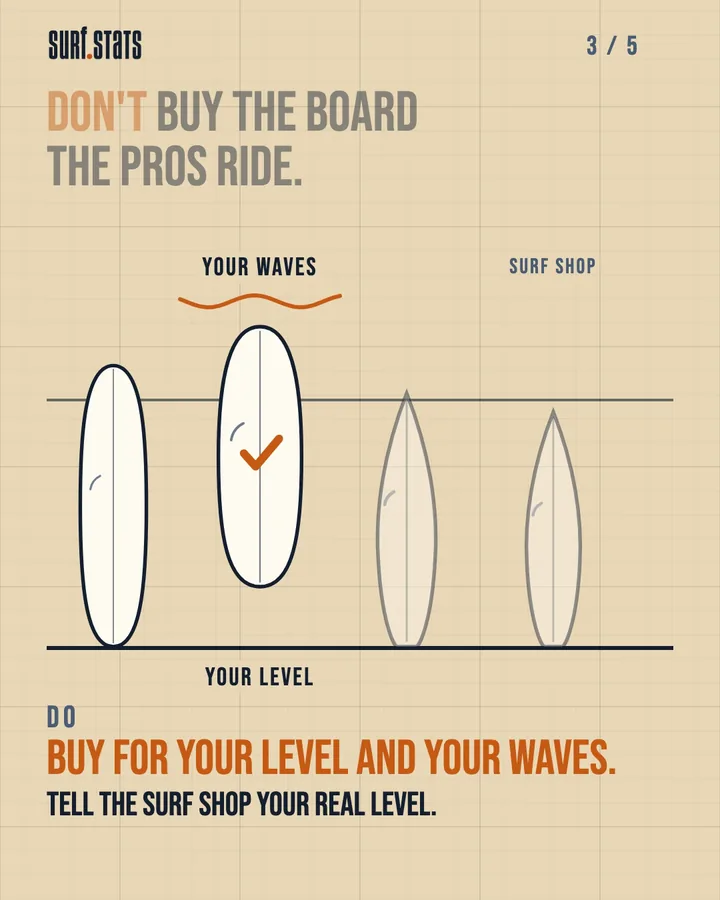
Try this: buy for your level and your waves.
Don't buy the board the pros ride. Surfer Today notes that beginners want to copy the pros, and warns against being swayed by brands, logos and signature models. Surfline compares a hot board for a learner to buying a Corvette for a kid who just got a driver's licence. Surfer's advice: don't compare yourself to experienced surfers.
Instead, ask yourself two questions from Surfer Today's buying guide: what's my real level, and what waves do I surf most? Surfd asks the same two things: be honest about where your surfing is, and buy for the waves you surf most often, not for a once-a-year trip.
Then tell the surf shop your real level. Surfer says to be open about your skill level when you ask for a recommendation, and Red Bull and Surfer Today both say to ask your local surf shop for help.
4. About to buy a shiny new board?
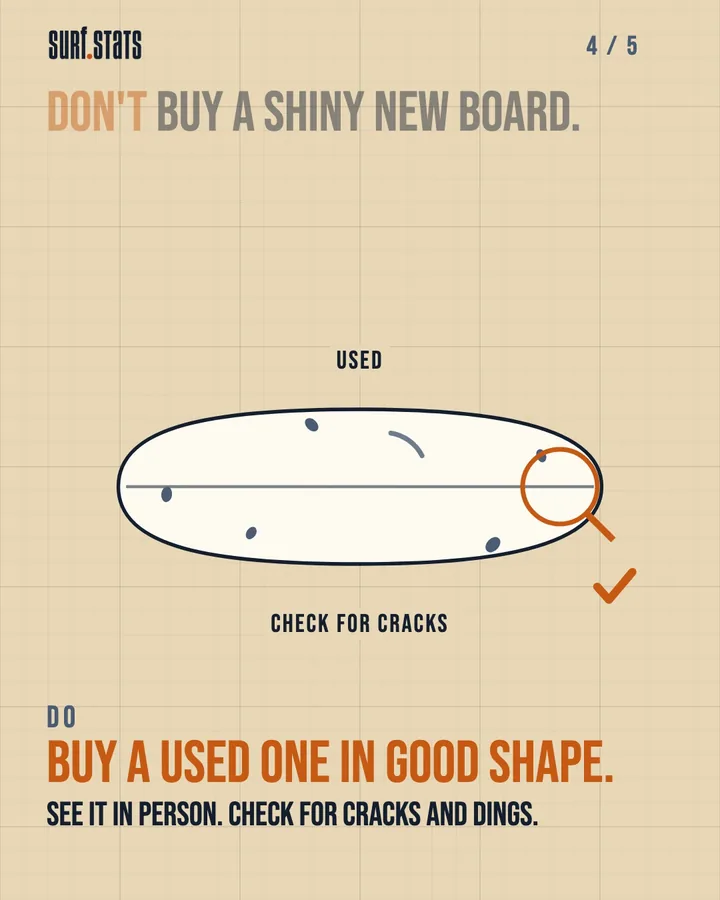
Try this: buy a used one in good shape.
Your first hard board doesn't need to be new. Surfline says your first board doesn't have to be shiny and new: save the money, and look at the used rack most shops keep. The Inertia's beginner guide calls used an excellent way to go for a beginner, and says new fibreglass boards cost much less used.
It will get dinged anyway. The Inertia says fibreglass boards break, you repair them, and they break again. Surfline compares a first board to a car you can knock around while you learn.
Good shape is the catch, so check it:
- See it in person. The Inertia's used-board story says you can't really judge a board until you see it, and Surfer Today expects a buyer to inspect a used board closely.
- Look for cracks and dings. The Inertia says to make sure the board has no holes or cracks. Surfline says to keep looking if the fibreglass has buckled anywhere or the board is covered in dings.
5. Forgetting it's hard now?
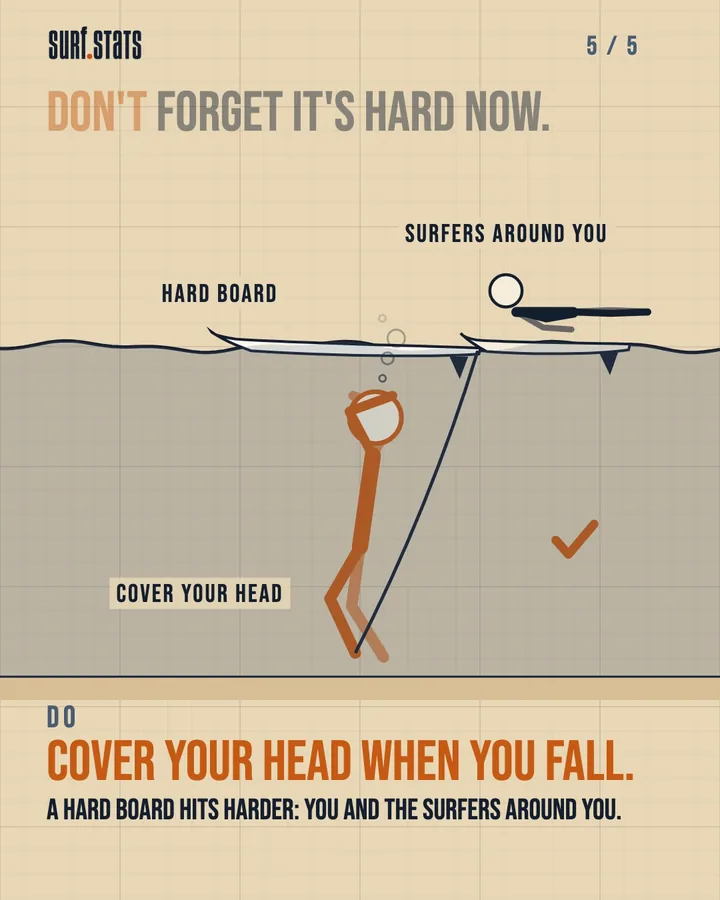
Try this: cover your head when you fall.
A hard board hits harder: you and the surfers around you. Surfline warns that a fall from a fibreglass board can be dangerous, most of all when the board strikes you or another surfer. The Inertia, Surfer Today, Surfer and Surfd all count the soft deck as a safety plus of foam boards, and your new board doesn't have one.
The new habit: when you fall, come up with your arms over your head. Surfer Today's advice is to rest your hands on your head as you surface, to shield it from your board. Surf coach Corky Carroll, quoted by Surfline, lists not covering your head when you fall as a common first-timer mistake.
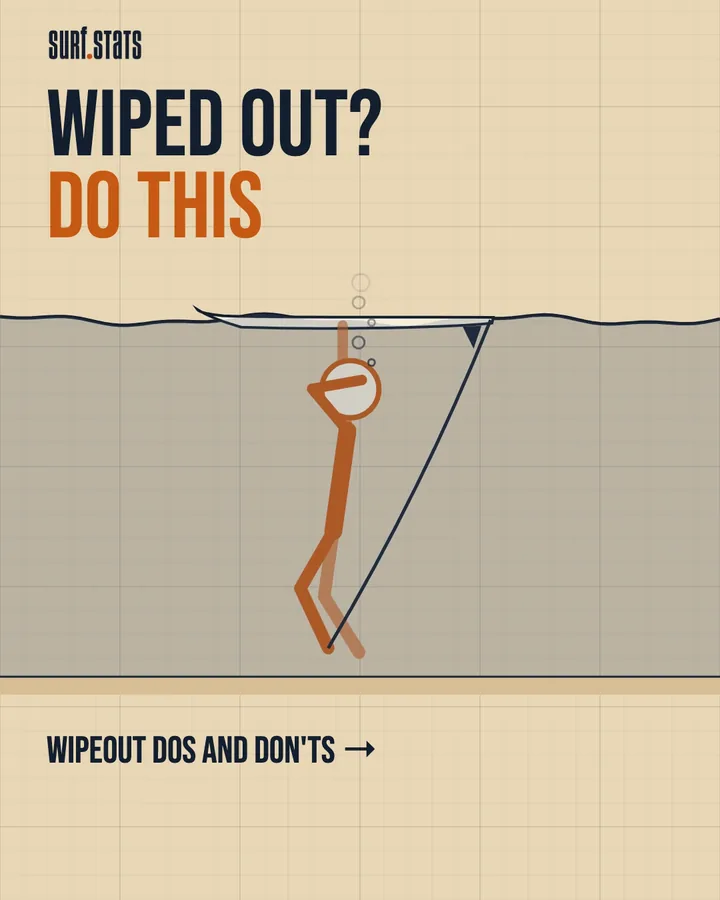
The full routine, from the fall to getting your board back, is in how to wipe out safely.
Keep the foamie for small days
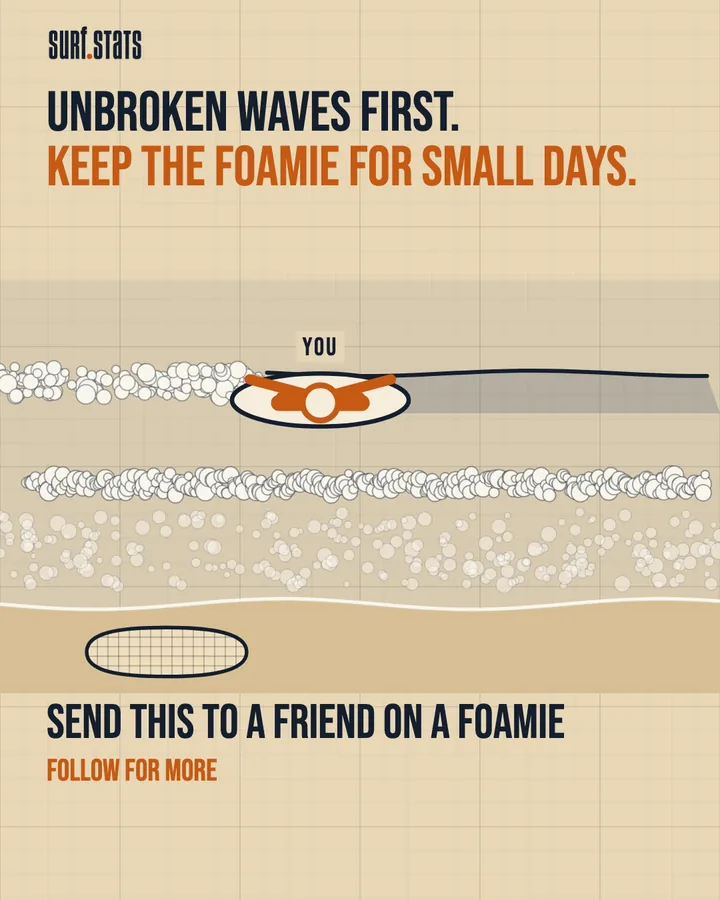
Unbroken waves first. And don't get rid of the foamie when the hard board arrives. Surfline says a soft top is perfect for small waves, and Surfer Today says intermediate and advanced surfers increasingly keep one as a backup board for summer and fun sessions.
Quick checklist
- Standing up isn't the signal. Riding along unbroken waves is.
- Still riding straight to the beach? Keep the foamie.
- First hard board: a funboard or a longboard, not a shortboard.
- Buy for your level and your waves, and tell the shop the truth.
- Used, in good shape: see it in person, check for cracks and dings.
- Cover your head when you fall.
- Keep the foamie for small days.