Stingray sting, jellyfish sting or reef cut? What to do
 Fin Selector: your fins in 1 minute
Shuffle your feet in sandy shallows. A stingray sting goes in hot water, not scalding, and gets checked. A jellyfish sting gets rinsed with seawater, not fresh water, and never pee. A reef cut means going in and cleaning it with soap and fresh water.
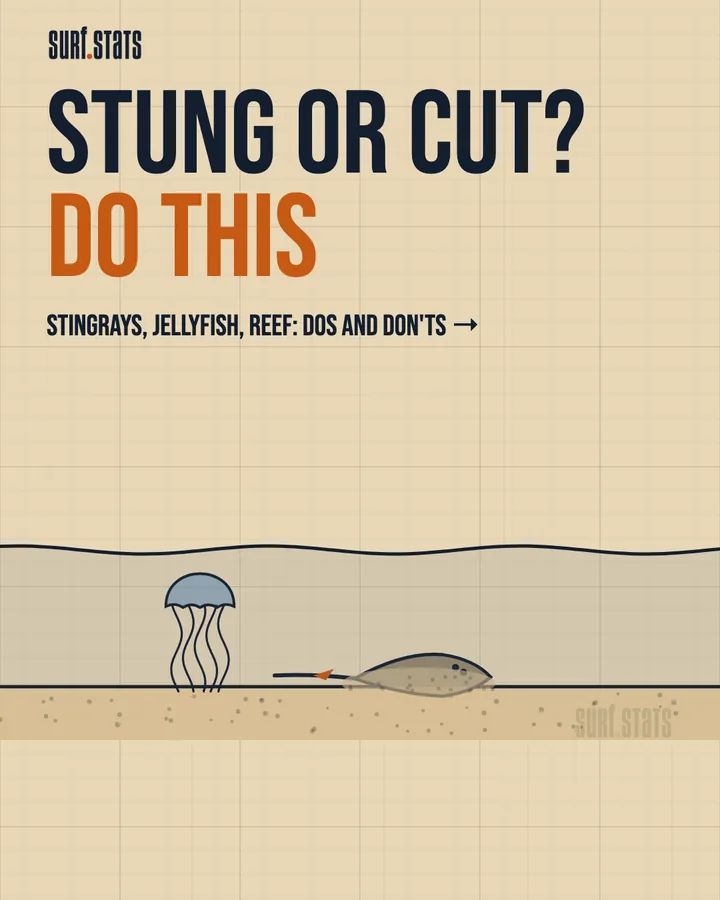
Walking in and paddling out, you can share the water with stingrays and jellyfish, and some spots have rocks and reef. When one of them gets you, the hard part is remembering what to do, because a ray sting, a jellyfish sting and a reef cut each need a different kind of water.
So what do you do for a stingray sting, a jellyfish sting or a reef cut? Below are five dos and don'ts, two that keep it from happening and three for when it does. They come from our stung or cut reel, and each one is backed by at least two independent sources: lifesaving services, government health bodies, hospitals, a diving-medicine non-profit and surf magazines.
1. Walking into sandy shallows?
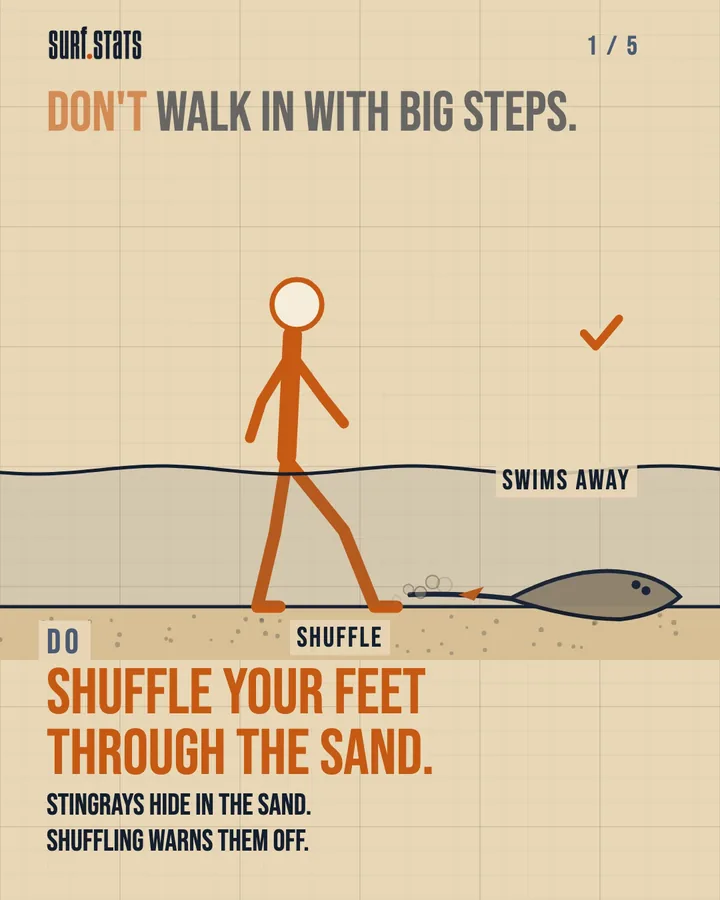
Try this: shuffle your feet through the sand.
Stingrays rest on the bottom in shallow, sandy water, often partly buried, and they can sting when someone steps on them. So don't walk in with big steps, lifting your feet. Slide them along the bottom instead.
Shuffling warns the ray that you're coming, so it has time to get out of the way. California State Parks, Poison Control, Surf Life Saving Australia and the Divers Alert Network all give the same advice.
2. Stung by a stingray?
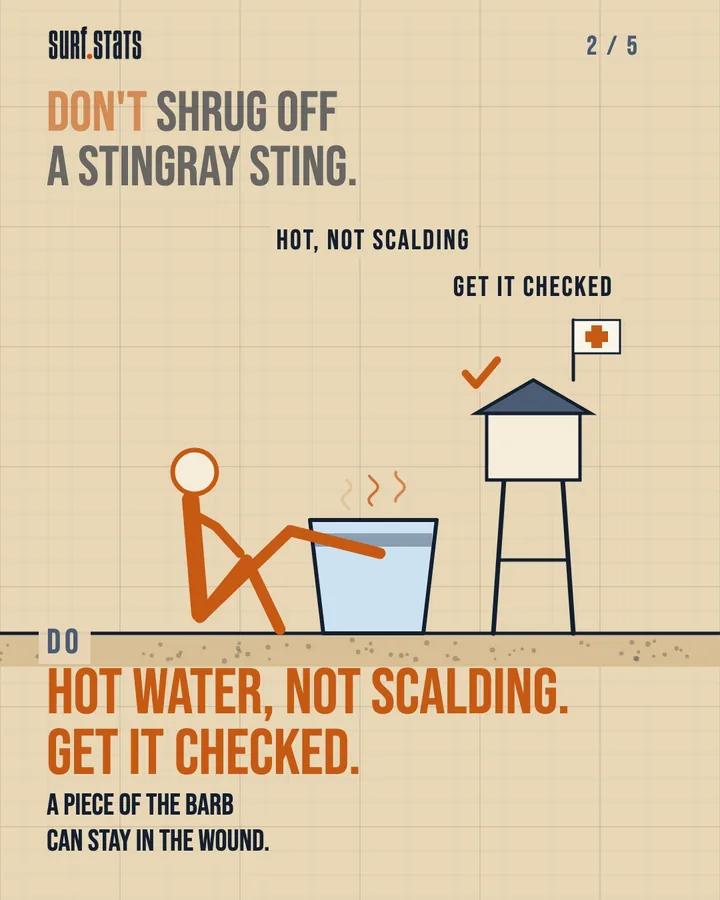
Try this: hot water, not scalding. Get it checked.
Don't shrug off a stingray sting. Soak it in hot water: hot, but not scalding. California State Parks and the Sydney Children's Hospitals Network both warn about burns, so test the water before the sting goes in.
Then get it checked. A piece of the barb can stay in the wound, and getting it out can need a doctor. California State Parks, Surf Life Saving Australia and the NHS all say to get medical help after a stingray sting.
3. Stung by a jellyfish?
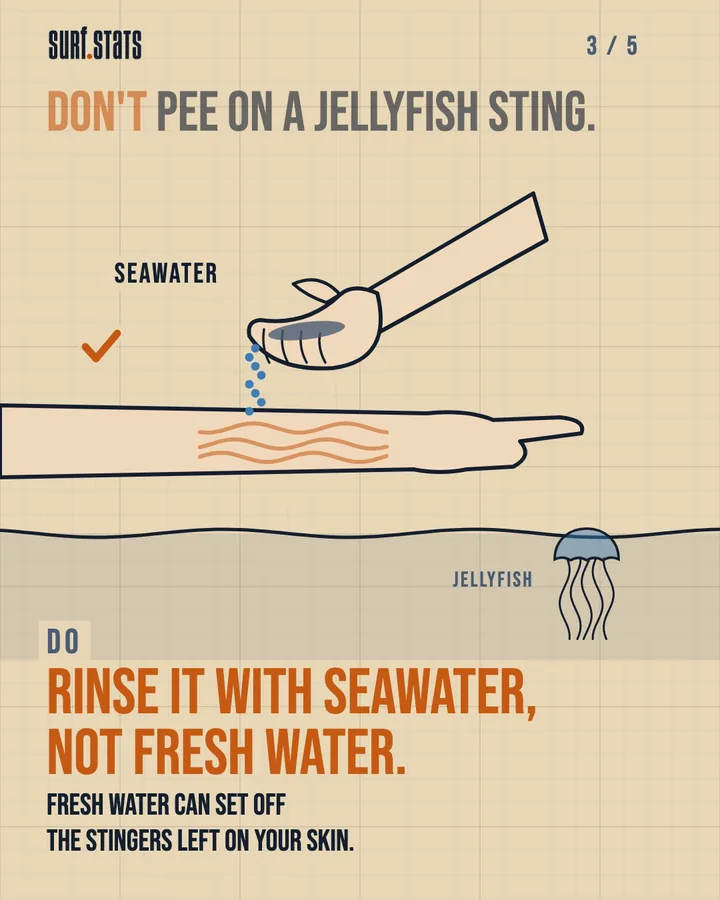
Try this: rinse it with seawater, not fresh water.
Don't pee on a jellyfish sting. Health bodies such as the NHS and Mayo Clinic list it as something not to do. Rinse the sting with seawater instead.
Not fresh water: fresh water can set off the stingers still left on your skin. A few more points from the lifesaving and health bodies:
- Don't rub the sting.
- Don't touch tentacles with bare hands (the NHS, Mayo Clinic and the MSD Manual say so). Wash them off with seawater, or lift them off with tweezers.
4. Paddling out at a rocky spot?
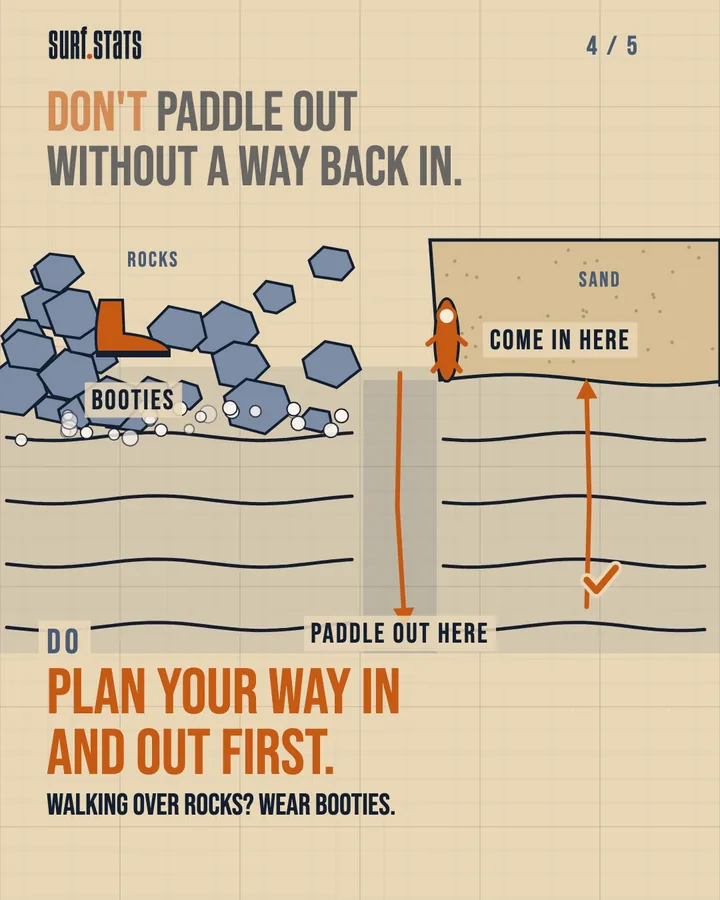
Try this: plan your way in and out first.
Don't paddle out without a way back in. Before you go, work out where you'll get in and where you'll get out. Surf Europe warns that getting out of the water is usually the harder part.
Walking over rocks? Wear booties. The NHS and the Sydney Children's Hospitals Network both say to wear water shoes around rocks.
5. Cut yourself on the reef?
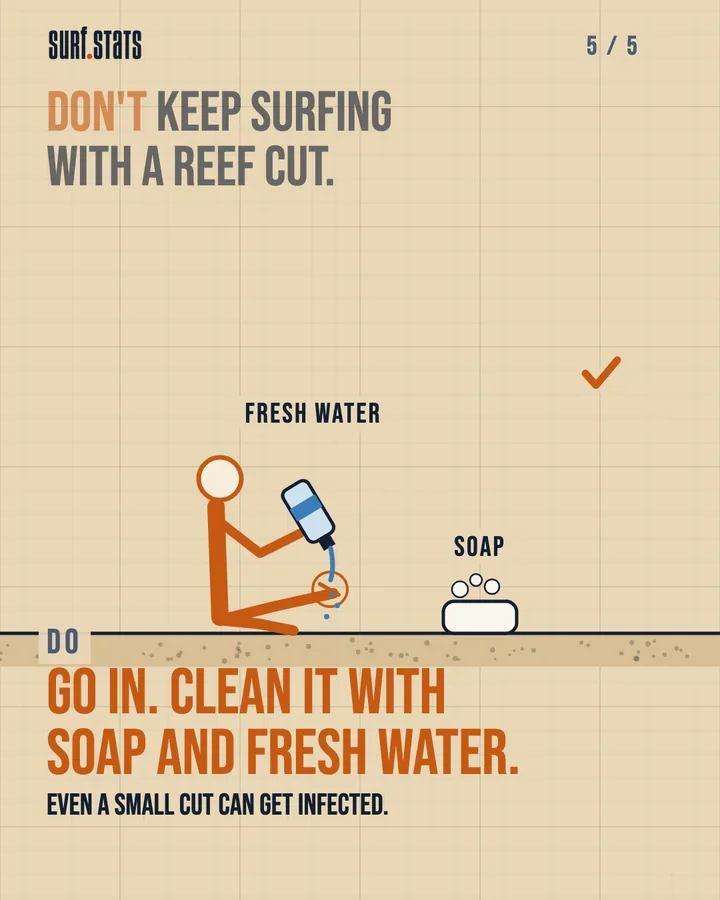
Try this: go in. Clean it with soap and fresh water.
Don't keep surfing with a reef cut. Paddle in and clean it as soon as you can, with soap and fresh water.
Don't brush it off because it's small. Even a small cut can get infected.
Which water goes with which?
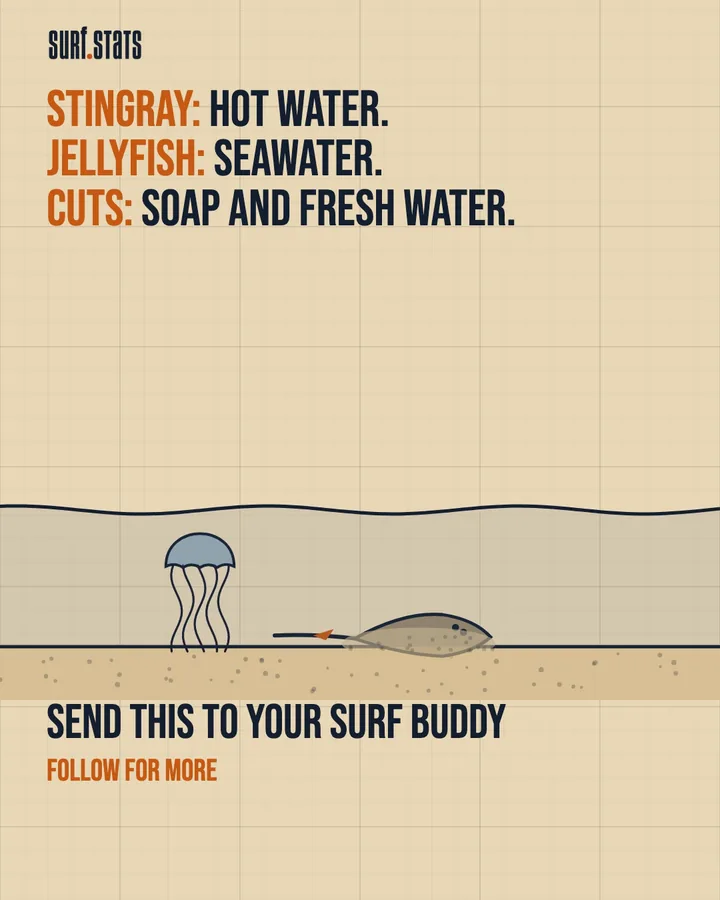
Three problems, three different waters. That's why the reel's end card names which goes with which:
- Stingray: hot water. A soak, hot but not scalding.
- Jellyfish: seawater. A rinse, not fresh water.
- Cuts: soap and fresh water.
For two more ocean safety topics, read how to spot and escape a rip current and how to wipe out safely.
Quick checklist
- Shuffle your feet in sandy shallows.
- Stingray sting: hot water, not scalding, then get it checked.
- Jellyfish sting: seawater rinse. No pee, no fresh water, no rubbing.
- Tropical water: get help fast.
- Rocky spot: plan your way in and out. Booties on the rocks.
- Reef cut: go in, soap and fresh water.