Stretches for a stiff lower back after surfing
 Fin Selector: your fins in 1 minute
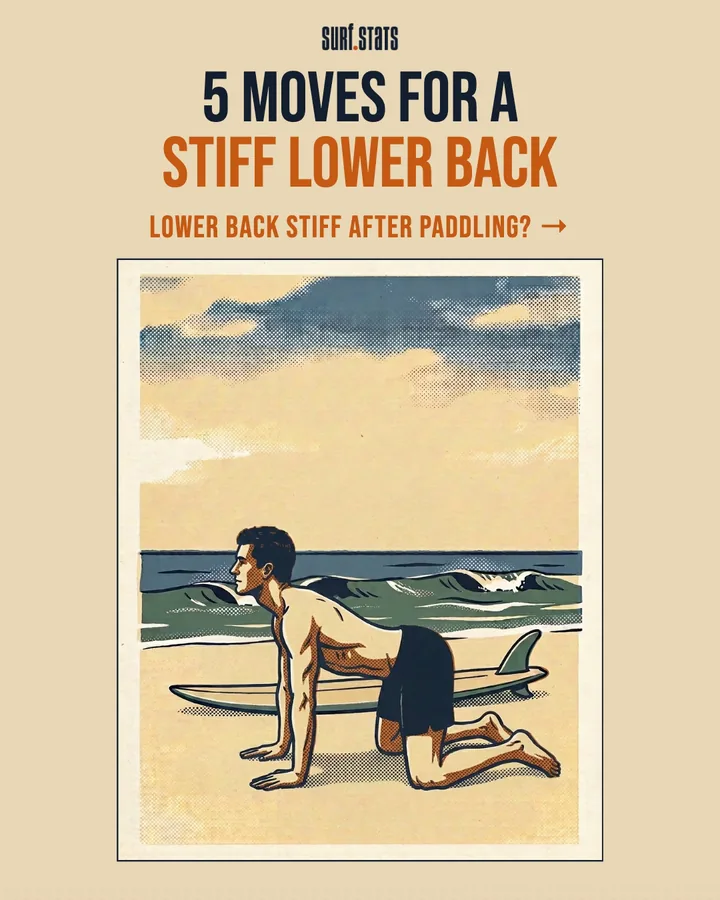
Five gentle moves for everyday lower-back stiffness after paddling: cat-cow, bottom to heels, knee hug, knee rolls and a glute bridge. Go slowly, a couple of times a week, and stop if the pain gets worse. They are not a treatment.
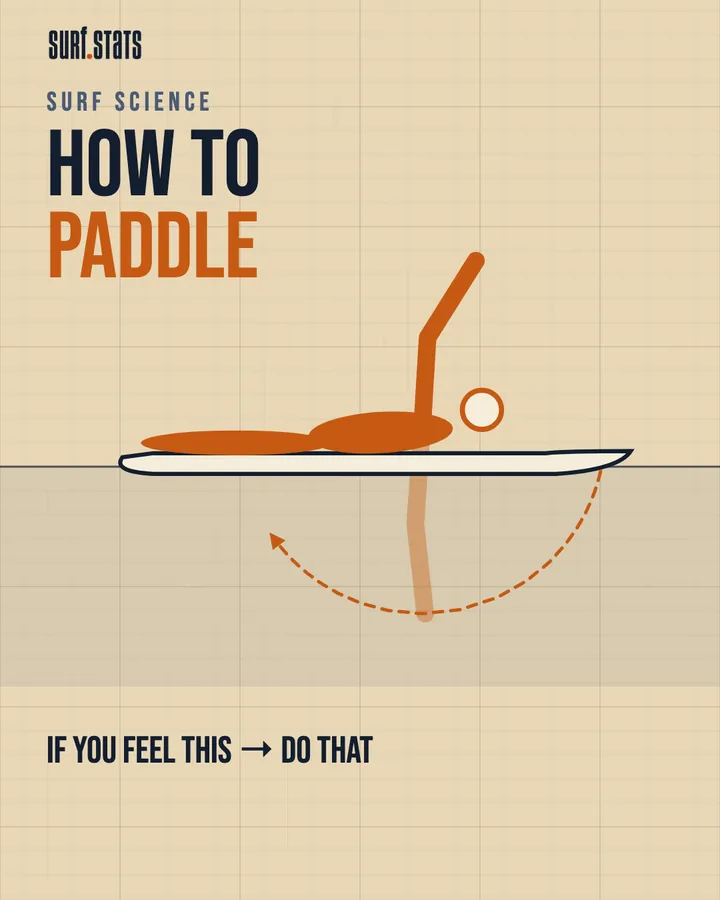
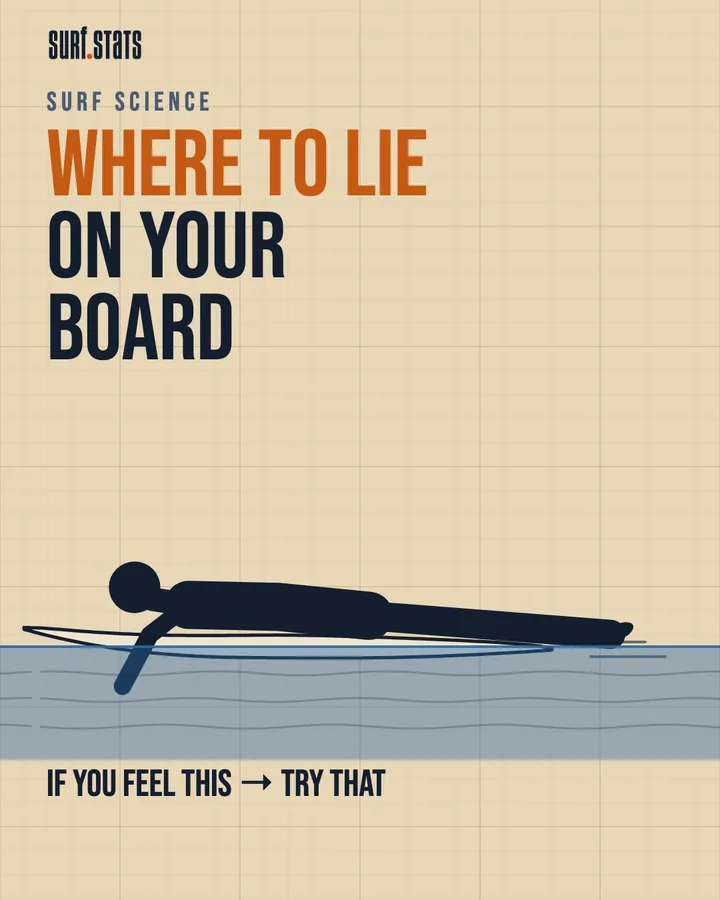
Paddling keeps your lower back arched for a long time. In studies that timed competitive surfers, about half the time in the water went on paddling (more in how to paddle a surfboard and where to lie on a surfboard). Lots of surfers feel it in their lower back, and in injury surveys, paddling is the cause surfers name most often.
Below are five gentle moves physios give for a stiff lower back, from our 5 moves for a stiff lower back reel. They are for everyday stiffness. They are not a treatment.
To be straight about the evidence: no study has tested these five moves in surfers. What they do have: each one is a standard home move on the lower-back pages of at least four independent health publishers, such as Mayo Clinic, Cleveland Clinic, HSS, the AAOS, the NHS and Arthritis UK.
Before you start
Try this: move slowly, a couple of times a week, after a surf or at home.
- Move slowly. Stay in a comfortable range.
- Pain getting worse? Stop.
- Hurt your back, have a back condition, or pain going down a leg? See a physio or doctor first.
The moves go from all fours to lying on your back. Moves 1 to 3 round your lower back, the opposite shape to the paddle (cat-cow takes it both ways). Move 4 twists it gently. Move 5 works the hips.
1. Cat-cow
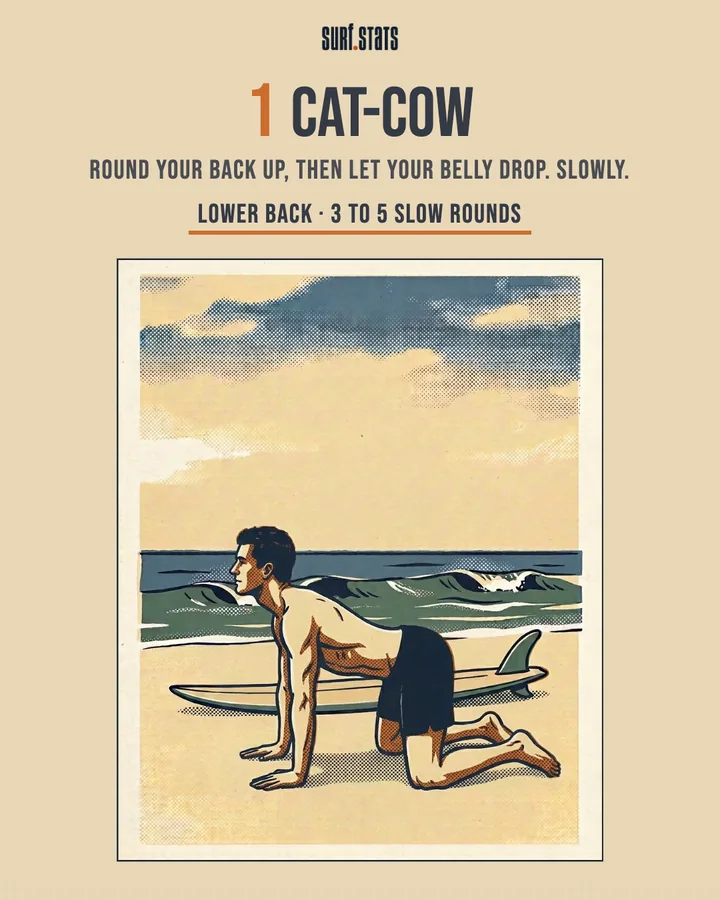
Try this: round your back up, then let your belly drop. Slowly.
Start on your hands and knees. Round your back up toward the sky and let your head drop. Then let your belly sink toward the sand and lift your head. The belly-down half is roughly the shape your back holds when you paddle. The round-up half is the opposite.
- Pause about 5 seconds at each end.
- Do 3 to 5 slow rounds.
Can't kneel? Cleveland Clinic shows a standing version with your hands on a counter.
2. Bottom to heels (child's pose)
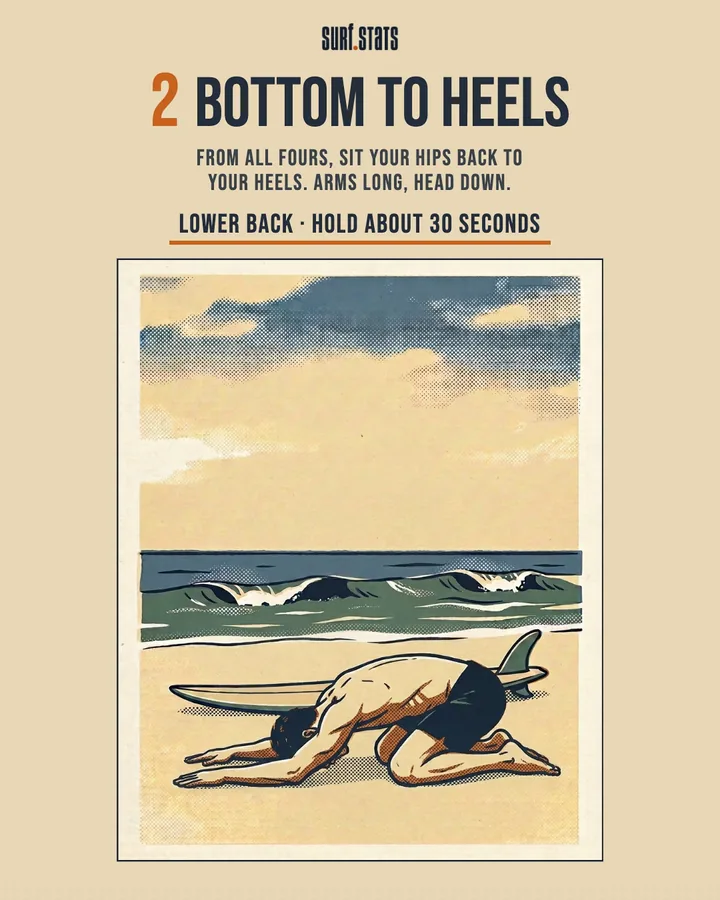
Try this: from all fours, sit your hips back to your heels. Arms long, head down.
Start on all fours with your back flat and your knees about hip-width apart. Slowly ease your bottom back toward your heels, with your arms stretched long in front of you and your head down.
- Hold about 30 seconds.
The NHS calls this a bottom to heels stretch. Other sources call it child's pose.
3. Knee hug
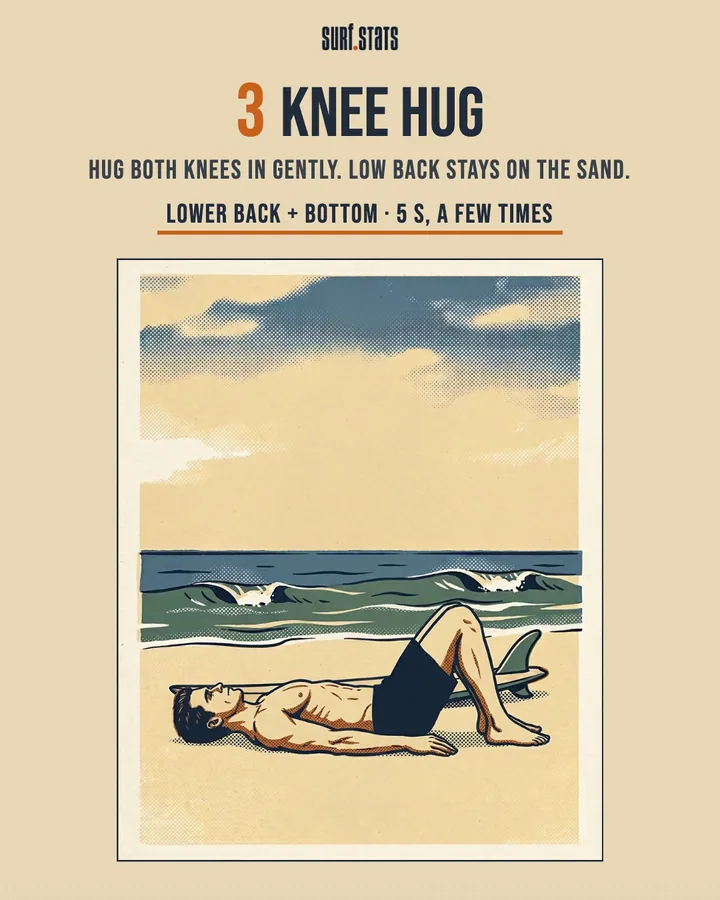
Try this: hug both knees in gently. Low back stays on the sand.
Lie on your back with your knees bent and your feet flat. Bring one knee up, then the other, and hug both in gently toward your chest. Mayo Clinic and the AAOS both add the same cue: brace your belly muscles and press your lower back into the sand. Hugging one knee at a time is the easier version.
- Hold 5 seconds, relax, and do it a few times.
Have osteoporosis? Skip this one. Mayo Clinic says to avoid the knee-to-chest stretch if you have osteoporosis, because it may raise the risk of compression fractures in the bones of your back.
4. Knee rolls
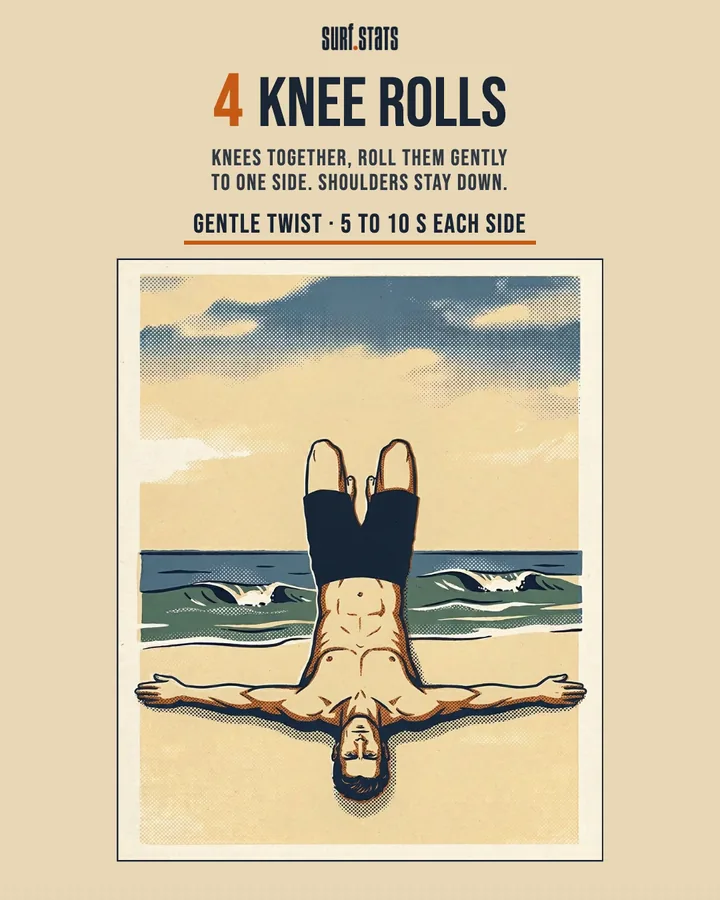
Try this: knees together, roll them gently to one side. Shoulders stay down.
Lie on your back, knees bent and together, feet flat. Keep both shoulders on the sand and slowly let your knees roll to one side. Bring them back to the middle, then roll them to the other side. Cleveland Clinic says what you're after is a gentle stretch on the other side.
- Pause 5 to 10 seconds each side.
- Do a few each side.
5. Glute bridge
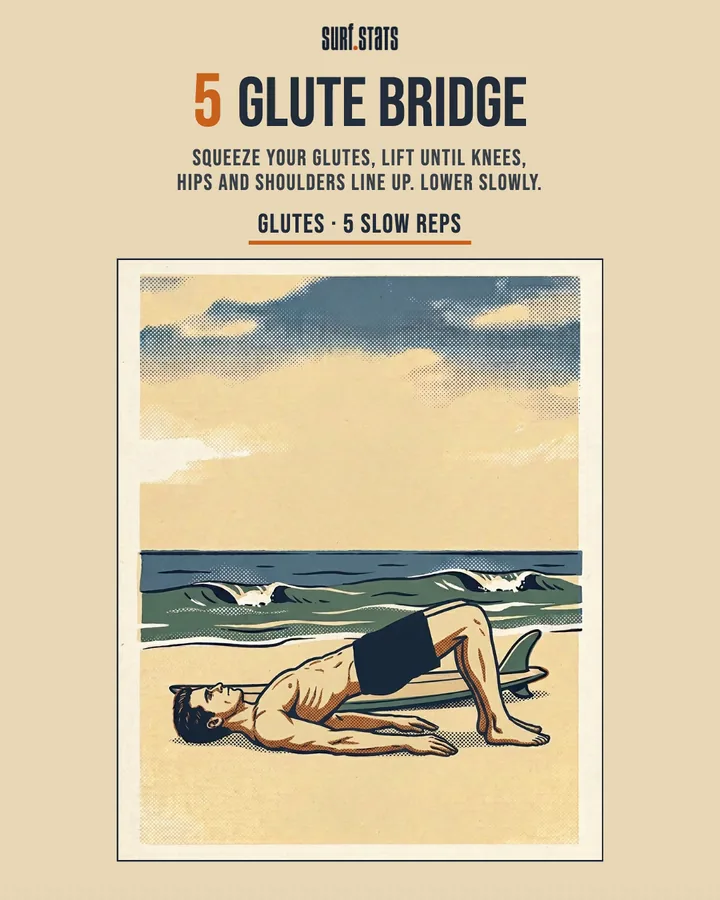
Try this: squeeze your glutes, lift until knees, hips and shoulders line up. Lower slowly.
This one builds strength instead of stretching. It works your glutes and the back of your hips, the muscles that support your lower back.
Lie on your back, knees bent, feet flat. Squeeze your glutes and lift your hips slowly until your knees, hips and shoulders make one straight line. That line is the top: not as high as you can go. Pause there, then lower slowly. The sources hold the top for anything from a second to 15 seconds, so we don't give you a number.
- Do 5 slow reps.
When to get help
- Fever, or pain after a fall or a heavy wipeout: get checked quickly.
- Not better after a few weeks, or spreading down a leg: get it checked.
Rare, but worth knowing: surfer's myelopathy is a spinal cord injury seen almost only in first-time surfers. If your back starts hurting while you paddle and your legs tingle or go weak, get out of the water and get medical help right away. Stretching does not prevent it.
Quick checklist
- Cat-cow, heels, hug, rolls, bridge.
- A couple of times a week, after a surf or at home.
- Slowly, in a comfortable range.
- Pain getting worse: stop.
- Back injury, back condition or pain down a leg: see a physio or doctor first.
- Osteoporosis: skip the knee hug.
Send this to a friend with a stiff back.