Surf paddling technique: fix these three
 Fin Selector: your fins in 1 minute
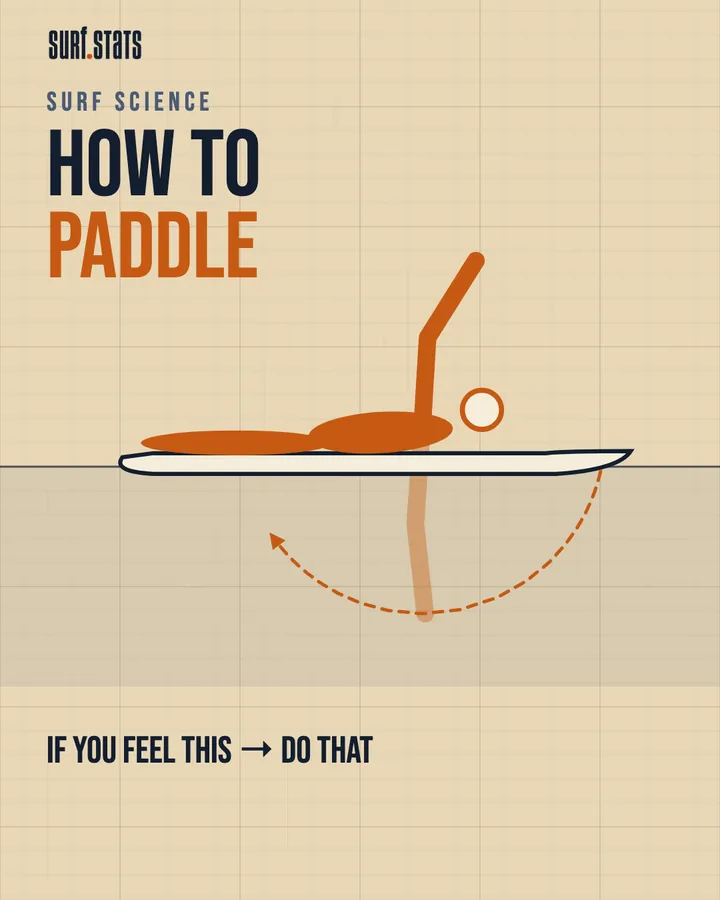
Lying down, paddle one arm, then the other, like a crawl, and save both arms together for the last push into a wave. Look ahead, where you're going. And bend your elbow a little, with the forearm upright in the water.
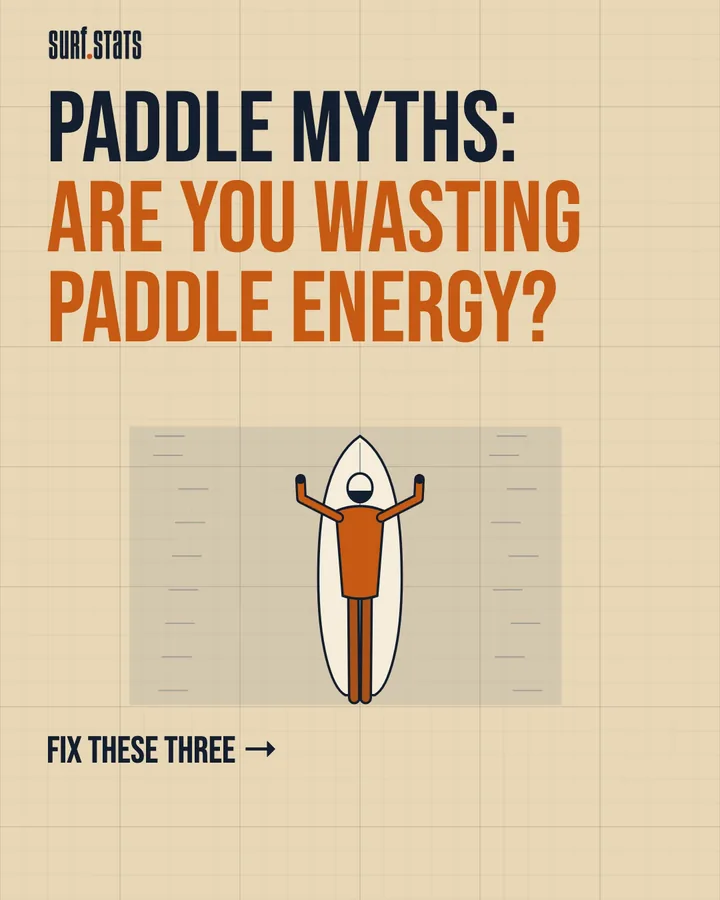
Once you have the basics of paddling, the next step in surf paddling technique is the detail of the stroke itself: what your arms do together, where your eyes go, and the shape of your arm under the water.
This post follows our how to paddle a surfboard guide, so it skips long strokes, splashing, arm width and catching the wave: those are covered there. Here are three more things to check while you paddle out and around the lineup, lying on the board. They come from our paddle myths reel. Only the first one is a myth. The other two are simple fixes to your stroke.
1. Both arms at once, the whole way out?
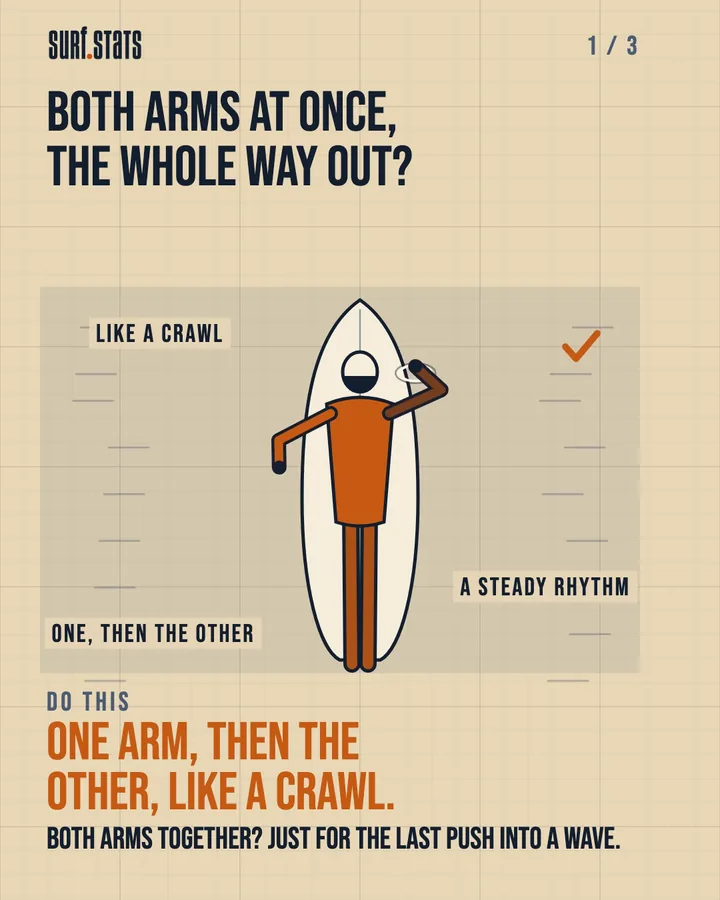
Do this: one arm, then the other, like a crawl.
The myth: both arms together is how you paddle. Lying down, it's one arm, then the other, like a crawl stroke. While one arm pulls back through the water, the other comes forward for the next stroke.
That is how the lifesaving bodies teach board paddling lying down. Surf Life Saving Australia compares it to the arm stroke in freestyle swimming, and Surf Life Saving New Zealand describes it as paddling on your stomach with alternate arms. Surfline's Nick Carroll suggests borrowing from the freestyle swimming stroke when you paddle, and a Brazilian paper on teaching surfing describes the stroke the same way: arms alternating.
So where does the both-arms habit come from? It is a real stroke, just for a different position. Surf Life Saving New Zealand lists using both arms at the same time as the way to paddle a lifesaving board while kneeling on it. Lying down, Surfer Today calls stroking both arms at once a common beginner mistake: a technique from surfing's early days that isn't the fastest way to get your board moving.
Both arms together? Just for the last push into a wave. Surfline's learn-to-surf guide says that when you are about to catch a wave, pulling with both arms at once might give you the extra push you need. For the rest of the paddle, keep the arms taking turns.
2. Eyes on your board?
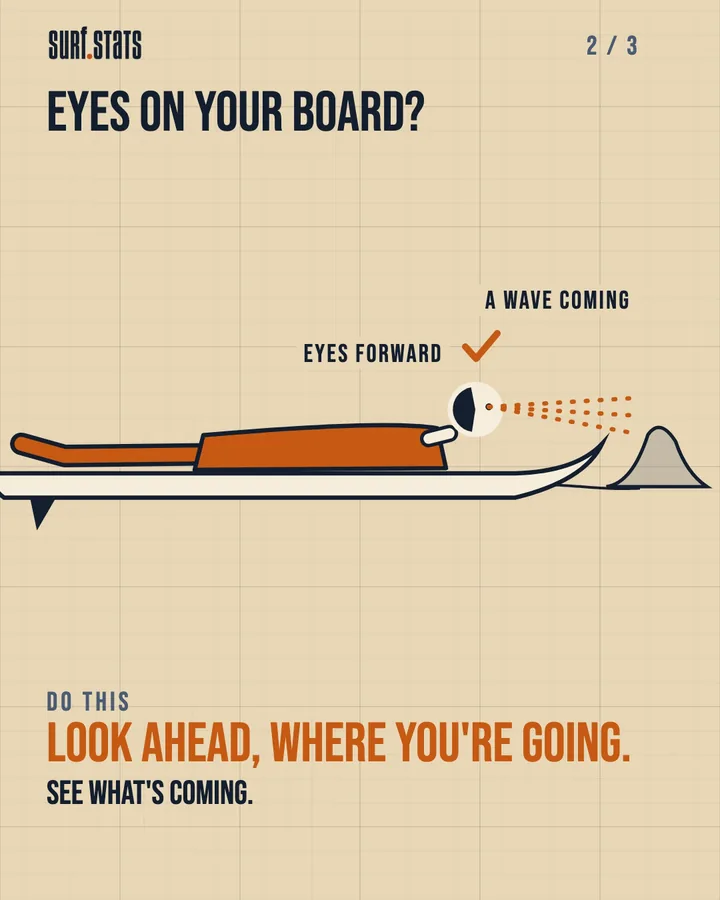
Do this: look ahead, where you're going.
Eyes forward, not down at the board. See what's coming.
Surfer Today's list of common surfing mistakes includes looking at your board, and that covers paddling too: eyes forward. Surf Life Saving Australia and the Brazilian paper both have you face forward while you paddle. Surfline's learn-to-surf guide gives the reason: so you stay aware of everything going on around you.
This one is about seeing, not about saving energy. The point is to see what's coming, not the deck.
How high to hold your head is a separate question, and coaches don't agree on it. This card is only about where your eyes point.
3. Pulling with a straight arm?
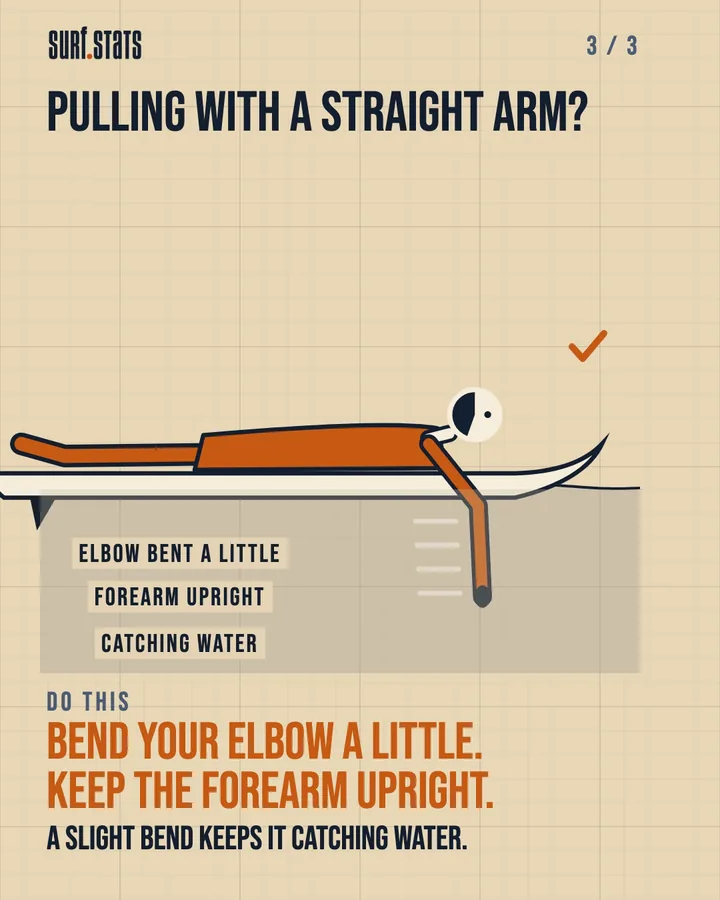
Do this: bend your elbow a little. Keep the forearm upright.
Bend your elbow a little, and keep your forearm upright in the water. A slight bend keeps your hand and forearm catching water.
Nick Carroll, in Surfline's paddling series, says a slightly flexed elbow keeps the hand and forearm catching water, without tipping you off to one side. In another part of the series he tells you to flex the elbow as you pull the hand and arm back.
In The Inertia's breakdown of Kelly Slater's stroke, surf-paddling expert Rob Case makes the same point about the forearm: when the hand and forearm are vertical, they hold on to the water and push you forward.
This is about the shape of your arm during the pull. Getting your forearm into the water in the first place, fingertips first, is its own fix in the beginner guide linked above.
One arm at a time. Eyes ahead. Elbow bent.
That's the whole stroke check in one line. Save this for your next session.
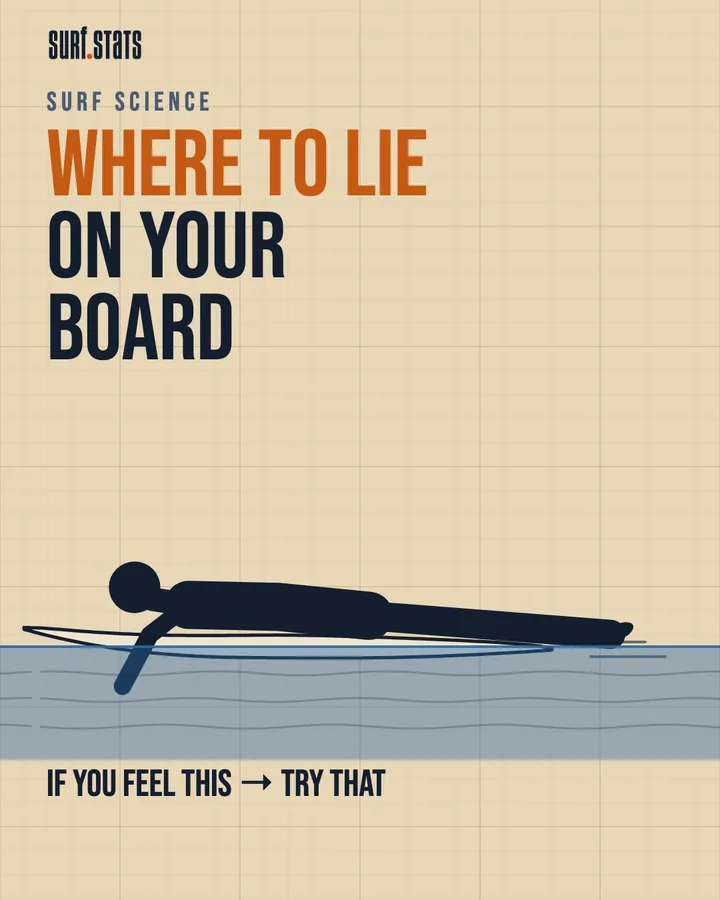
Where you lie on the board is its own topic, covered in where to lie on a surfboard.
Quick checklist
- Lying down: one arm, then the other, like a crawl.
- Both arms together only for the last push into a wave.
- Eyes forward, not down at the board.
- Elbow bent a little, forearm upright in the water.