Surfboard tail shapes
 Fin Selector: your fins in 1 minute
Corners let the water go and curves hold it longer. A squash is the everyday shortboard tail, a square pivots in weak waves, a round gives smooth turns on open faces, a pin holds in big surf, and a swallow adds speed in small waves with two points for hold.
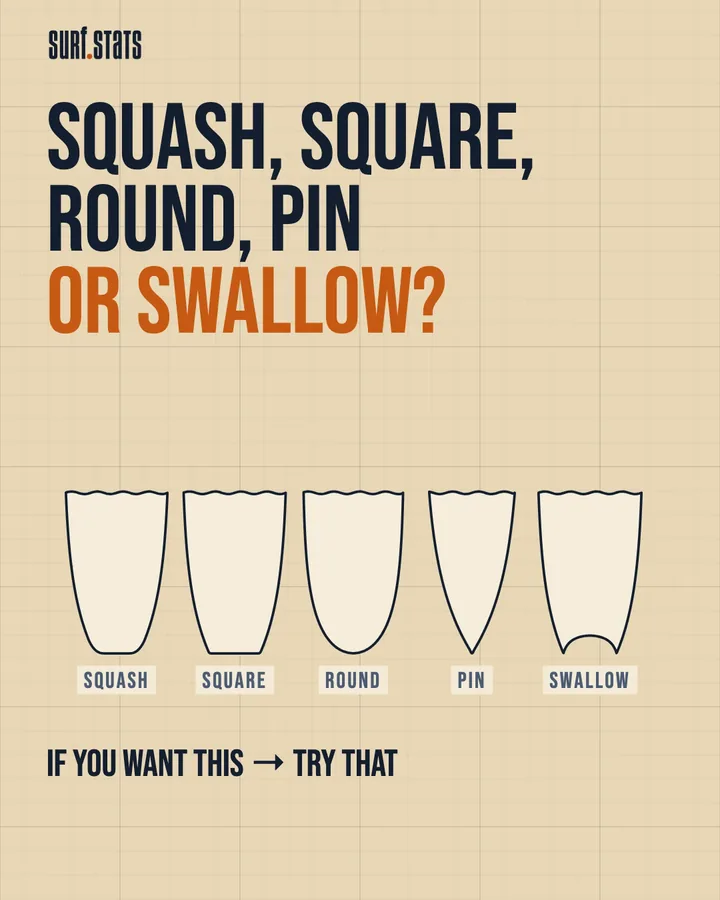
Look at the back end of any surfboard from above and you will see one of a handful of outlines. The five basic ones are the squash, the square, the round, the pin and the swallow. Each one changes how the board feels, and it all comes down to one idea: corners let the water go, curves hold it longer.
Below is one tail shape for each thing you might want from your board. Think of it as "if you want this, try that". It comes from our surfboard tail shapes reel, checked twice against shapers, a board maker, surf magazines and a surf education site. Where the sources disagree, we say so.
This post is only about the outline of the tail. How wide or narrow the tail is overall, plus volume and rocker, is covered in how to choose a surfboard.
1. Want one tail for everyday waves? Try a squash
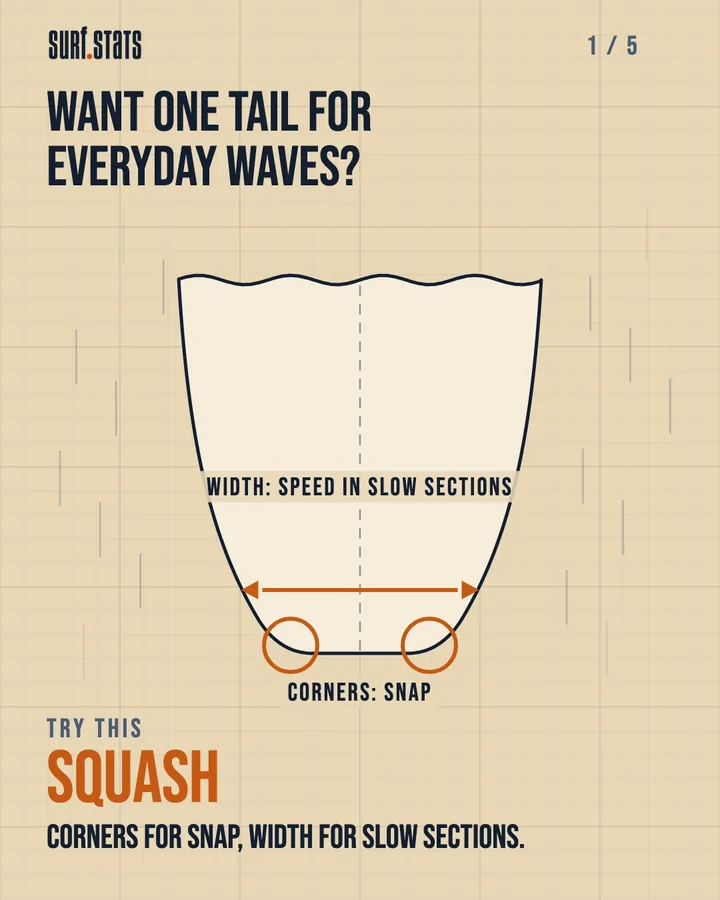
Try this: squash. Corners for snap, width for slow sections.
The squash is the common everyday shortboard tail, made for small to medium waves.
It gives you a bit of both worlds:
- The corners give it snap. They let the water break away, so the board feels loose and responsive in sharper turns.
- The width keeps you moving. The extra area helps you plane and keep your speed through slow sections.
Surfer Today sums it up as a mix of stability and easy turning.
2. Want quick pivots in weak waves? Try a square
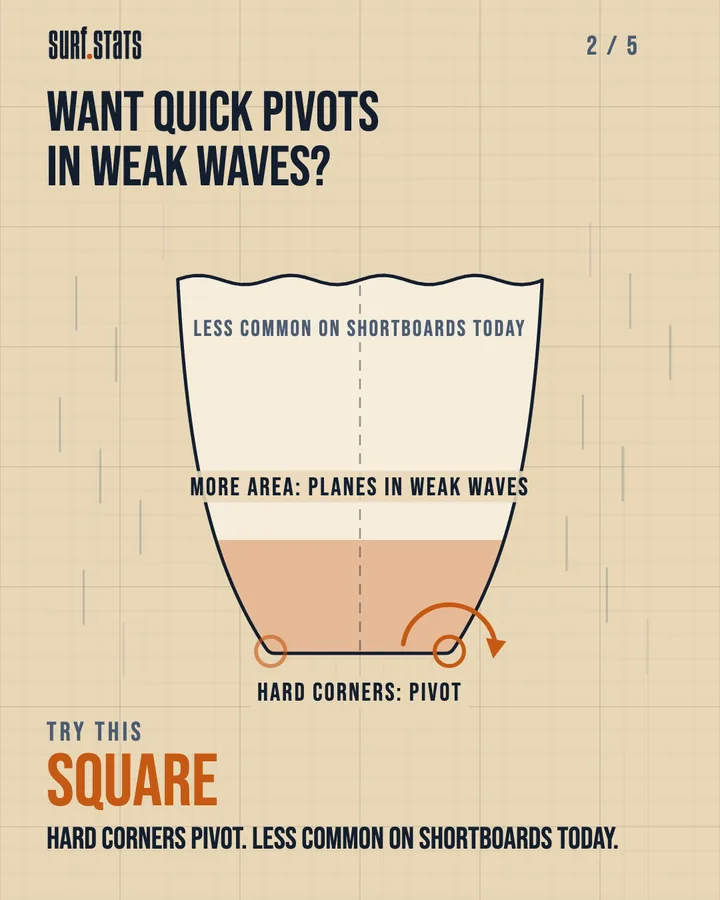
Try this: square. Hard corners pivot. Less common on shortboards today.
A square tail has hard corners, and the board pivots on them when you turn. That makes for quick, short, tight turns.
The square end also leaves extra tail area, and that area planes through weak, mushy sections of the wave.
On shortboards it is less common today: the squash took over. As The Inertia puts it, the squash does everything the square does, and more.
3. Want smooth turns on bigger, open faces? Try a round
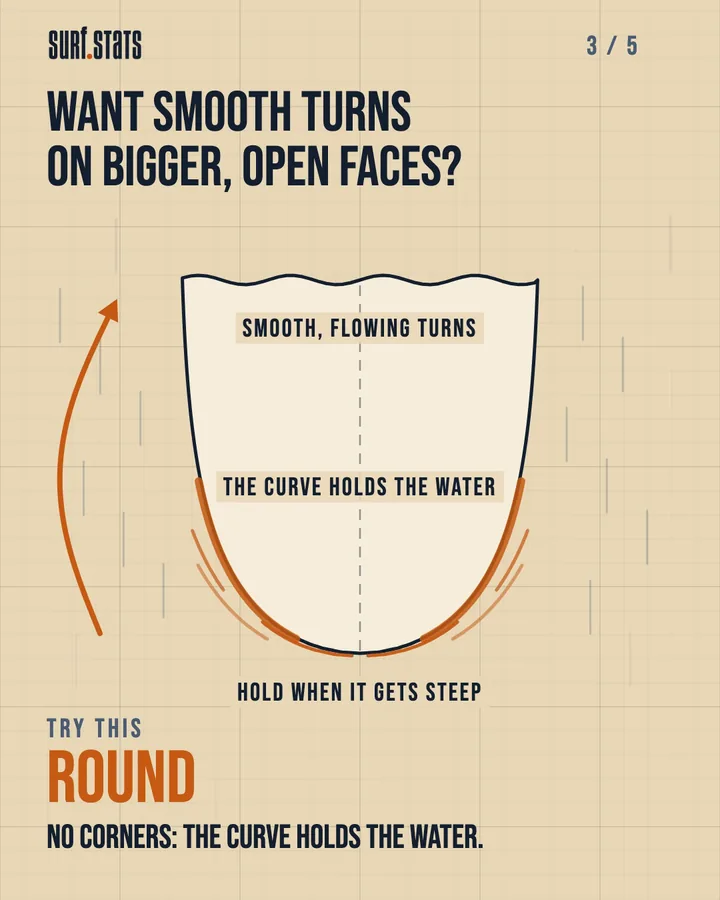
Try this: round. No corners: the curve holds the water.
A round tail has no corners at all. With nowhere for the water to break away, the curve holds it longer. You get smooth, flowing turns, and hold when the wave gets steep and hollow.
It is a good pick when the waves get a bit bigger and the face is open.
One naming trap: some sources (Lost Surfboards and Unisurfity) lump the round in with the round pin, while shaper Rusty Preisendorfer and Brazilian shaper Henry Lelot treat them as two different tails. In this post, a round tail means a curve with no point.
4. Want hold in big, powerful waves? Try a pin
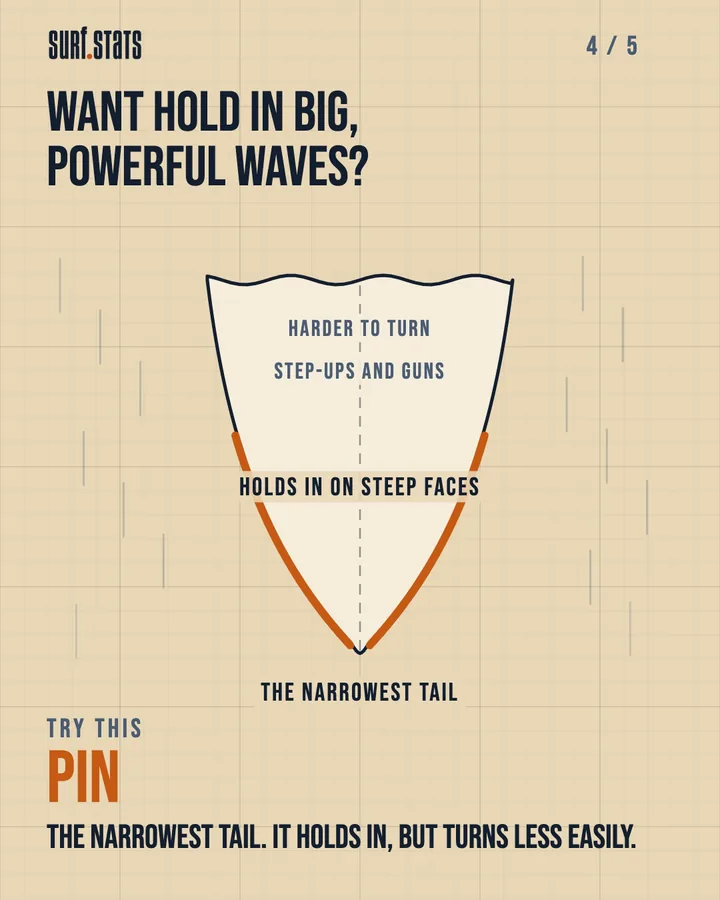
Try this: pin. The narrowest tail. It holds in, but turns less easily.
The pin has the narrowest tail of all the shapes and comes to a point. It holds in on steep faces at high speed, which is what you want when waves are big and powerful.
The cost:
- It is harder to turn. You give up maneuverability for control.
- It is not for small waves.
That is why you'll find pins on step-up boards and guns, the boards made for bigger surf.
5. Want speed in small waves, plus hold? Try a swallow
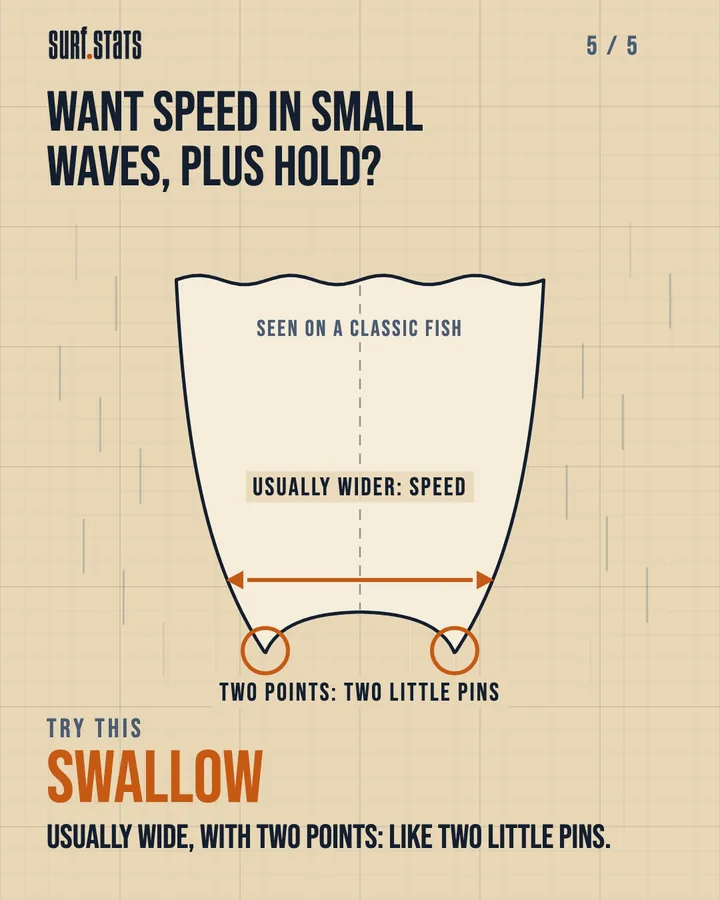
Try this: swallow. Usually wide, with two points: like two little pins.
A swallow has a notch cut in the middle, which leaves two points. It is usually a wider tail, and that width gives you speed in small waves.
The two points are the other half of the story. Each one works like a small pin tail, so together they give the board hold and grip.
It's the tail you see on a classic fish, though not every swallow is wide or a fish. Surfer Today says it is also popular on high-performance shortboards. And whether a swallow turns more easily or less easily is something the sources disagree on, so we leave that out.
Which tail for your next board?
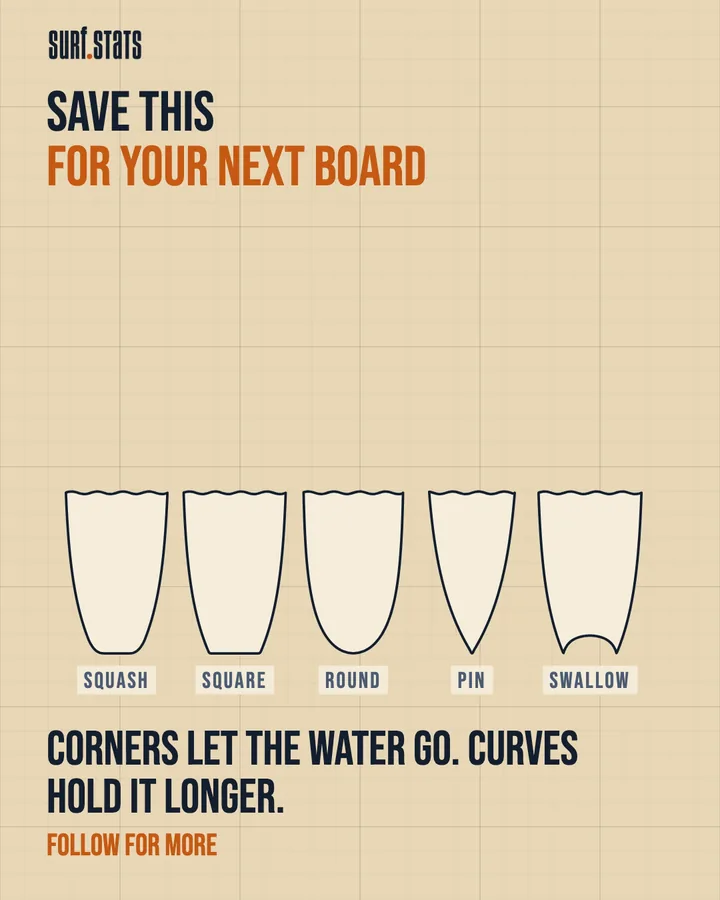
Save this for your next board. If you remember one line, make it this: corners let the water go, curves hold it longer. More corner means a looser, snappier tail. More curve means smoother turns and more hold. Start from the waves you surf most and the feeling you want, then pick the tail that matches.
Quick checklist
- Everyday small to medium waves: squash.
- Quick pivots in weak, mushy waves: square.
- Smooth turns on bigger, open faces: round.
- Hold in big, powerful waves: pin.
- Speed in small waves, plus hold: swallow.
- Corners release the water. Curves hold it.