What is surfer's myelopathy?
 Fin Selector: your fins in 1 minute
Surfer's myelopathy is a rare injury to the spinal cord, seen mainly in people who are new to surfing. If your back starts to hurt while you surf, stop and get out of the water. If your legs then tingle, go numb or feel weak, get emergency help now.
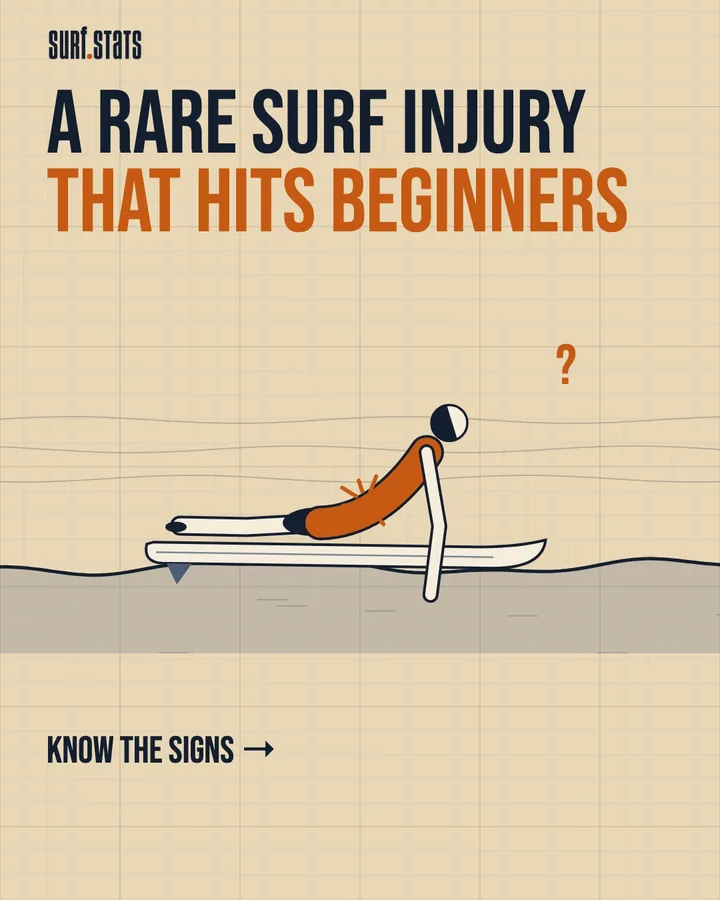
Surfer's myelopathy is a rare injury to the spinal cord. Doctors see it mainly in people who are new to surfing, often in their first lessons. It isn't caused by a crash or a blow to the body: doctors call it non-traumatic.
It's rare. But it's worth knowing the signs before you start, and what to do if you notice them. Below are the warning signs from our surfer's myelopathy reel, and what to do about each. Each line rests on more than one independent source: case reports and reviews in medical journals, doctors at a hospital in Hawaii, and the safety tips of the Surfer's Myelopathy Foundation as quoted in medical journals.
This is general information, not a diagnosis. It can't tell you what's wrong with your back. A doctor can.
1. New to surfing, and your back starts to hurt?
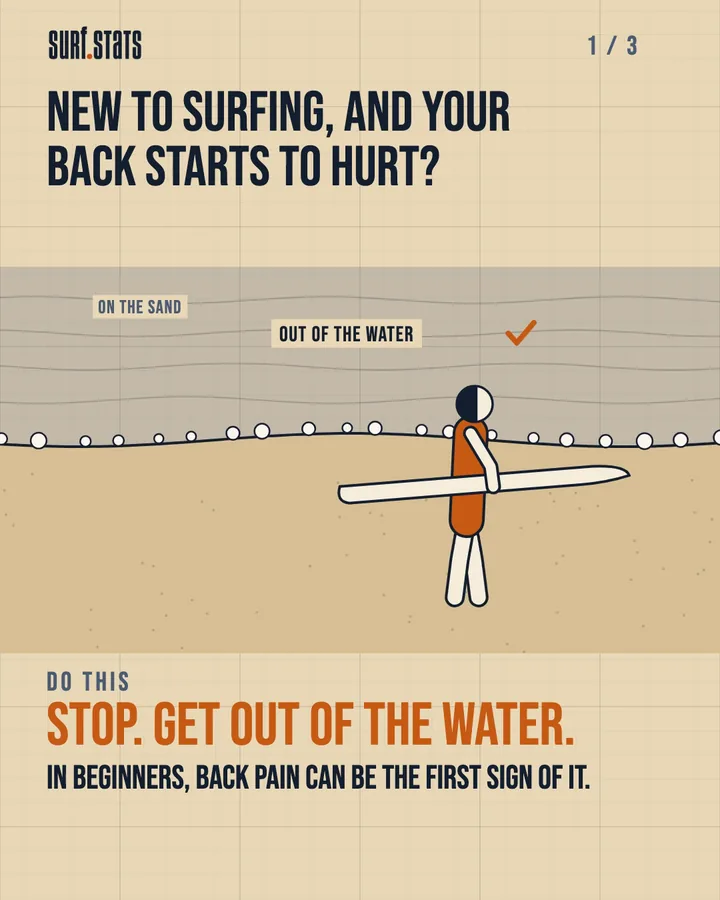
Try this: stop. Get out of the water.
In beginners, back pain can be the first sign of surfer's myelopathy. In the cases doctors describe, it usually starts with back pain while surfing, often in the lower back.
That's "can be", not "is". It's rare, so back pain doesn't mean you have it. But it's the sign to act on. A review in the Hawaii Journal of Medicine and Public Health says people surfing for the first time should stop as soon as their back starts to hurt. The Surfer's Myelopathy Foundation's tips point the same way: leave the water and get checked by a doctor if you have pain, tingling or weakness.
2. Back pain, then legs tingling, numb or weak?
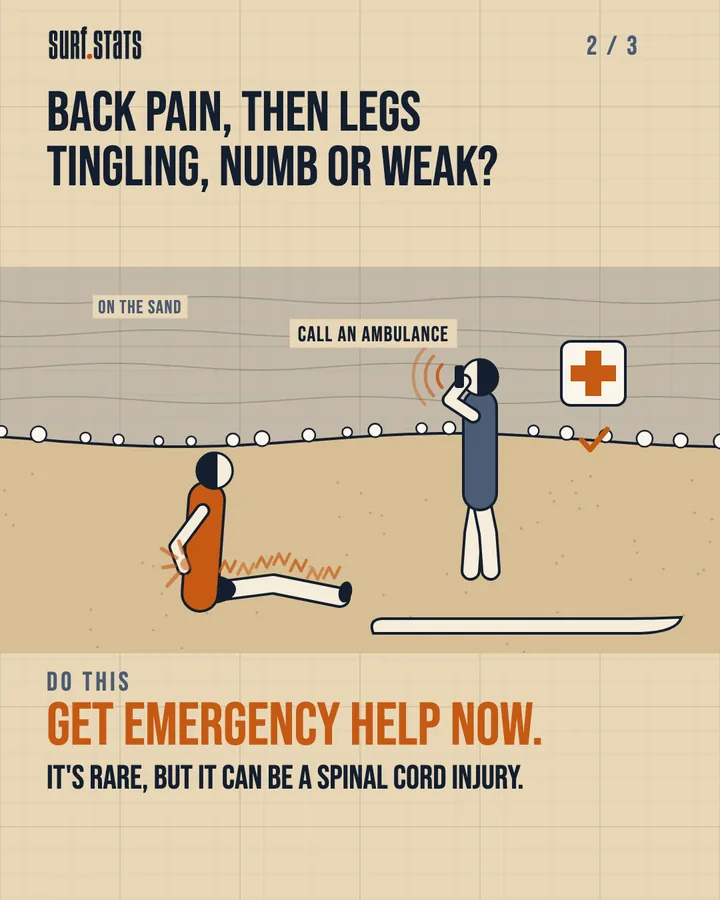
Try this: get emergency help now. Call an ambulance.
It's rare, but this can be a spinal cord injury, and fast care matters.
In the cases doctors describe, the back pain comes first. Then the legs change: they can tingle, go numb or get weak. That's why the reel ties the leg signs to the back pain. It's the pattern in the medical reports.
When that happens, don't wait to see if it passes:
- The Queen's Medical Center in Honolulu says to get medical care right away by calling emergency services.
- A Brazilian medical guideline calls it serious and says it needs urgent care.
- Doctors who write about it stress recognizing the signs early, so the injury is caught before it gets worse.
What happens at the hospital is for the doctors there to decide. Your job is to get there fast.
3. Pain eased, so you paddle back out?
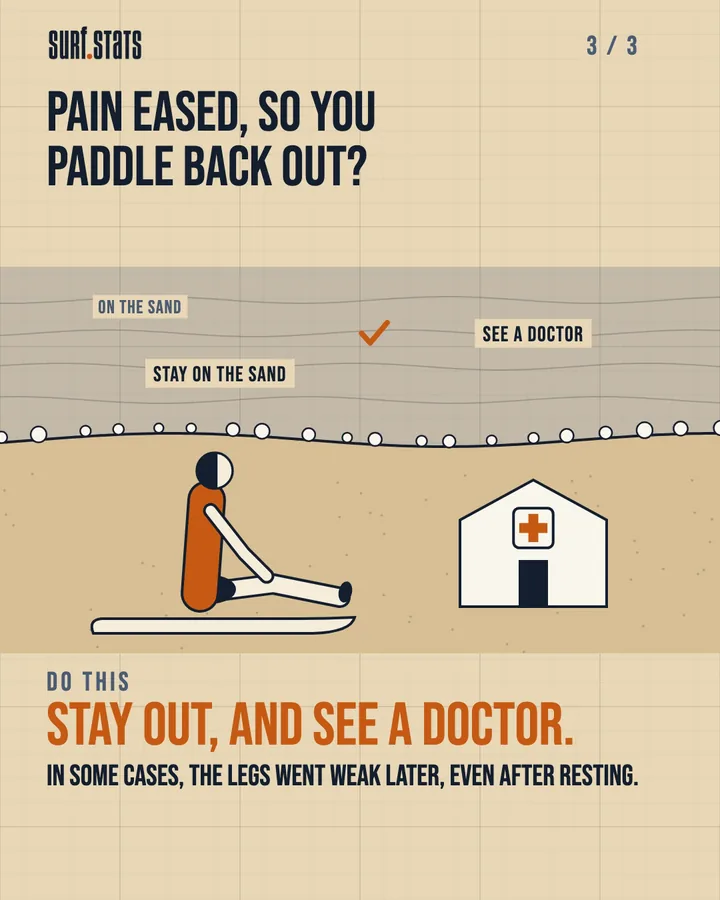
Try this: stay out of the water, and see a doctor.
If the pain eases, it can feel like the problem went away. But in some of the cases doctors describe, the legs went weak later, even after resting.
So don't paddle back out to test it. Stay out, and get checked by a doctor. The Hawaii review calls lower back pain in a new surfer a possible warning sign, a reason to stop, and the foundation's tips say to get checked by a doctor. And if your legs start to tingle, go numb or feel weak, go back to the section above: get emergency help now.
Why does it happen?
Doctors don't know for sure. Their leading idea is the position beginners use: lying belly-down on the board with the back arched for a long time.
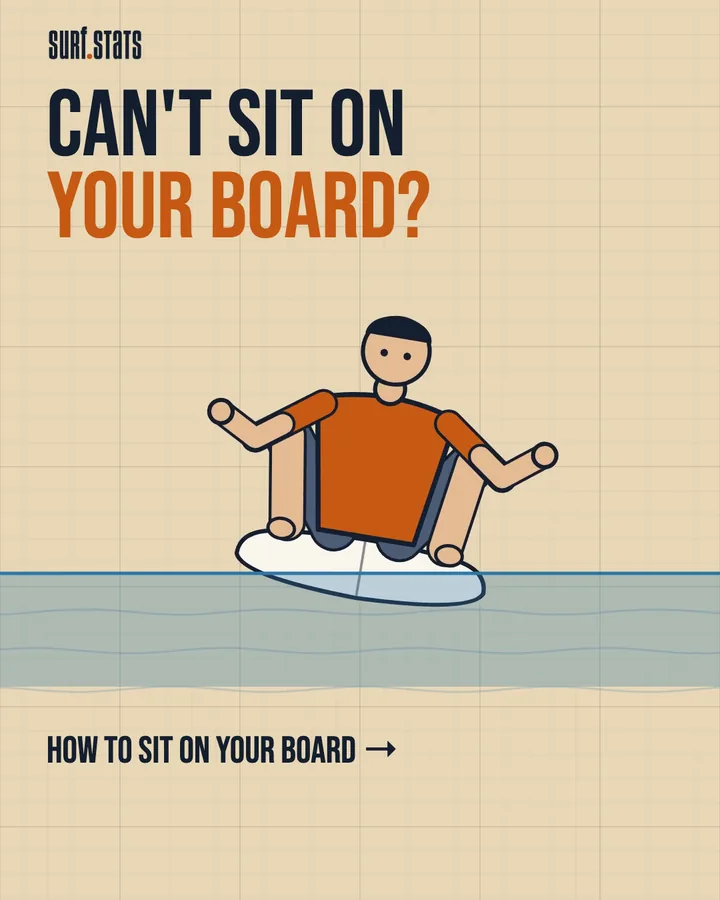
Doctors who study it suggest sitting up on your board between waves, instead of lying there arched. It's a suggestion from the people who see these cases, not a guarantee. If sitting on a board still feels shaky, here's how to sit on a surfboard.
Back hurts? Get out. Then legs tingle? Get help now.
That's the whole reel in short. Back pain while you surf: stop and get out of the water. Back pain, then tingling, numb or weak legs: get emergency help now. Pain eased: stay out and see a doctor.
Doctors who have written about it say new surfers and their instructors should know the early signs. So send this to a friend who's starting to surf. And if they're getting ready for their first time, our first time surfing tips cover the rest.
Quick checklist
- It's rare, but know the signs before your first lessons.
- Back starts to hurt while you surf: stop and get out of the water.
- Back pain, then legs tingling, numb or weak: get emergency help now. Call an ambulance.
- Pain eased? Stay out of the water and see a doctor.
- Waiting for waves: doctors who study it suggest sitting up on your board.