Does surfskating help your surfing?
 Fin Selector: your fins in 1 minute
Yes, for some things. A surfskate trains carving turn after turn, opening your hips and shoulders into the turn, and extra turns when there are no waves. It won't train your paddling or teach you to read waves: that takes time in the water.
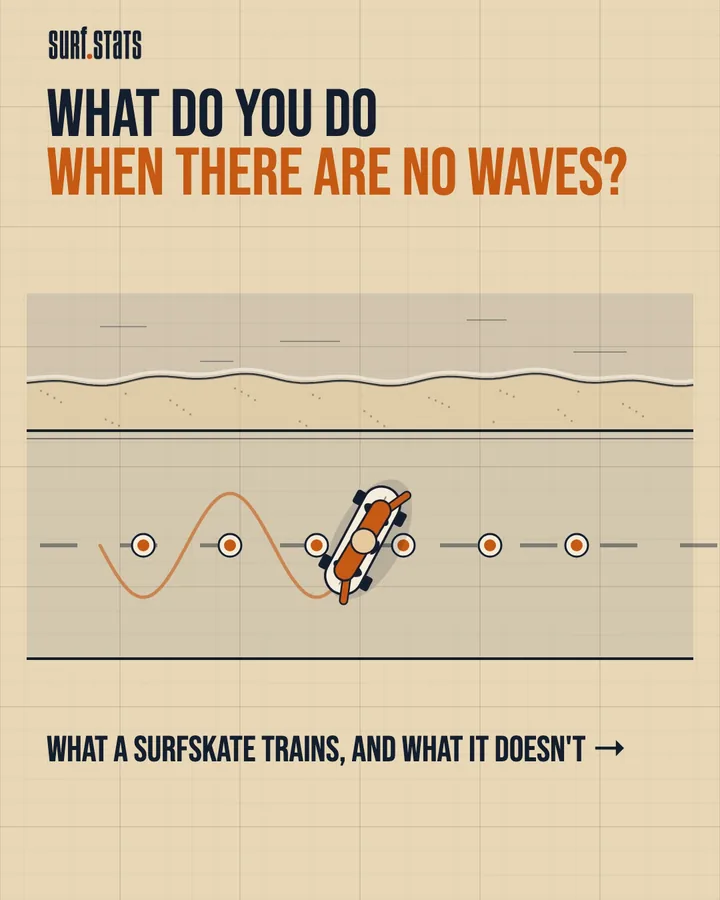
No waves for days, and you want to keep improving. Maybe a surfskate: a skateboard with a swivelling truck, built to move more like a surfboard than a regular skateboard does. So does surfskating help surfing? For some things, yes. For others, no amount of street time will do it.
Below are five situations: three where surfskate training helps your surfing, and two where it won't. They come from our surfskate reel, and each point has at least two independent sources behind it: surf and lifestyle magazines, a surf coaching programme and two peer-reviewed papers. Some of the magazine pieces talk about skateboarding in general, not surfskates only.
1. Can't link your turns?
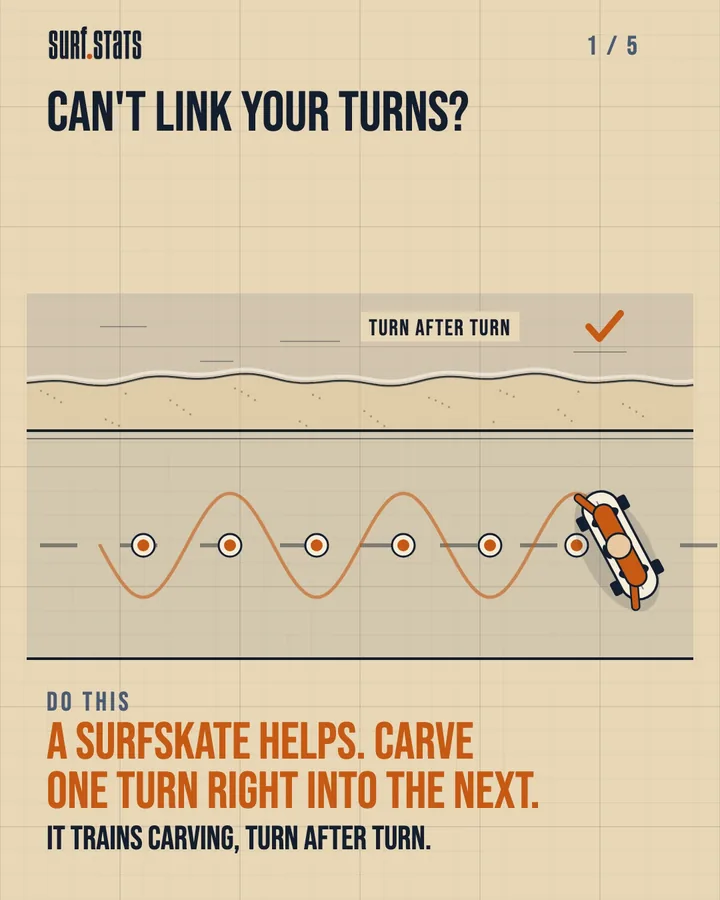
A surfskate helps. Try this: carve one turn right into the next.
It trains carving, turn after turn, and it lets you repeat the move as often as you like.
- OMBE, a surf coaching programme, says a surfskate suits learning to carve, turn, and compress and extend on the rail better than a regular skateboard does. It suggests setting up cones and weaving between them, so each turn is a longer one, not a quick flick, and you have to compress and extend again and again.
- Stab's advice: keep doing cutbacks on the skate until they're comfortable, so the move goes into muscle memory.
- The Inertia says skating lets you test carves you haven't tried and imagine lines you haven't drawn yet.
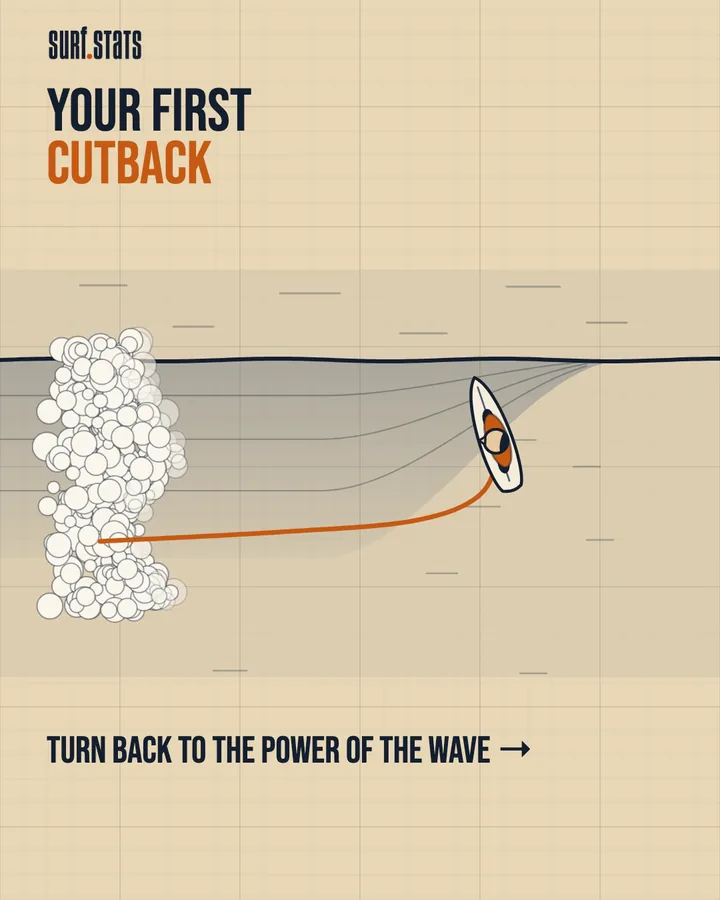
If you're working on the turn itself in the water, read how to do a cutback.
2. Turns stiff, hips stuck?
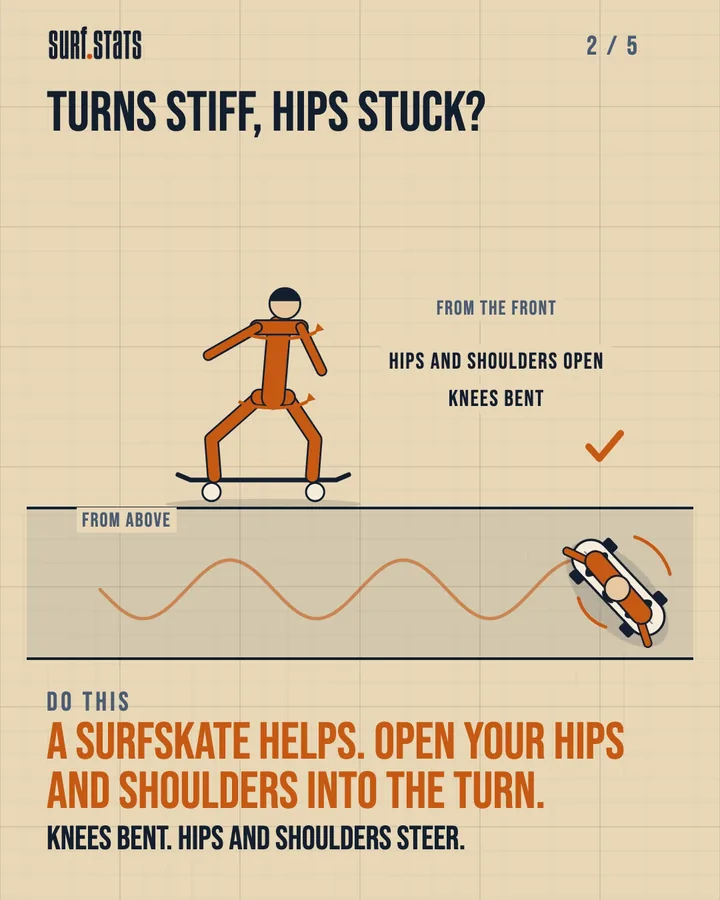
A surfskate helps. Try this: open your hips and shoulders into the turn.
Keep your knees bent. Your hips and shoulders steer.
Stab calls opening up your hips and shoulders essential when you draw lines on a wave, because they decide your turns. OMBE describes the typical beginner on a surfskate: the upper body moves all over, the lower body hardly moves, and the board gets no signal to turn. On a surfskate you can work on letting your hips go and your knees bend, the same thing Surfer Today says the goal is when you practise turning on a skateboard.
The sources don't agree on which part of the body starts the turn, so we don't name an order. Just let both hips and shoulders turn.
One limit, from Stab: turning a surfboard takes much more force than turning a surfskate, and if you lean that hard on a skate the wheels slide out. The skate gives you a good model of the move, not the full feel of it.
3. No waves for days?
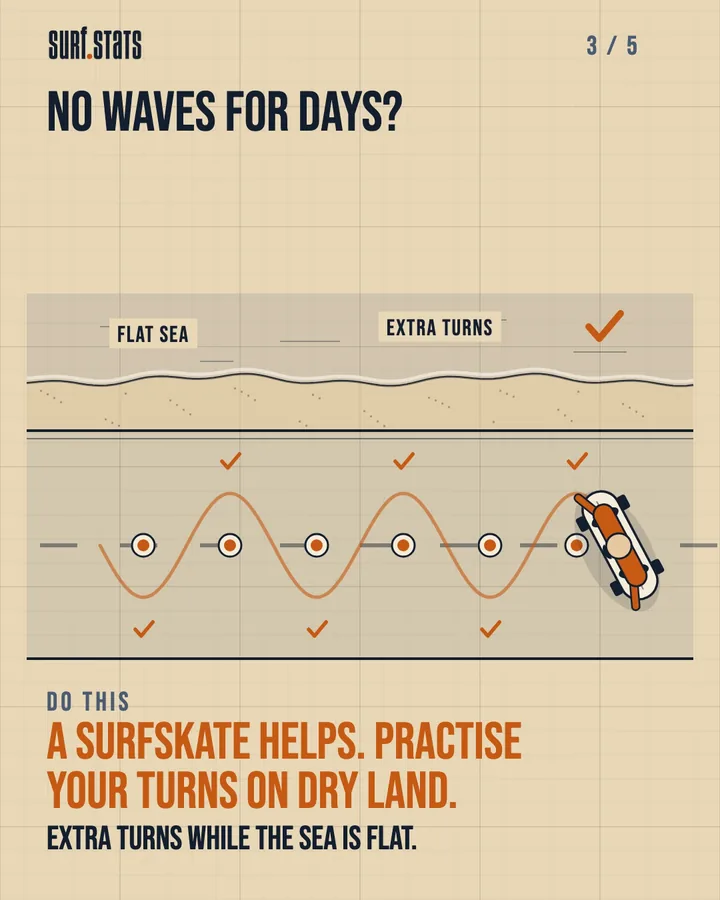
A surfskate helps. Try this: practise your turns on dry land.
You get extra turns while the sea is flat. Stab's point is simple: reps. You can't always get them in the water, because of school, work or no swell, but on a surfskate you get as many tries as you want. The Inertia makes the same point about skating in general: you don't depend on the wind, the tides or the swell, and riding regularly keeps your timing sharp when the surf is flat. Surfer Today notes that skateboarding started out as something surfers rode on days with no waves.
4. Is paddling what wears you out?
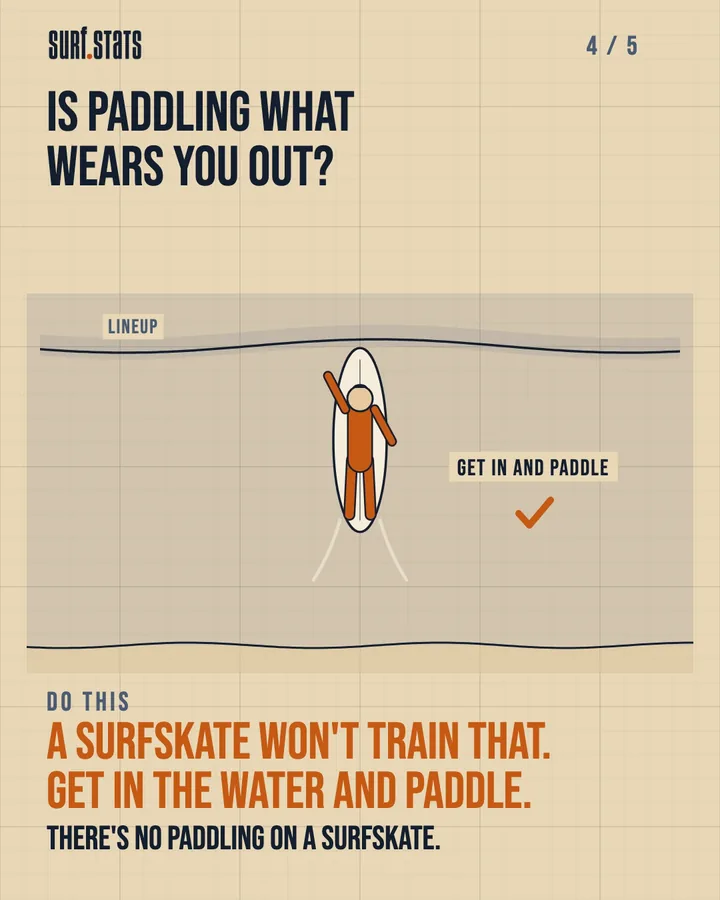
A surfskate won't train that. Try this: get in the water and paddle.
There's no paddling on a surfskate. The Inertia points out that on a skateboard there's no paddling around looking for waves. But a real surf session asks for nonstop paddling, as InsideHook puts it, and paddling takes up far more of a session than riding waves does. A sports-medicine review of surfing found the same. An empty car park can't give you that.
The Inertia is blunt about it: whatever else you do, getting better means paddling out. To make each stroke count, read how to paddle a surfboard.
5. Can't read the waves yet?
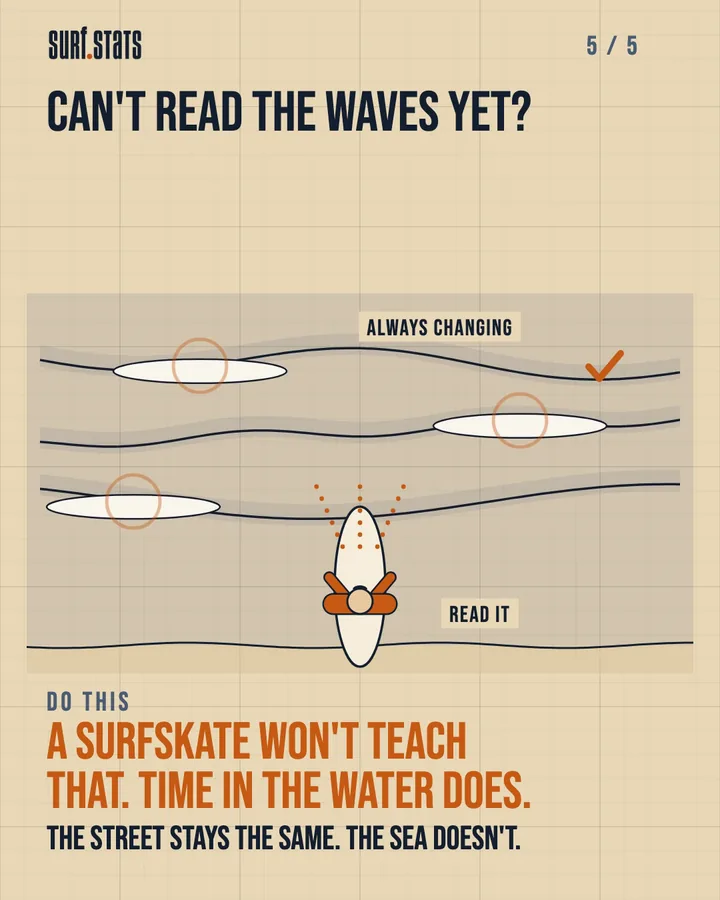
A surfskate won't teach that. Try this: spend time in the water.
The street stays the same. The sea doesn't.
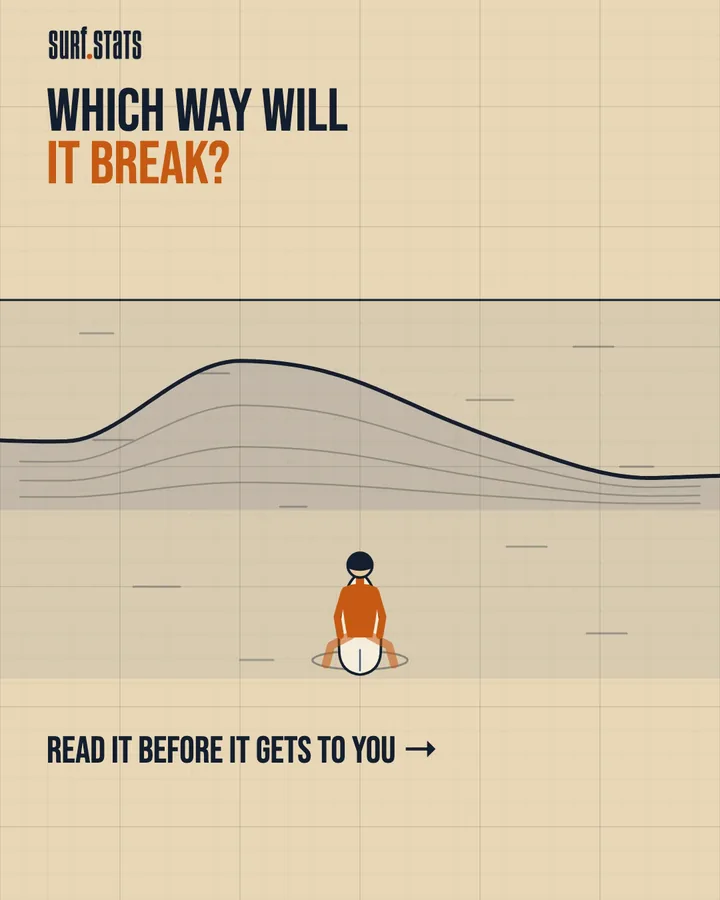
Reading waves means predicting what a wave will do and deciding what to do about it. A peer-reviewed paper on skill learning in competitive surfing makes that point, and notes that dry-land training often happens in settings that are largely fixed and predictable. The Inertia says the same thing in plain words: on a skateboard the conditions are always the same, and in surfing they never are. InsideHook adds that surfing asks for at least some knowledge of breaks and swells.
Skate for your turns. Surf for the rest.
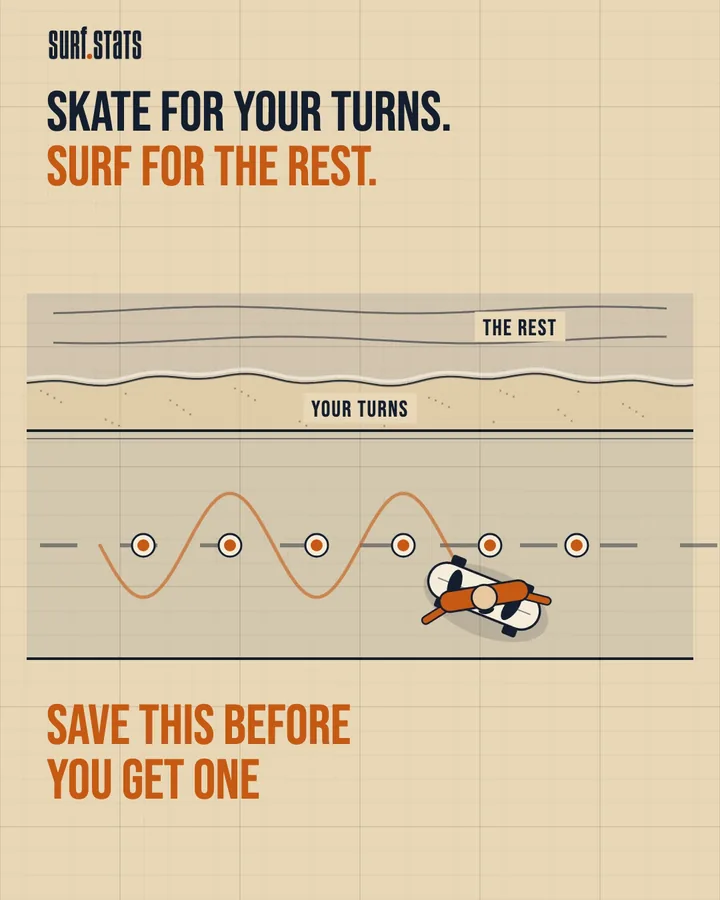
A surfskate is a good tool for the turns, and for keeping your turns going when it's flat. InsideHook says surf skating could be a wise side quest. It is not a replacement for time in the water. Stab puts it simply: if you want to surf better, go surfing.
Quick checklist
- Linking turns: carve one into the next, around cones.
- Stiff turns: knees bent, open your hips and shoulders.
- Flat spell: get your extra turns on dry land.
- Paddling: a surfskate won't train it. Get in the water and paddle.
- Reading waves: the street stays the same, the sea doesn't. Put in time in the water.