How to carry a surfboard into the water
 Fin Selector: your fins in 1 minute
Carry the board at your side, never between you and the wave, with the nose pointing at the wave. When whitewater is about to hit, lift the nose up and over it and keep your hands on the board.
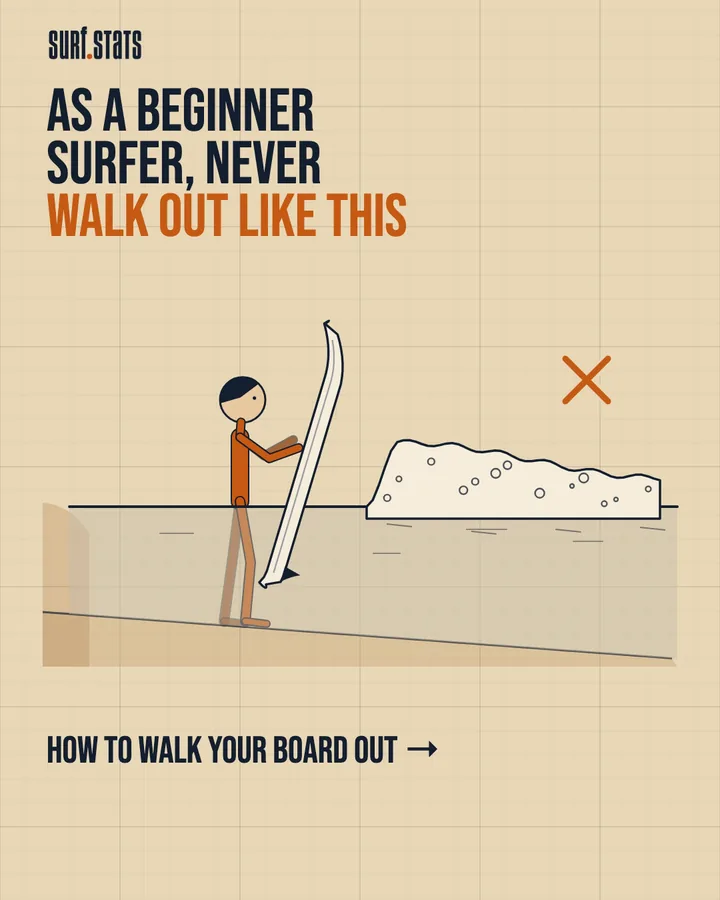
Before you can paddle out, you have to walk your board out through the shallow whitewater. It's tempting to hold the board up in front of you like a shield as you wade toward the waves. That is exactly how you shouldn't carry a surfboard into the water. A wave hits the board, and the board hits you.
The fix is two habits, one for where the board is and one for what to do when the foam arrives. They come from our walk your board out reel. Both of the reel's tips are backed by at least two of three independent sources: the Safe Surfing workbook Surfing Australia publishes with Wet Paper, the Surfing Handbook beginner's guide and the Australian surf site Seabreeze. Where a point below rests on one source, we name it.
This post is about the walk out itself: standing in the shallows, board in your hands. Lying on the board and paddling through waves is a different skill, covered in how to paddle out.
1. Is your board between you and the wave?
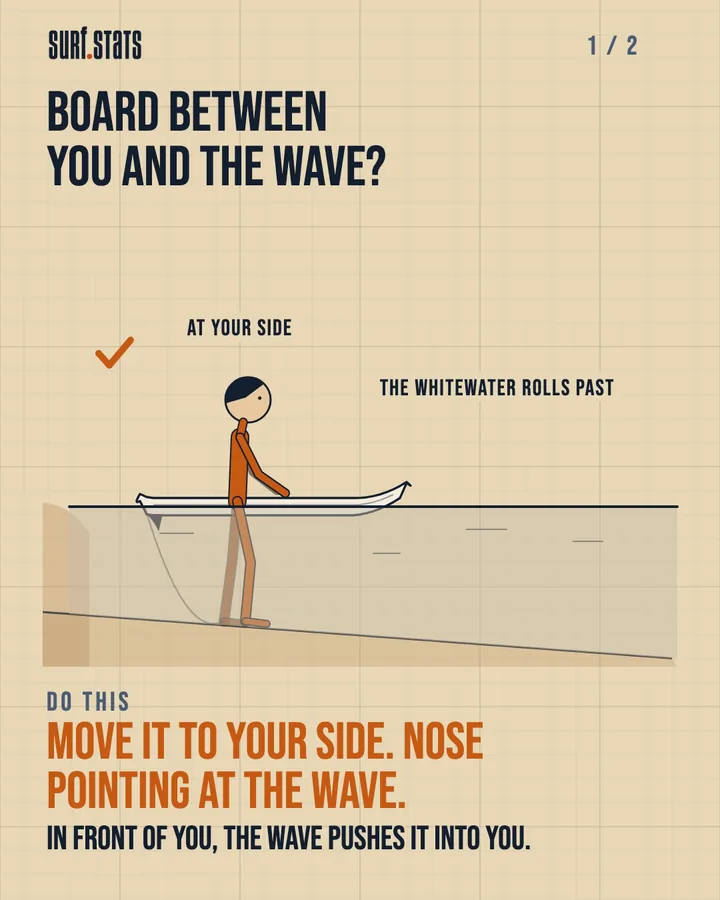
Try this: move it to your side, nose pointing at the wave.
In front of you, the wave pushes the board into you. Surfing Handbook says a wave will throw the board at you faster than you can react, and Seabreeze's guide to whitewater on a stand-up paddle board says the wave pushes the board into your body.
Don't judge it by how small the foam looks. Surfing Handbook warns that waves are stronger than you'd expect, and that whitewater can catch you off guard with its force. The same Seabreeze guide makes that point about even the smallest waves, and it calls the board between you and the wave probably the most common cause of injuries in the surf, on any kind of surf craft.
So, as you walk your board out:
- Keep the board at your side. Surfing Australia's workbook says to carry the board at your side, and Surfing Handbook says to stay to the side of your board. Our sources describe the safe spot in slightly different words, but every one of them allows the board at your side, so that's the one to learn.
- Point the nose at the wave. Surfing Australia has the nose of the board facing the waves, and Surfing Handbook says to keep the nose pointing directly into them.
2. Whitewater about to hit?
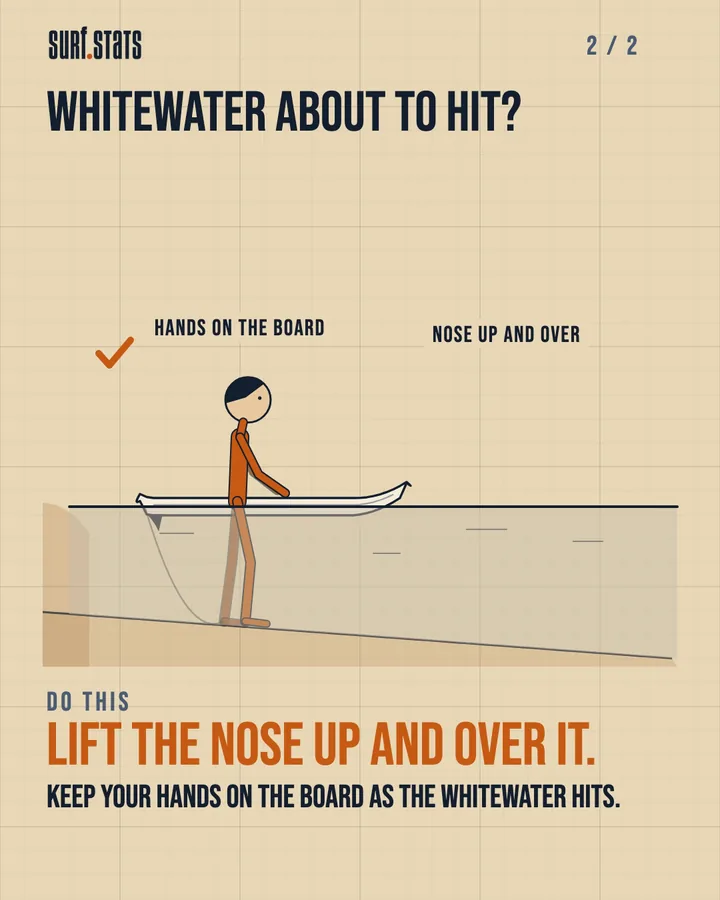
Try this: lift the nose up and over it.
When a line of whitewater comes toward you, lift the nose of the board up and over it. Both Surfing Australia and Surfing Handbook teach this, and Surfing Australia's workbook lists "not lifting the board over the breaking waves" as one of the common errors at this stage.
Keep your hands on the board as the whitewater hits. The sources put your hands in slightly different places:
- Surfing Australia: hands on the rails (the board's edges) at the middle of the board.
- Surfing Handbook: a hand or two resting on the deck while you stand next to the board.
The workbook also has a fallback. If carrying the board on your hip is hard for you, it says you can lift the board over the whitewater by holding it by the nose.
Board at your side, nose to the wave
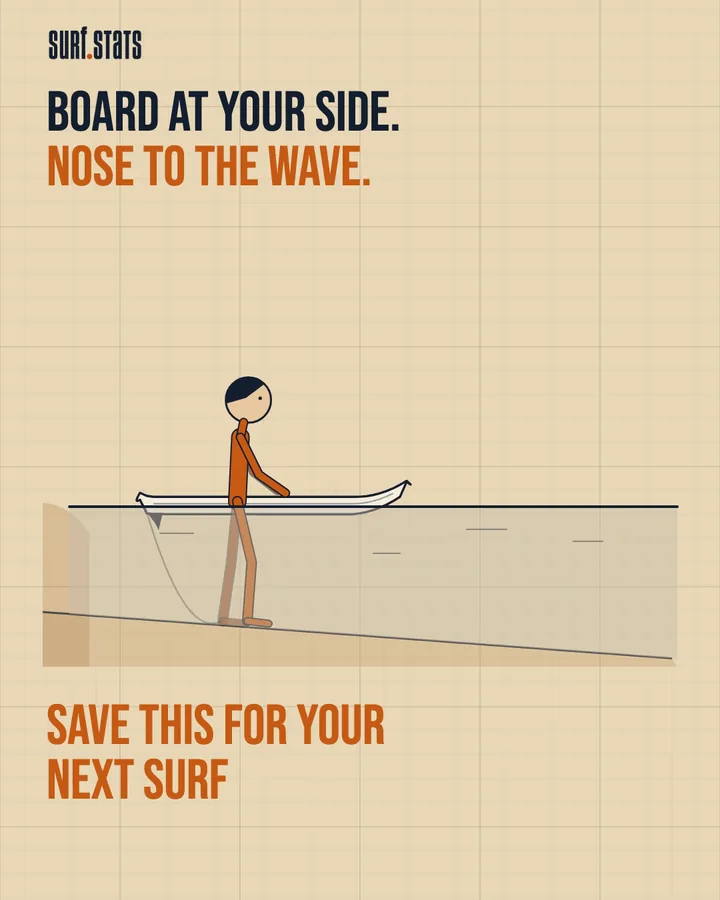
That's the whole walk out in one line: board at your side, nose to the wave, and lift the nose when the foam comes.
Surfing Australia's Safe Surfing workbook files it under basic surfing skills, as Skill 3, "Entering the surf zone", right after carrying the board and paddling it, and in that drill the coach explains and demonstrates how to carry the board out before the student practises it. If you're weighing up whether to start with a coach, read surf lessons or learning alone.
Quick checklist
- Never hold the board in front of you, between you and the wave.
- Walk with the board at your side.
- Point the nose at the wave.
- Whitewater coming? Lift the nose up and over it.
- Keep your hands on the board as the foam hits.
- Even small whitewater is more powerful than it looks.