How to catch more waves
 Fin Selector: your fins in 1 minute
Don't wait in one spot. Keep checking where the waves break and move when it shifts, go to the wave first (out or across) before you turn, and give yourself a runway: smooth strokes first, then harder, so you hit top speed as it picks you up.
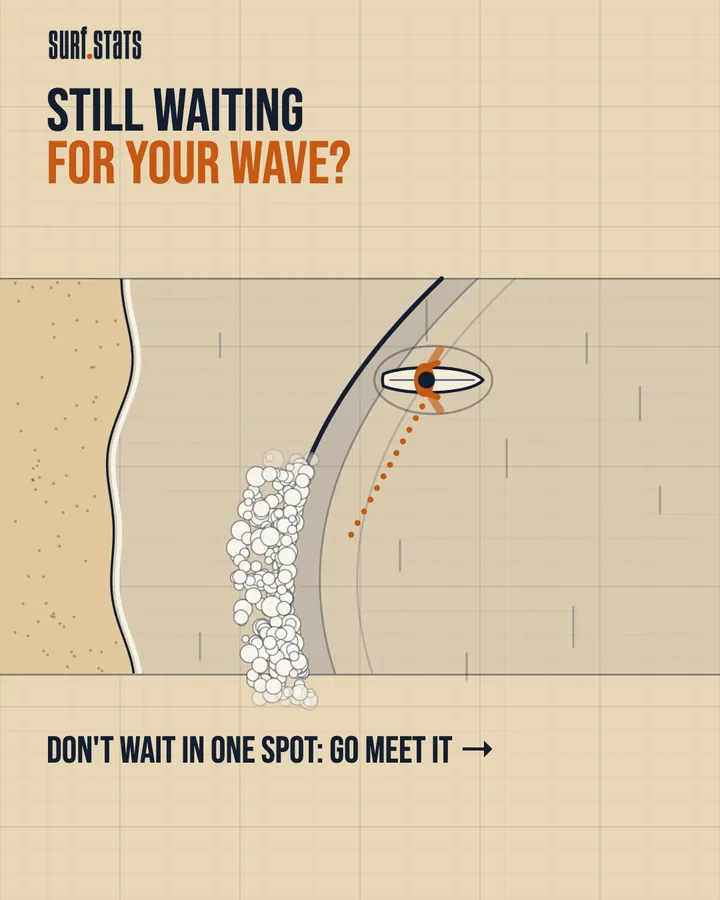
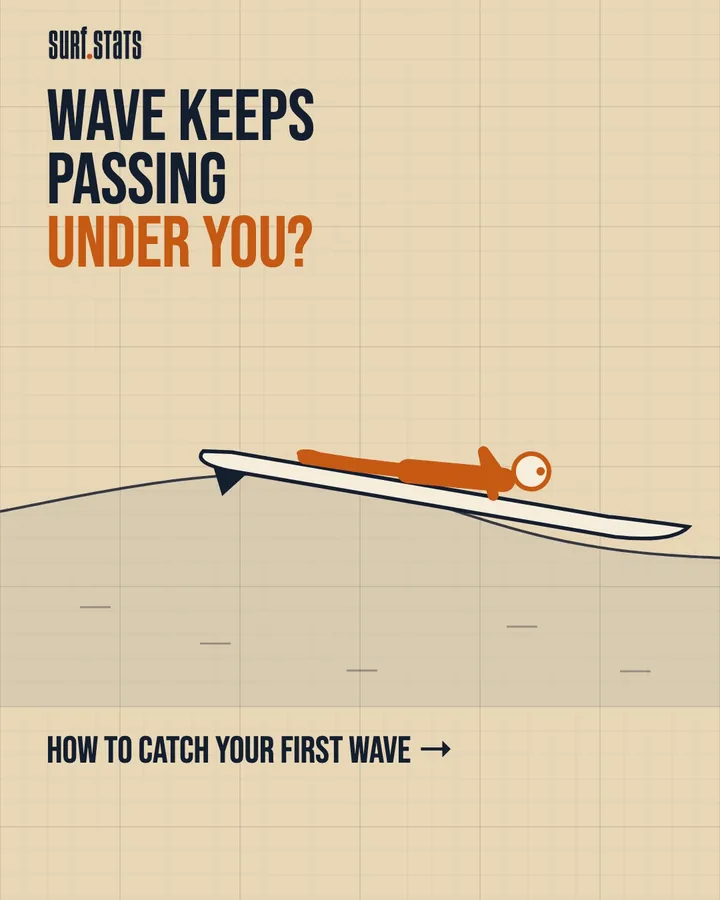
You paddle out, find a spot and sit there. The good waves break somewhere else. When one finally comes your way, you turn for the beach and sprint, and it rolls on without you. Sound familiar? Catching more waves is less about waiting for the right one and more about what you do between waves and as one comes.
Below are three common habits that cost you waves, and the fix for each. They come from our still waiting for your wave? reel. We checked them against a coaching programme, surf magazines, a coaching guide and a coach's blog. The first two fixes are the best agreed; the third has the thinnest support (see the note at the end).
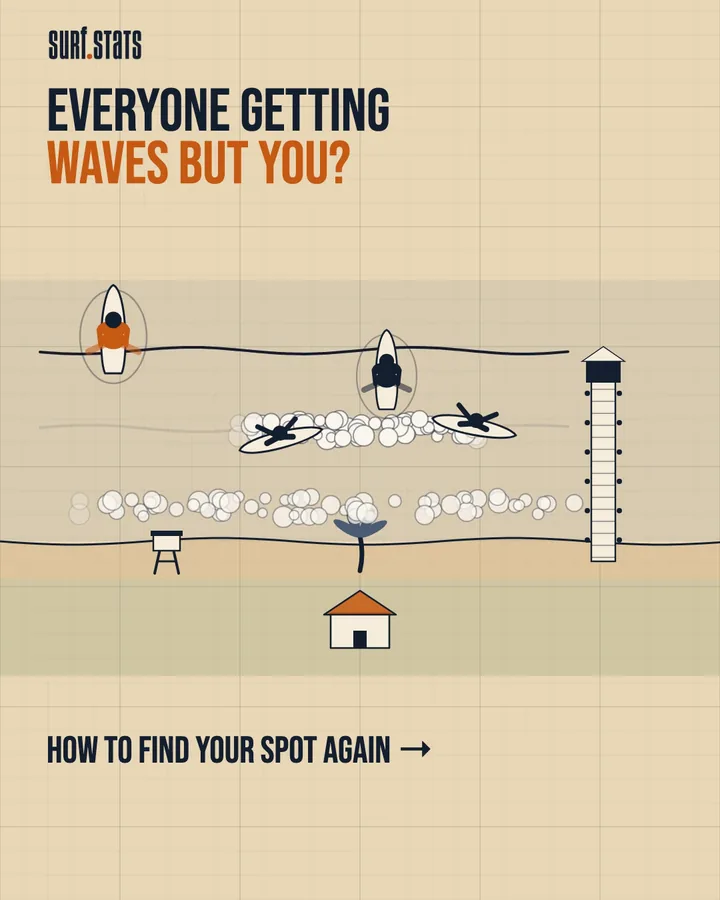
This post is for when you already paddle out past the whitewater. Finding your spot in the first place is its own skill: see where to sit in the lineup. Picking which wave to go for is in which waves to catch.
1. Sitting in one spot all session?
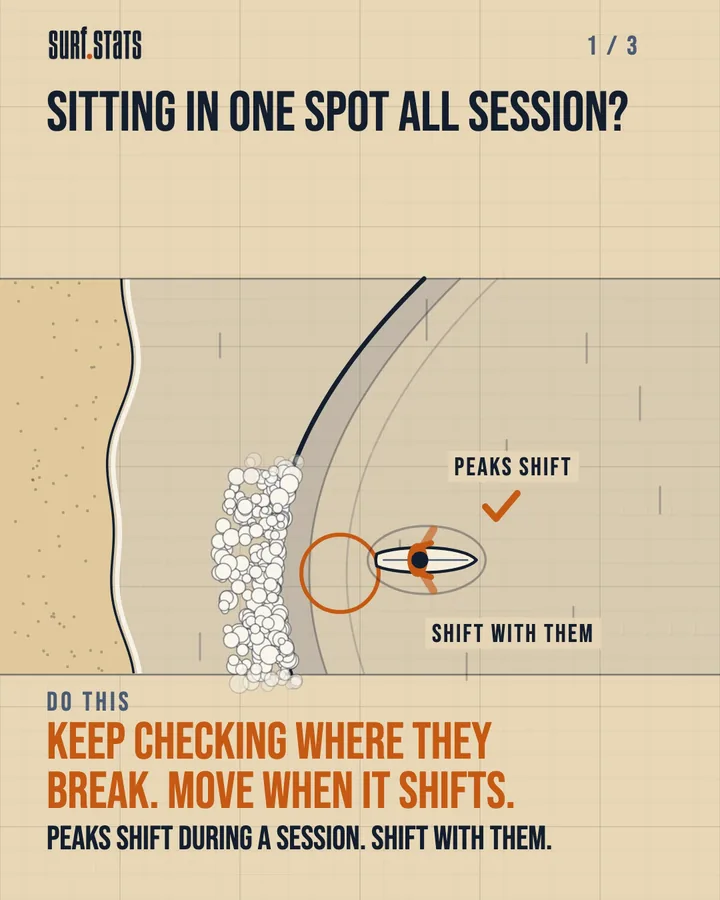
Try this: keep checking where they break. Move when it shifts.
Peaks shift during a session. Shift with them. At a beach break, The Inertia says in a piece with longboarder Kassia Meador, being in the right spot is a moving target.
So keep looking between waves. OMBE's coach describes himself out in the water watching the waves the whole time, relaxed but observant. OMBE also suggests asking yourself out there: have the conditions changed, and do you need to move or stay?
That's the point: check, then move if it has shifted. You're not paddling around for the sake of it. OMBE points to the surfer who seems to get every wave: follow them around and you'll likely see them paddling all over to get in position while everyone else sits still.
2. See one coming and paddle straight for the beach?
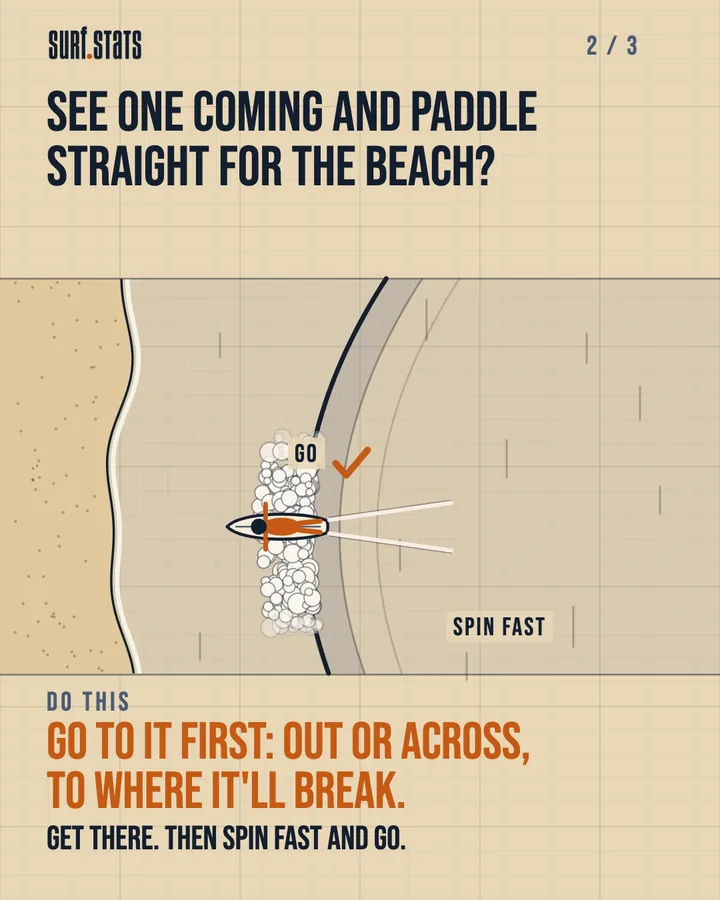
Try this: go to it first, out or across, to where it'll break. Get there. Then spin fast and go.
OMBE calls this a mistake most beginner and intermediate surfers make: paddling straight in toward the beach, or away from the wave, instead of to it. If the wave is going to break out from you or off to one side, every stroke toward the beach takes you further from it.
Instead, paddle to the spot first. That can mean straight out, or across to the side. Dion Mattison, a surf coach, says that when you see good waves coming, don't just turn around: first paddle out or sideways to where you think the peak will be, then turn. The Inertia's lineup tips say the same: position yourself before you turn to catch the wave.
Once you're there, don't hang about. Spin the board round fast and go.
3. One all-out sprint at the last second?
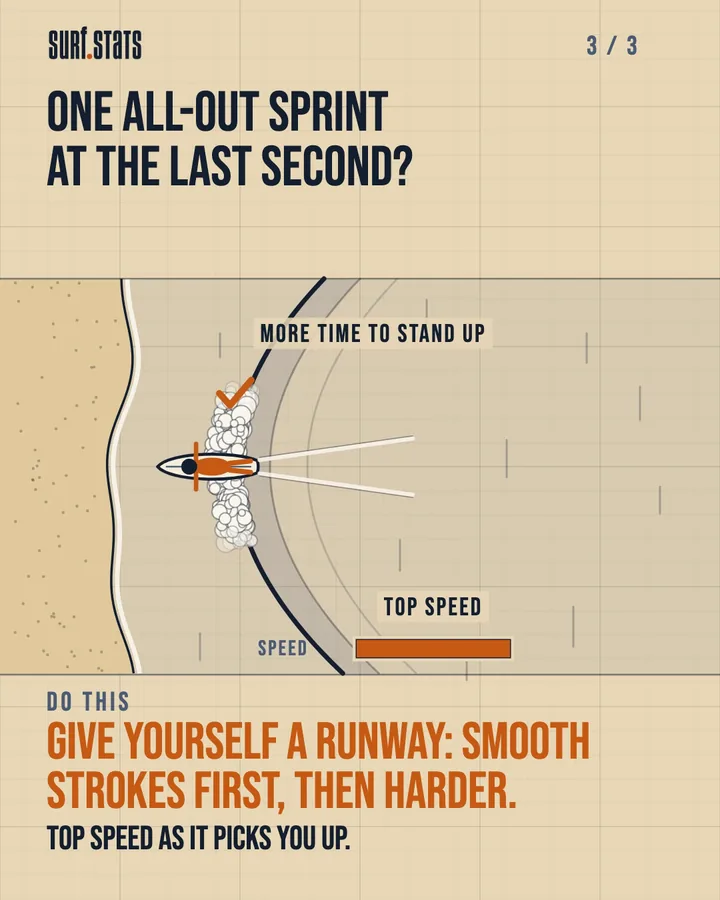
Try this: give yourself a runway. Smooth strokes first, then harder. Top speed as it picks you up.
OMBE warns that when you paddle too much and too frantically, you're tired by the time you meet the wave.
Think of a runway: the speed builds along it. Do the same with your paddle. Smooth strokes first, then harder as the wave gets close, so you are at top speed as it picks you up.
Why it matters: to catch a wave you have to be going fast enough for it. Barefoot Surf and Surfer Today both say you have to paddle fast enough to match the wave's speed, and Surfer Today adds that the board must be moving when the wave arrives. Catch it earlier, and you get more time to stand up.
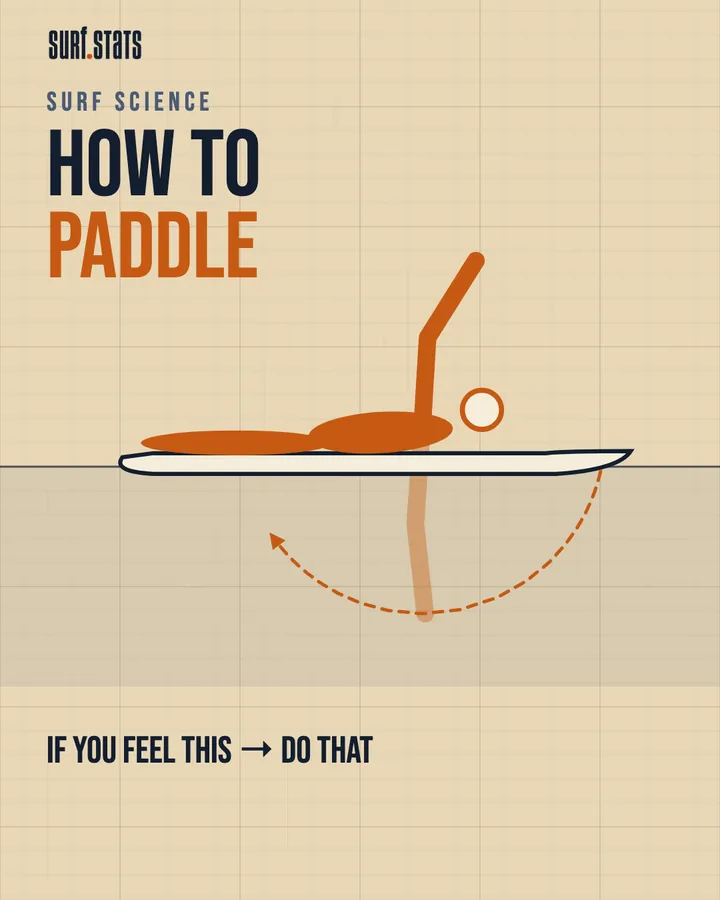
This card is about how you build the speed, not when you start. For the timing of the catch itself, read how to catch a wave. For the stroke, see how to paddle a surfboard.
Move to the wave. Build your speed.
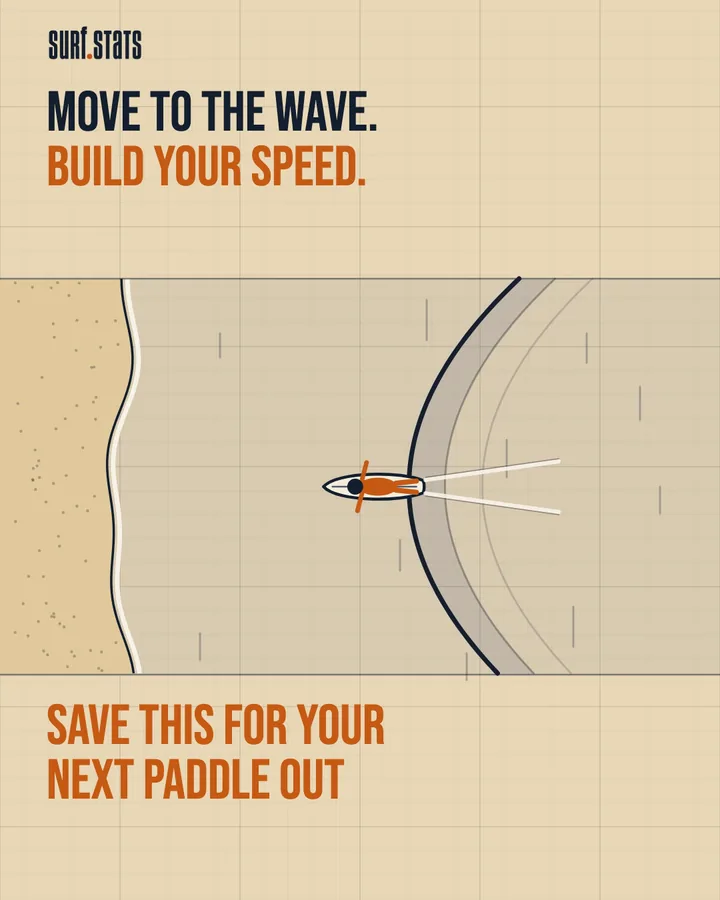
The whole idea in two lines: move to the wave, and build your speed. Keep checking where they break, get to the spot before you turn, and build your paddle up so you're at top speed when it picks you up.
Quick checklist
- Don't wait in one spot. Keep checking where they break.
- Peaks shift. Move when they do.
- See one coming? Go to it first, out or across.
- Get there, then spin fast and go.
- Smooth strokes first, then harder.
- Top speed as it picks you up.