Is it worth surfing in bad conditions?
 Fin Selector: your fins in 1 minute
Yes, if the waves are your size. On a choppy day catch lots of short ones, on a small day take your biggest board, on a quiet grey day try the move you keep avoiding (never alone), and on any bad day pick one thing to work on. Big and stormy? Stay on the sand.
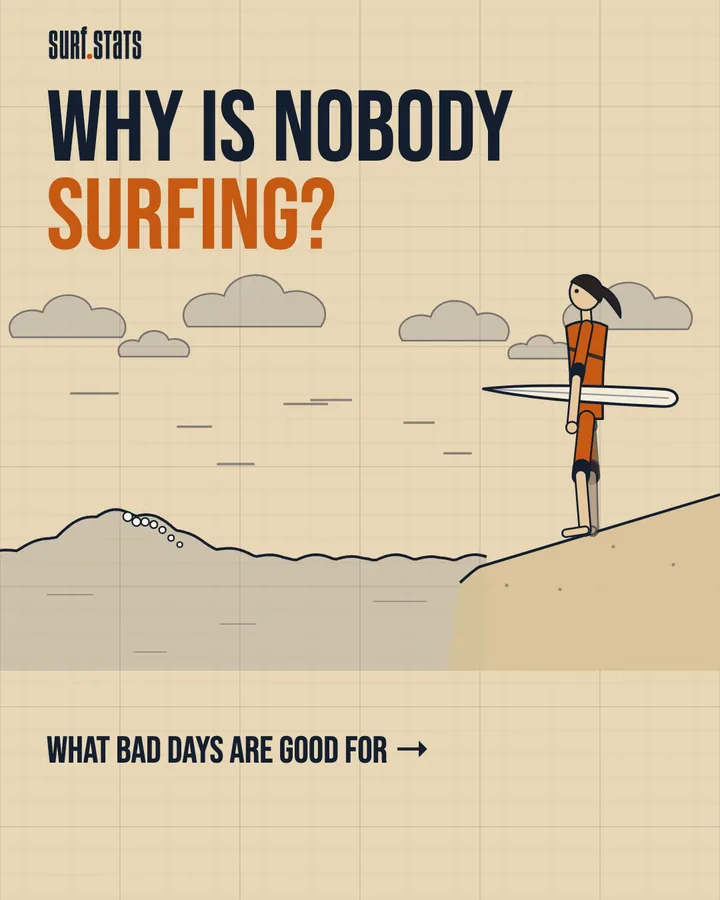
Plenty of surfers check the waves, see chop, small waves or a grey sky, and stay home. So is it worth surfing in bad conditions? If the waves are your size, yes. A bad day won't give you your best waves, but each kind of bad day is good for something, and fewer people tend to paddle out.
Below are four kinds of bad day and what to do with each. They come from our reel on surfing the bad days. This is coaching advice, not lab science: it comes from surf magazines, a surf coaching programme and surf tips sites, and each tip is backed by at least two of them. Where only one source says something, we name it. The line about never surfing alone also leans on water safety groups.
1. Onshore and choppy, so you stay home?
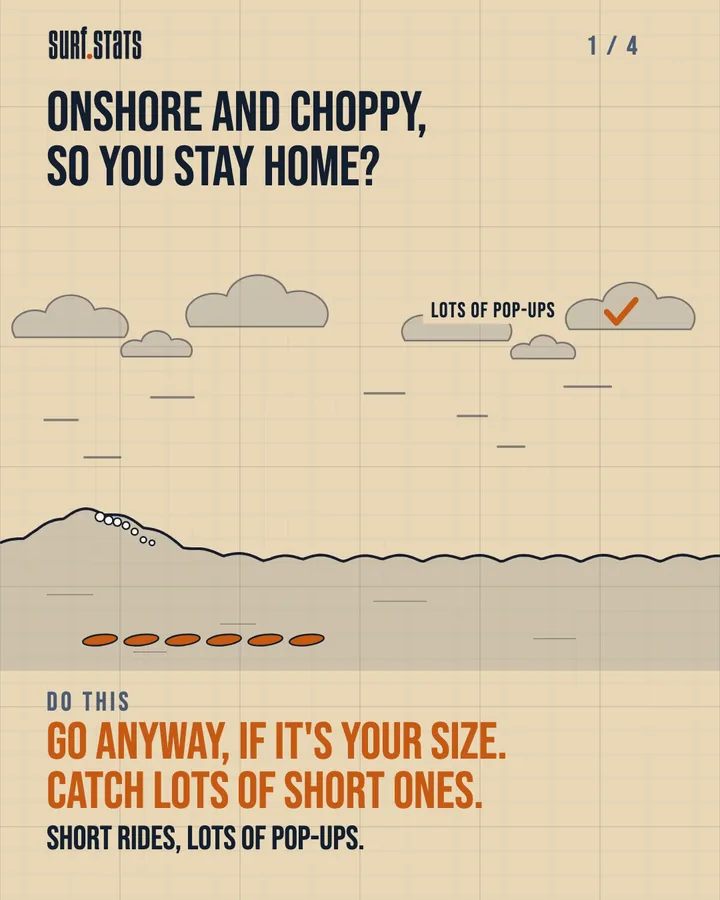
Try this: go anyway, if it's your size. Catch lots of short ones.
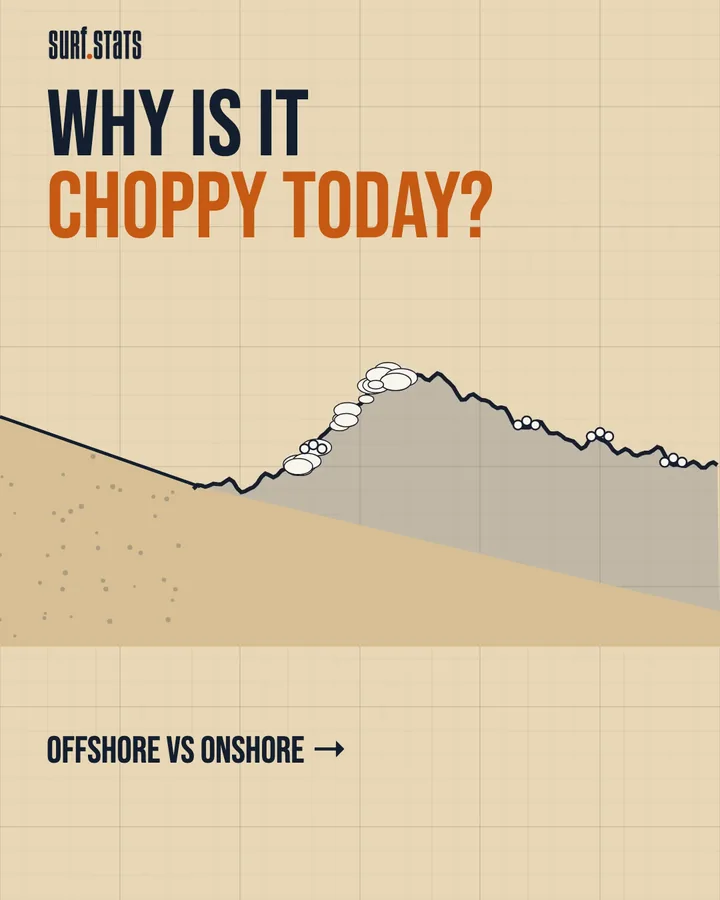
Lots of surfers see an onshore, choppy day and decide it isn't worth it. The sources behind this post say go anyway. A writer at The Inertia puts it in two words: just go. OMBE, a surf coaching programme, says bad conditions shouldn't be avoided.
On a choppy day, no perfect wave is coming, so there's no point waiting for one. Catch lots of short ones instead. Short rides mean lots of pop-ups, and every pop-up is practice.
The condition matters as much as the tip: the waves have to be your size. Surf Hungry tells you to take your skill level into account, and The Inertia says to know your limits. If the waves are bigger than you can handle, this tip isn't for you. Stay on the sand.
Want to know what the wind is doing to the waves? Read offshore vs onshore wind. This section is only about what to do once it's blowing.
2. Waves too small for your board?
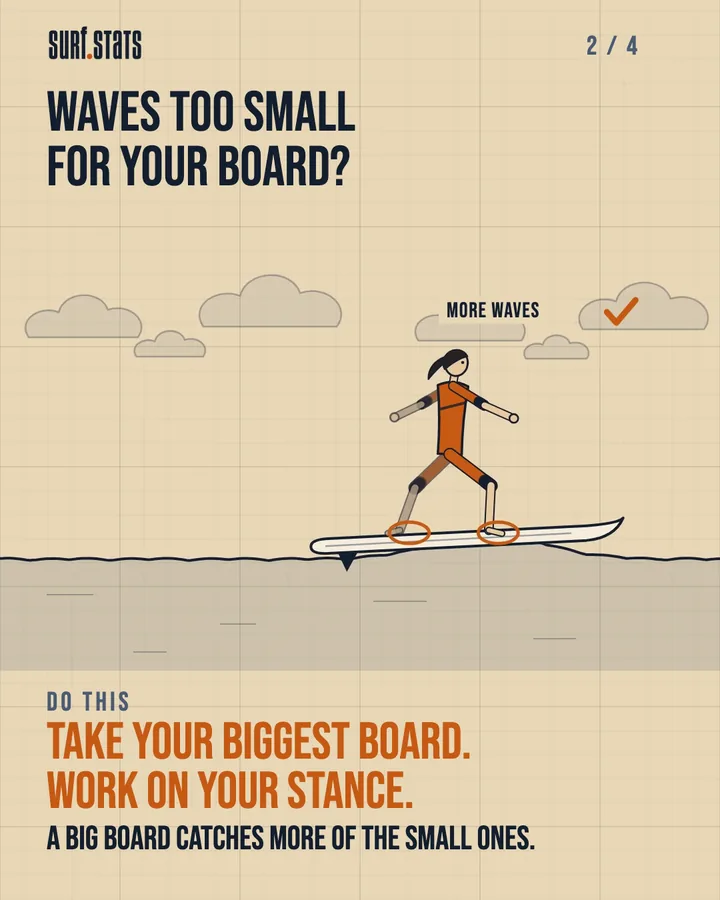
Try this: take your biggest board. Work on your stance.
Small waves don't give you much speed, so you have to work harder for it. Writing about choppy days, Surf Hungry adds that a board that's too small won't float enough to catch weak, messy waves.
So bring the biggest board you have. A big board catches more of the small ones, so you get more time on your feet. Surfer Today suggests grabbing a fish or a longboard on these days, and Surfd says to switch to the longest board you have.
Then use that extra time standing. Work on your stance: where your feet go and how you stand on the board. Surfer Today says small waves are where you can work on the fine details of your stance, and OMBE tells beginners on big boards to learn to control the board and their stance.
3. Grey day, hardly anyone out?
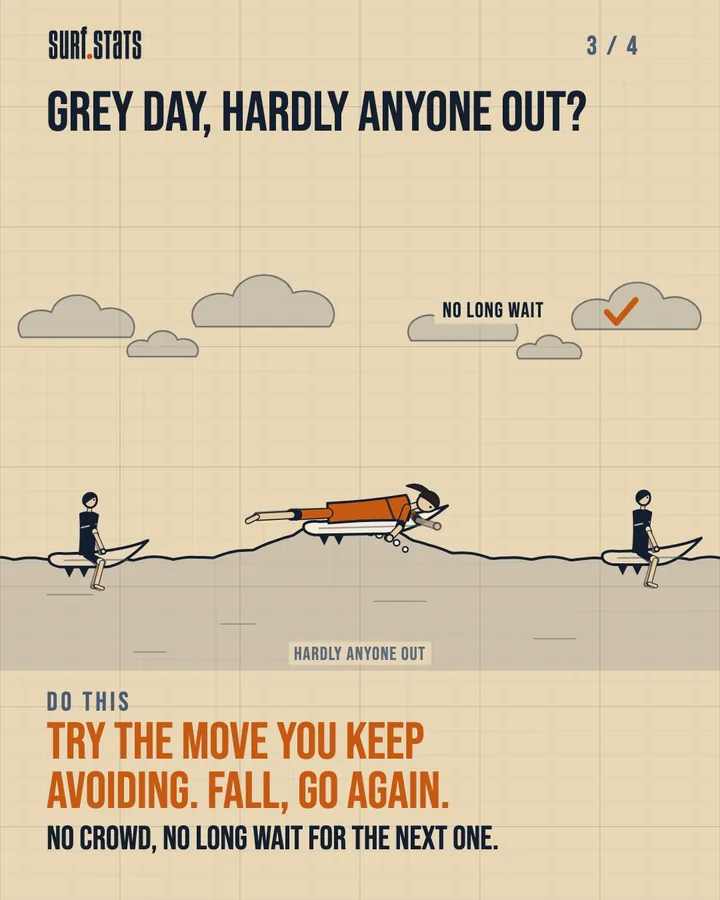
Try this: try the move you keep avoiding. Fall, go again.
On a grey, cloudy day, fewer people tend to go out. A writer at The Inertia noticed fewer surfers out on cloudy days, and OMBE describes a rainy, cold day with an empty lineup.
Use the space. Try the move you keep avoiding. You'll fall, so paddle back and go again. With no crowd, there's no long wait for the next wave. The Inertia points out that on an imperfect day, a wipeout doesn't cost you a long wait for your next try, and Surf Hungry says fewer people and more waves give you more time to practise.
Hardly anyone is not no one. Don't go out alone. Carve lists "don't surf alone" as a ground rule for every surfer, the RNLI says to surf with a friend, and Water Safety New Zealand asks people not to do water activities alone. More on that in our first time surfing tips.
4. Surf's bad, so what's the point?
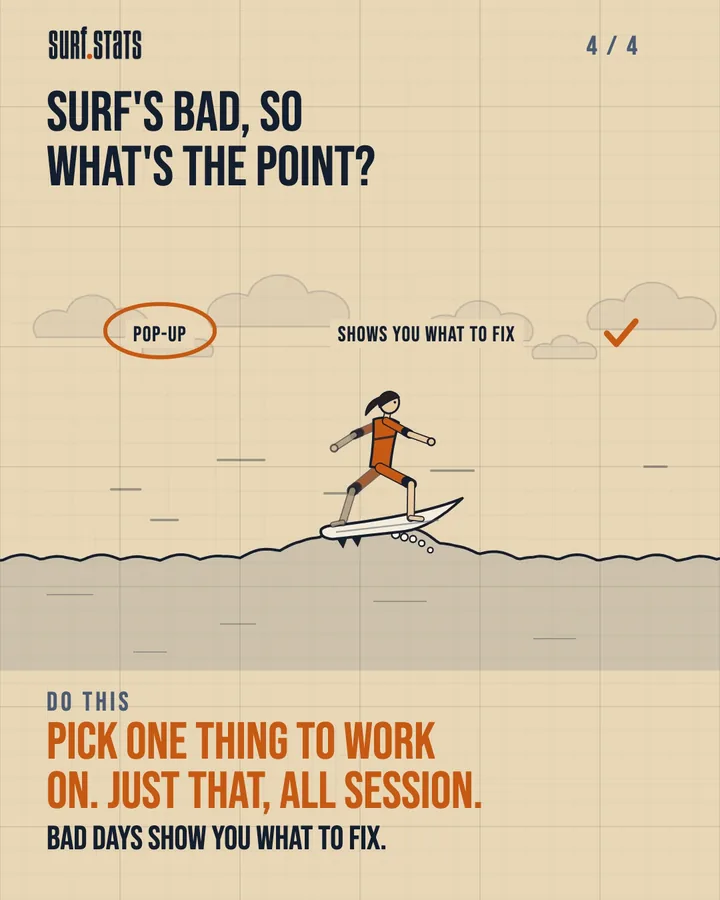
Try this: pick one thing to work on. Just that, all session.
When the waves are bad, it's easy to wonder if you're wasting your time. Give the session a job instead. Pick one thing to work on, and do only that, the whole session. OMBE says to focus on that one thing for the entire surf. It can be something basic: Surf Hungry says even a whole session spent practising your pop-up is worth it.
Bad days show you what you need to fix. OMBE says bad conditions bring out the problems in your surfing, while good waves let those problems hide. The Inertia says imperfect days teach surfers at every level about their board choice, style, reflexes and fitness.
Messy or dangerous?
Bad days count too. Messy is fine, if the waves are your size. Big and stormy is not: stay on the sand.
The sources draw the same line. Surf Hungry says surfing choppy water doesn't mean paddling out in a hurricane, and tells you to avoid large swells. OMBE says it isn't telling you to surf big, messy waves over your head. The Inertia warns about weather that can make conditions dangerous.
Inside that line, bad days are worth your time. Surf Hungry says to make the effort to surf bad conditions now and then, and OMBE says you need to learn to surf in many kinds of conditions.
Quick checklist
- Onshore and choppy, waves your size: go, and catch lots of short ones.
- Waves too small: take your biggest board and work on your stance.
- Grey and quiet: try the move you keep avoiding. Never alone.
- Surf's bad: one thing, the whole session.
- Big and stormy: stay on the sand.