Losing speed after your turn
 Fin Selector: your fins in 1 minute
A turn that slides loses speed, and a turn on the rail carves and keeps it. Get your speed before you turn, and as the nose comes round, let that rail go and roll onto the other one to ride away.
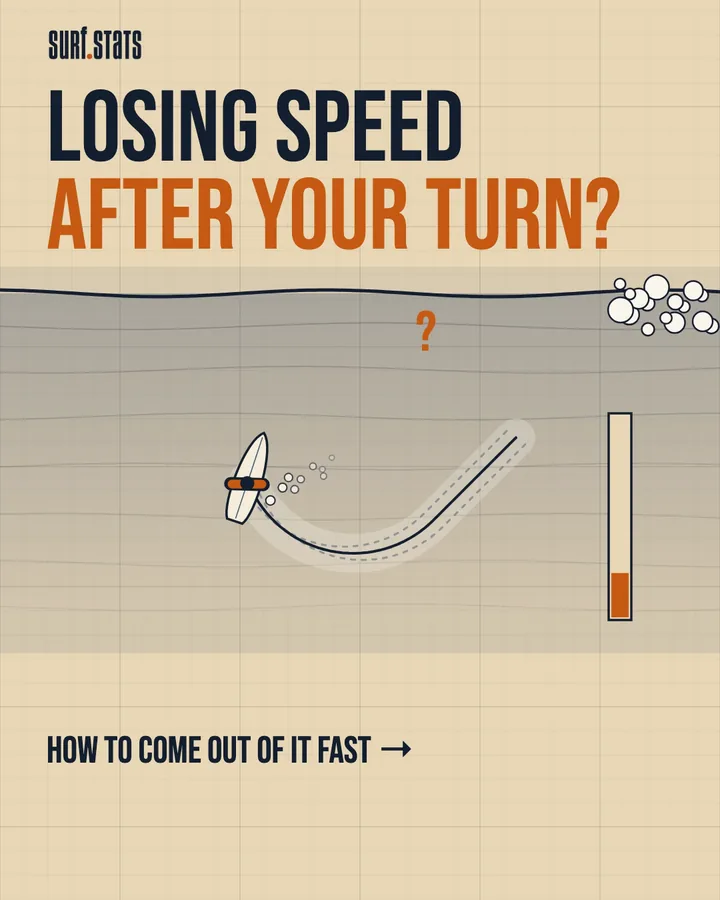
You had speed going in. You turned. Now the board is slow and the wave is getting away from you. When the speed dies right after the turn, the place to look is the turn itself: how the board goes through it, the speed you take into it, and how you come out of it.
This post is for surfers who already turn on unbroken waves and feel the board slow down after the turn. If the whole ride feels slow, not just the turn, start with how to keep your speed on a wave, which covers where you ride on the wave, your back foot and pumping. Here we stay with the turn.
Below are three reasons you lose speed after a turn, in the order of our losing speed after your turn reel, with the fix for each. They come from surf coaches and magazines, so read them as coaching advice, not science.
1. Tail slides out as you turn?
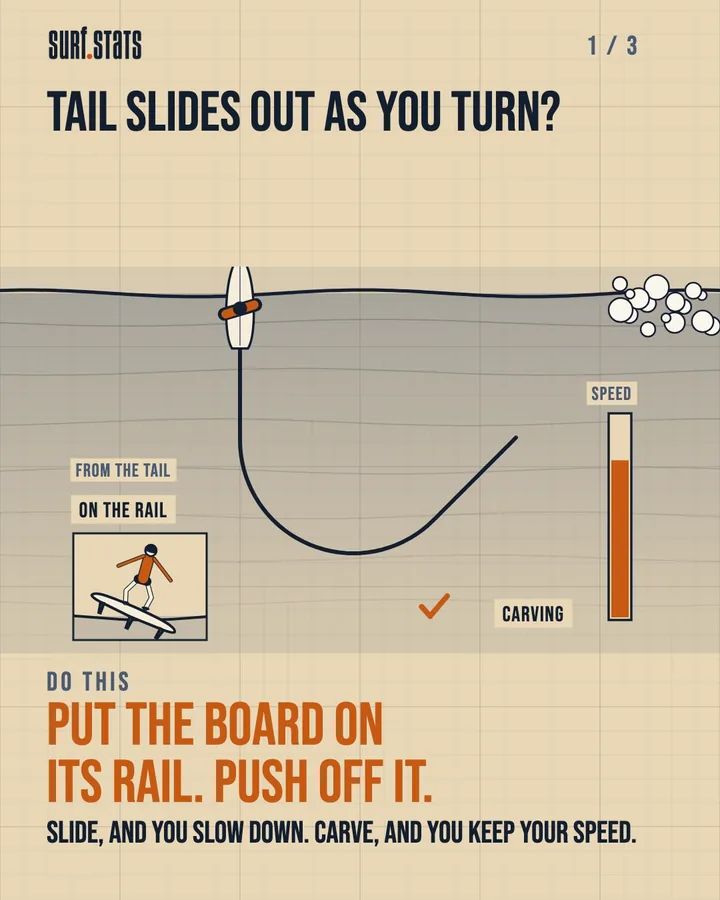
Try this: put the board on its rail, and push off it.
Slide, and you slow down. Carve, and you keep your speed.
When the tail slides out, the board is skidding round the turn instead of carving it. Surf coach Joel Gray, writing in Wavelength, says that if the board isn't tipped onto its rail enough, you get what he calls a "fat, skiddy" turn. He also says no turn holds its speed better than the carve.
SUPboarder Magazine compares two kinds of turn on a stand-up paddleboard, which turns on rails and fins like your surfboard. In a sliding turn, the fins let go and the tail slides away. That feels exciting, but it doesn't use the board's design to make speed. A carving turn does: it uses the rails and fins to make drive and speed through the turn.
So get the board on its rail and give yourself something to push against:
- Surfer Today puts it simply: when you're riding on the rails, you're carving, and the goal is to put your power and weight on the rail.
- Wavelength's key points end with pushing off the rail you're tipping into the water.
2. Slow before you even turn?
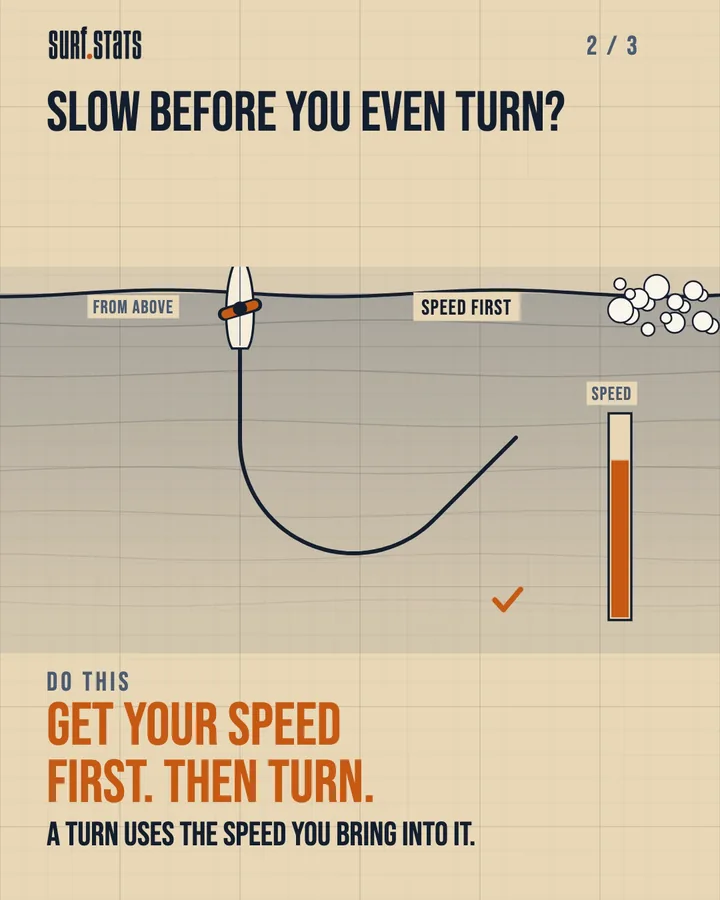
Try this: get your speed first. Then turn.
A turn uses the speed you bring into it.
If you start the turn already slow, the turn has little speed to use. Wavelength calls speed the key ingredient for a good carve. Surfer Today describes the carve as using the speed and power you built in the turn before it, a bottom turn for example. And a coaching column in The Inertia, written with surf coach Nick Tiscoe, warns that when the wave hasn't given you enough speed going into a bottom turn, you're likely to bog the rail. Carve Magazine makes a similar point about the cutback: lose your speed and you stall.
So the order matters. Speed first, then the turn. This card isn't about where on the wave to turn, and it isn't about how to make speed: the post on keeping your speed, linked at the top, covers that. It's about not starting a turn you have no speed for.
3. Still on the rail as the turn ends?
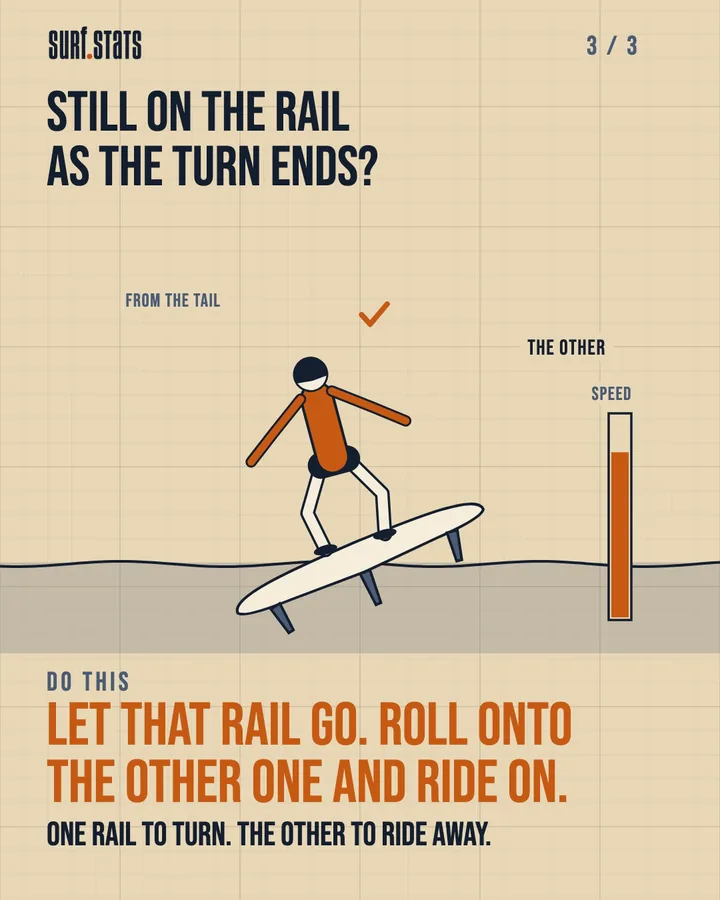
Try this: let that rail go. Roll onto the other one, and ride on.
One rail to turn. The other to ride away.
You turn on one rail. You ride away on the other. Here is how three sources describe the end of a turn:
- Surfer Today's carve steps: once the nose of the board has come round, release the rail, then carry on riding with a bottom turn.
- Wavelength: one common way to finish a carve is rolling back onto the other rail and into a bottom turn.
- Carve Magazine's cutback: at the end, the board goes back on its rail, ready to drive out and set up the next turn.
In two of those descriptions the board goes flat for a moment, on its way from one rail to the other, and then it goes back on a rail. For riding along the wave on your rail between turns, see how to use your rail.
The three fixes in one line
Push off the rail. Speed in. Switch rails out. If you know someone whose turns go fast in and slow out, send this to them.
Quick checklist
- Tail sliding out in the turn? Put the board on its rail and push off it.
- Sliding loses speed. Carving keeps it.
- Slow before the turn? Get your speed first, then turn.
- The turn uses the speed you bring into it.
- Turn finished? Let that rail go and roll onto the other one.
- Flat is a moment between rails, not how you ride away.